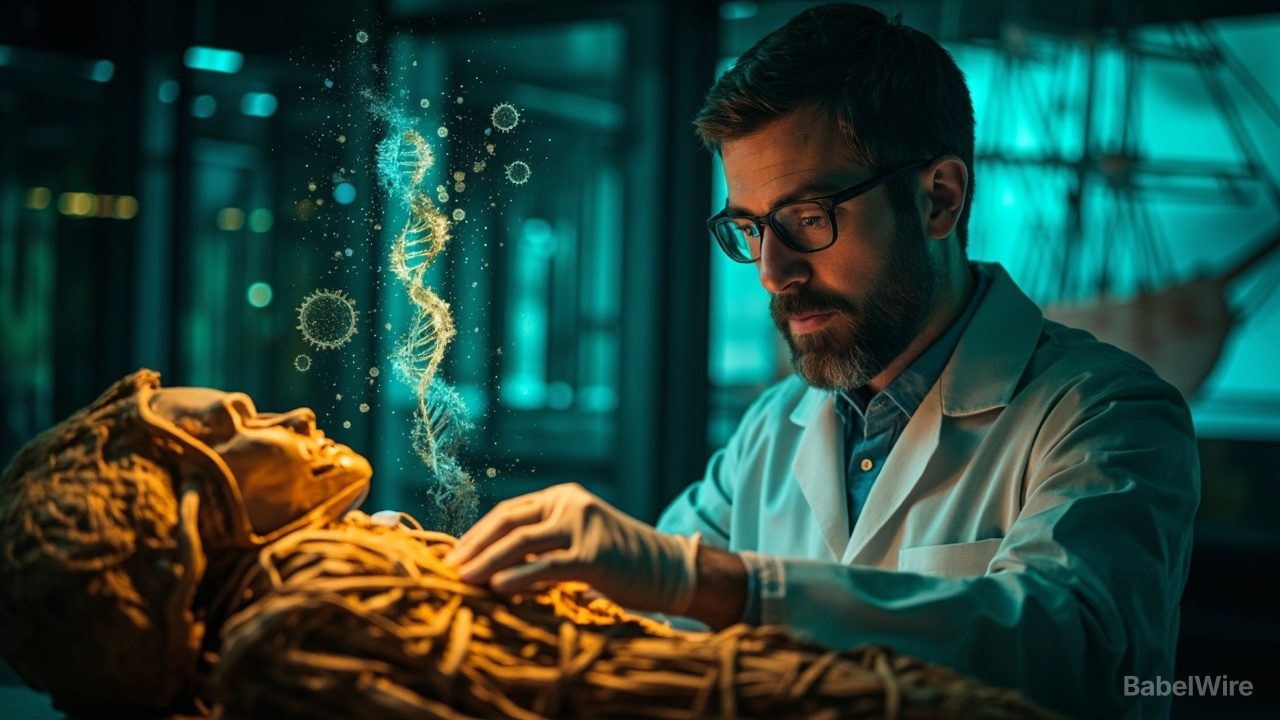
Viral DNA recovered from mummified remains in Chile has yielded the first direct molecular evidence that smallpox arrived in the Americas with European colonizers, an international team reports in Science. The findings settle a long-running historical debate with genetics rather than ships' manifests alone.
The researchers sequenced ancient variola virus genomes — the virus that causes smallpox — from Chilean mummies, identifying a lineage they call CAM9. It is the earliest known smallpox genome from the Americas, the team says, and its closest relatives point to European origin.
Smallpox devastated Indigenous populations across the Americas after first contact, and historians long debated precisely when and how the disease crossed the Atlantic. European colonial records and shipping documents suggested introduction in the early colonial period, but direct genetic proof from the era had been lacking until now.
"This discovery provides the first molecular confirmation that smallpox was carried to the Americas during the colonial period," the researchers said, according to a statement from the team. The genomes also offer clues about how the virus evolved and spread once it reached the continent.
The work was reported alongside related findings that ancient smallpox genomes recovered in the Americas could help trace the disease's colonial-era transmission routes. Nature News highlighted the study as one of the week's key scientific developments.
Beyond the historical significance, the study demonstrates how ancient DNA techniques can reconstruct the movements of pathogens across centuries — a tool researchers increasingly use to understand both past epidemics and modern emerging diseases.