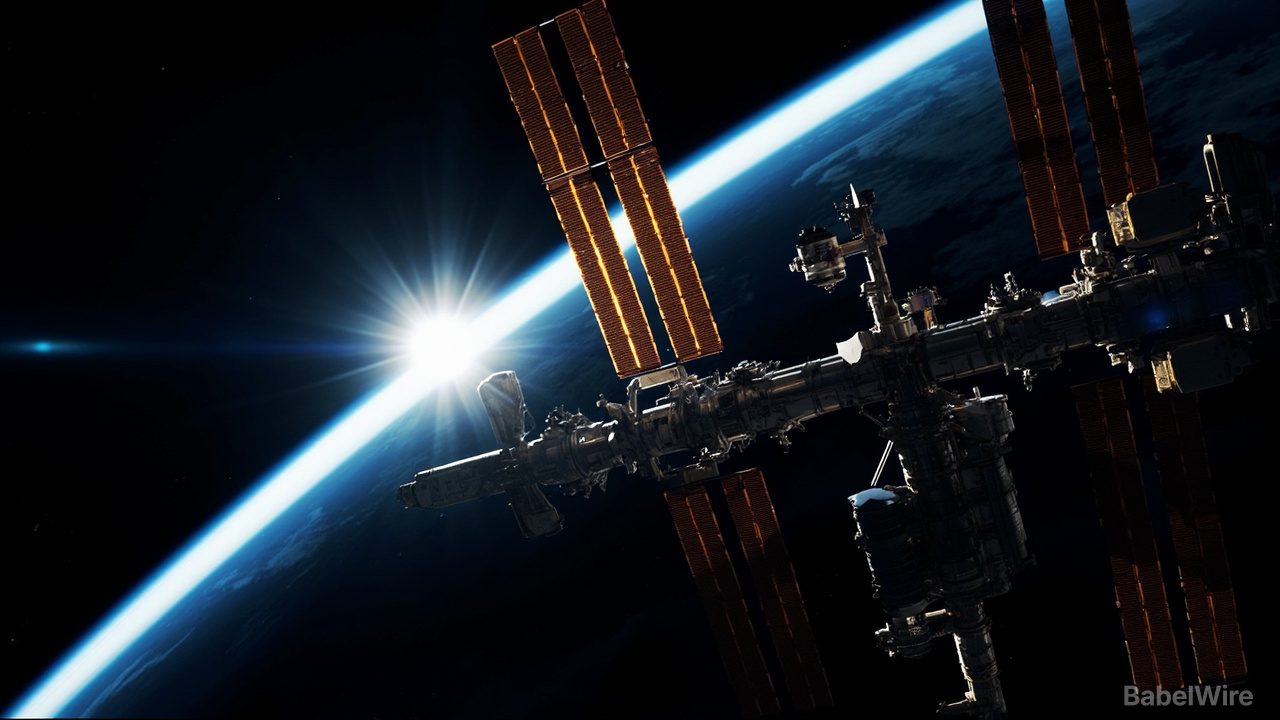
On 29 October, NASA astronaut Anil Menon and CSA astronaut Joshua Kutryk left the airlock and worked outside for seven hours and eleven minutes on the station's port truss. They installed the seventh of eight International Space Station Roll-Out Solar Arrays on the 2A power channel. That is unremarkable until you read what the extra electricity is for.
The eighth and final wing is due onto the 3B channel on 5 November. After that, NASA says available power rises by up to 30 percent, from about 160 kilowatts to roughly 215. The agency does not justify the upgrade with new experiments. It justifies it with critical operations, including a safe and controlled deorbit.
That is the substance of the announcement. The station has been preparing for its own end for years, and a controlled reentry of an object this size is not a passive event. It needs attitude control, propulsion, communications and thermal control running at once — systems that all draw on the same power budget. As the power system ages, so does the ability to end the station in an orderly way.
The IROSA units are an interesting compromise. Rather than replace the original wings, flexible blankets unroll over their existing masts; each is roughly half the size of an original array and still delivers comparable power, because the cells are more efficient. Eight of them amount to an upgrade without a teardown — an approach the rest of the space industry might study, since it avoids the most expensive work in orbit: removing something.
The tempo is worth noting too. The 29 October spacewalk was the 285th in support of station assembly, maintenance and upgrades, and the 100th US spacewalk; it was Menon's fourth and Kutryk's first. A station that once needed three such excursions a month now gets by on a handful a year, and spends them on ageing rather than expansion.
What happens after the station remains open. NASA intends to bring it down with a dedicated deorbit vehicle rather than leave the job to cargo craft or chance. Whether the power margin now installed is enough depends on how much of it is consumed by degradation and new instruments in the years between. The 5 November spacewalk closes a construction site opened in 2021 — and opens the question of how long the rest of the infrastructure carries the bill.
Sources
- nasa.govNASA: Spacewalkers install roll-out solar array for power generation
- spaceflightnow.comSpaceflight Now: NASA nears end of space station solar array upgrade
- sciencedaily.comScienceDaily: Astronauts just gave the International Space Station a powerful upgrade
- golem.deGolem: ISS — neue Solarpanels sollen sicheren Absturz unterstützen