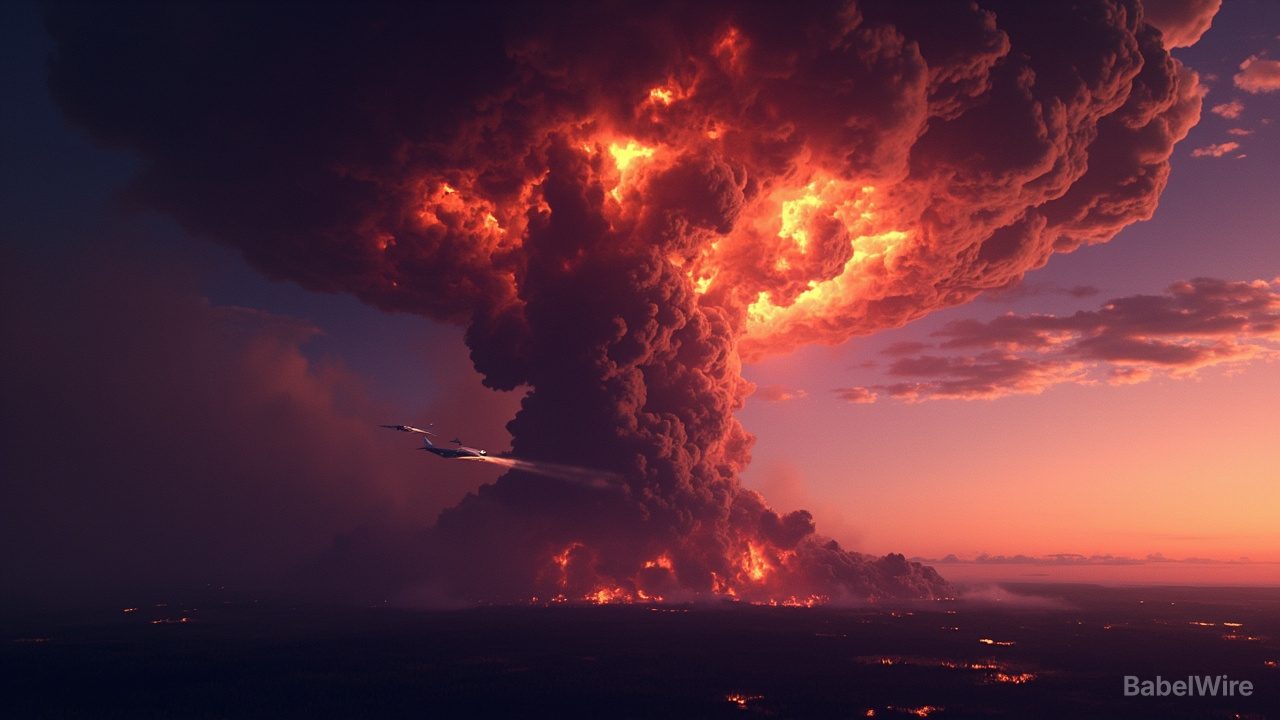
A Gulfstream V research jet is undergoing final checks in a hangar in Broomfield, Colorado, before setting out on a NASA-led campaign to fly through "fire clouds" — towering pyrocumulonimbus formations spawned by extreme wildfires that are currently burning across France, Spain and the Pacific Northwest.
Known as pyroCbs, these mushroom-shaped plumes can make their own weather, generating winds and lightning that can ignite new fires. They also loft smoke into the stratosphere, the layer stretching from roughly 10 to 50 kilometres above the surface, where it spreads readily around the globe, eats away at Earth's protective ozone layer and influences weather and climate. Yet scientists have so far collected only one fresh smoke sample from a pyroCb's stratospheric plume; everything else comes from opportunistic "sniff tests" by planes flying for other purposes. "This time, it's going to be more than a sniff," says David Peterson, the campaign's principal investigator at the US Naval Research Laboratory.
Named INSPYRE — the Injected Smoke and Pyrocumulonimbus Experiment — the mission brings together more than 150 researchers from US universities, NASA and the Navy. NCAR's Gulfstream V will grab fresh smoke samples with on-board air scrubbers, while a NASA high-flying jet scans the clouds with infrared instruments from above and ground teams deploy mobile radars and weather balloons to measure the conditions fuelling the clouds. Forecasters at the University of Utah have been practising all summer to predict where pyroCbs will form. The campaign runs until 10 September, with more fieldwork scheduled next year — and its first flight could target fires in Oregon as soon as this week.