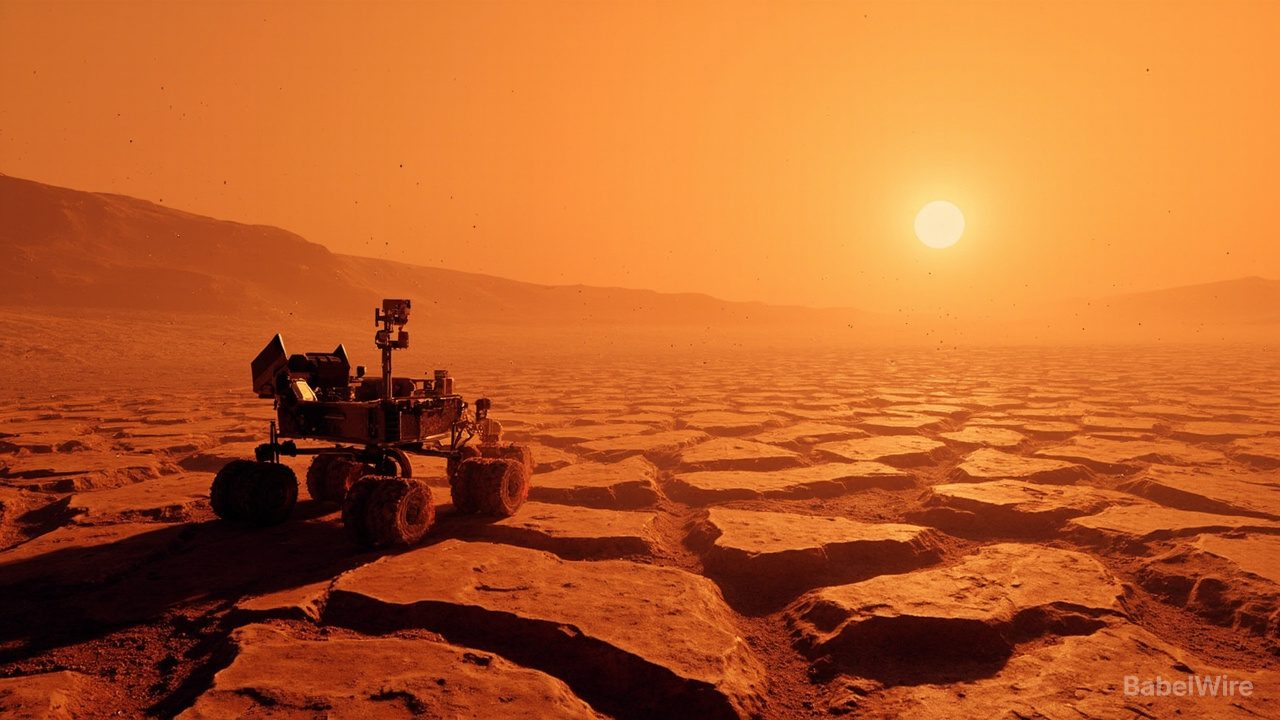
As NASA's Curiosity rover began climbing up a Martian valley nicknamed 'Valle Grande,' it sent back images that stunned mission scientists: a sweeping 'sea' of honeycomb-like textures stretching in all directions for as far as the rover can see.
The geometric shapes, known as polygonal fractures, measure about 1.5 to 3 inches (4 to 8 centimeters) across. While the mission has spotted small patches of these patterns several times before, nothing on this scale — a 360-degree panorama captured on June 19 and 20, sols 4,930 and 4,931 — has ever been seen. The polygons even wrap around the sides of a nearby 20-foot (6-meter) sand-capped butte nicknamed 'Miraflores.'
'We've seen a lot of fascinating landscapes through Curiosity's eyes, but this sea of polygons took our breath away,' said Ashwin Vasavada, the mission's project scientist at NASA's Jet Propulsion Laboratory. 'We measured their shapes and chemistry carefully and are hopeful there are clues in the data as to how these features formed.'
Polygonal fractures can form through multiple processes, including mud cracking, cycles of warm and cold temperatures, or compression that squeezed water out of sediment when the surface was buried. The discovery adds to Curiosity's 14 years of surprises since landing in 2012 — and to evidence that ancient Mars had lakes, streams and chemistry capable of supporting microbial life.