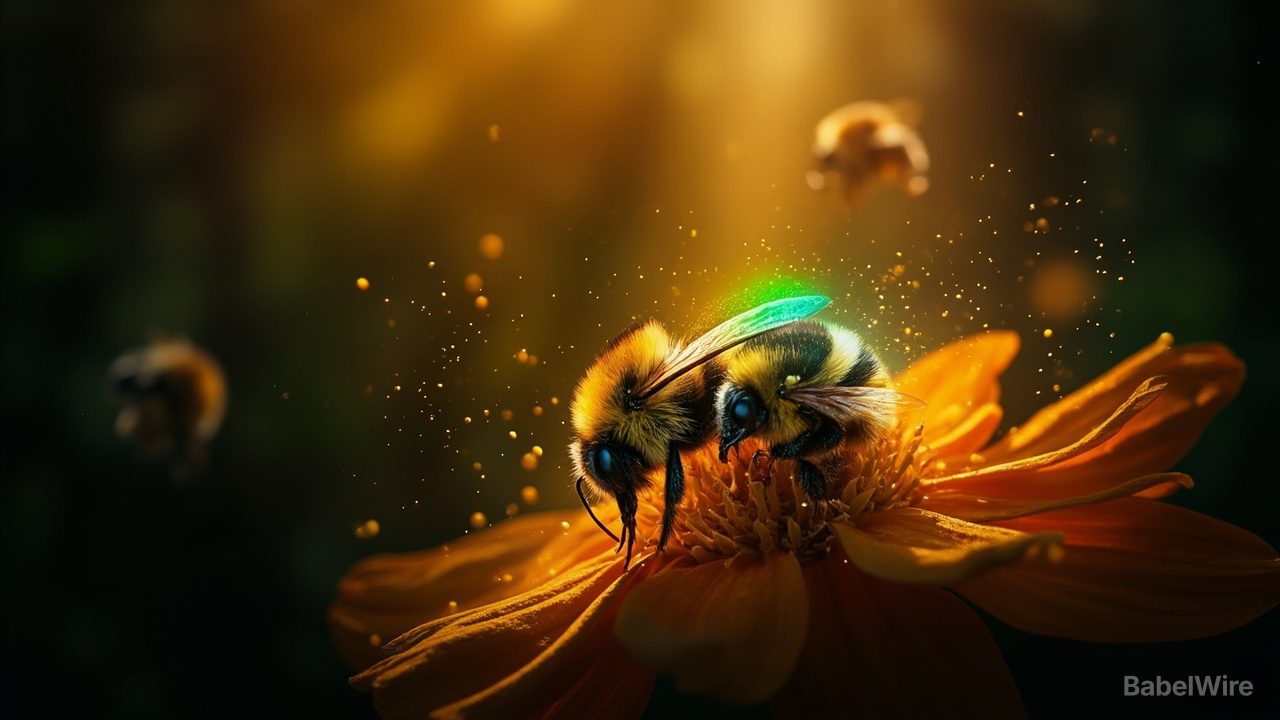
Bumblebees are accumulating dramatically higher levels of toxic heavy metals than honeybees — even when both species forage in exactly the same places — according to new research from Newcastle University and the University of Cambridge.
The study found that bumblebees collected up to seven times more heavy metals, including lead, copper, and zinc, in their pollen loads compared to honeybees sharing the same foraging grounds. The findings raise serious concerns about how hidden soil and air pollution may be silently harming vital pollinator populations, potentially reducing their ability to find food, reproduce, and maintain healthy colonies.
The key difference lies in foraging behavior. Honeybees are generalist foragers with large colonies and communicate food sources to nestmates, allowing them to selectively avoid contaminated flowers. Bumblebees, by contrast, have smaller colonies, shorter foraging ranges, and are less selective about which flowers they visit — making them more vulnerable to polluted environments.
"Our research shows that different bee species can have very different exposures to pollution, even when they appear to be living side by side," said researchers involved in the study. "This hidden contamination could quietly reduce their ability to thrive."
Heavy metal pollution in soils and the air can accumulate in plants and flowers, where foraging bees then pick up contaminated pollen and nectar. At high concentrations, heavy metals can impair bee neurological function, reduce foraging efficiency, compromise immune systems, and decrease reproductive success.
The findings underscore the importance of considering pollution exposure when designing conservation strategies for different pollinator species. Since bumblebees are already facing population declines linked to habitat loss, pesticides, and climate change, heavy metal contamination represents an additional, largely overlooked threat.
The study adds to growing evidence that environmental pollution impacts insect biodiversity in ways that are often invisible until populations have already collapsed.