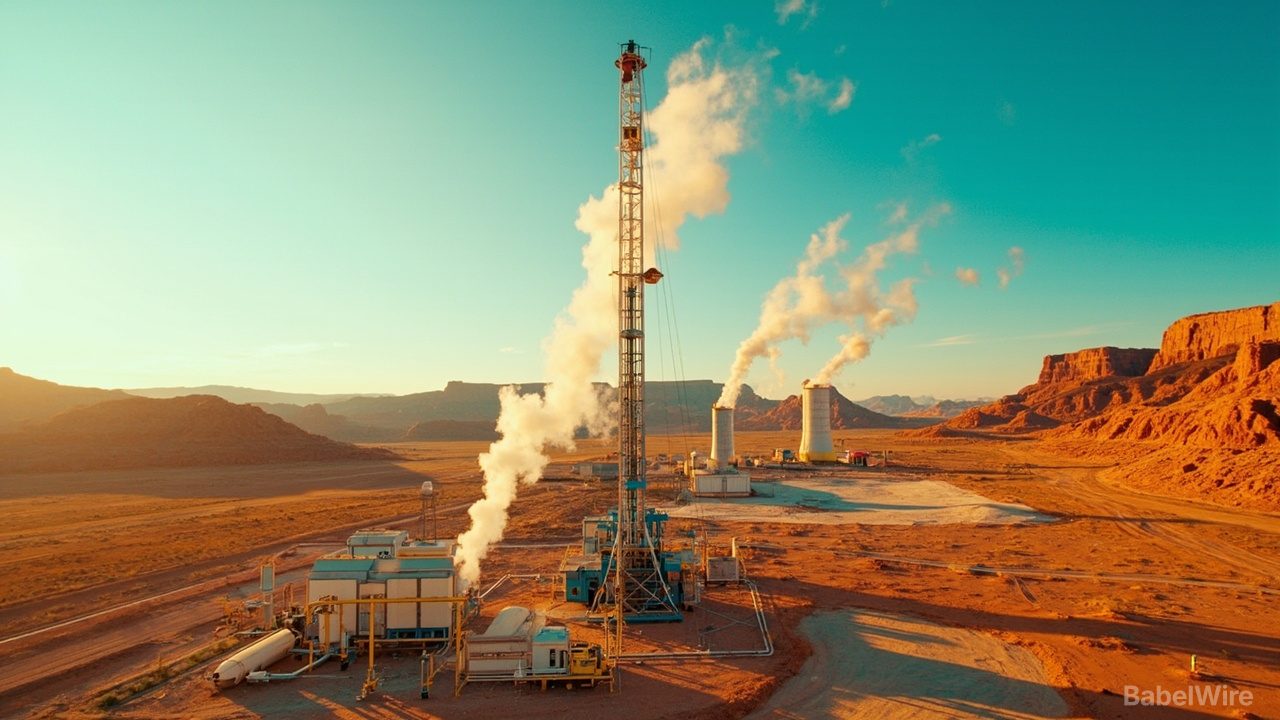
Houston-based Fervo Energy has brought the first block of its Cape Station project in Utah online, turning a technology long confined to pilot projects into utility-scale power. According to reports, the 33-megawatt unit reached commercial operation a day ahead of schedule, after 23 months of construction.
The significance lies in what 'enhanced geothermal' means. Conventional geothermal plants need naturally occurring hot water or steam close to the surface, which limits them to a handful of geographies. Enhanced geothermal systems (EGS) instead drill deep into hot, dry rock and inject fluid under pressure to create a fracture network, then circulate water through it to drive turbines — a design that could work almost anywhere with enough heat at depth.
Cape Station is described as the first such plant at utility scale to deliver power to the grid. Reporting on the project puts its build-out plan at 500 megawatts, with some of that capacity contracted to Google, and the wider development carrying a price tag in the region of two billion dollars.
If the model holds, it matters for the AI build-out as much as for climate targets: data-centre operators are hunting for firm, carbon-free power that, unlike solar and wind, is available around the clock. Fervo has said later phases should connect to the grid faster than the first.
Caveats remain. EGS has a short operating record, and induced seismicity, water use and cost per megawatt are open questions the first commercial plants will now begin to answer with real data.