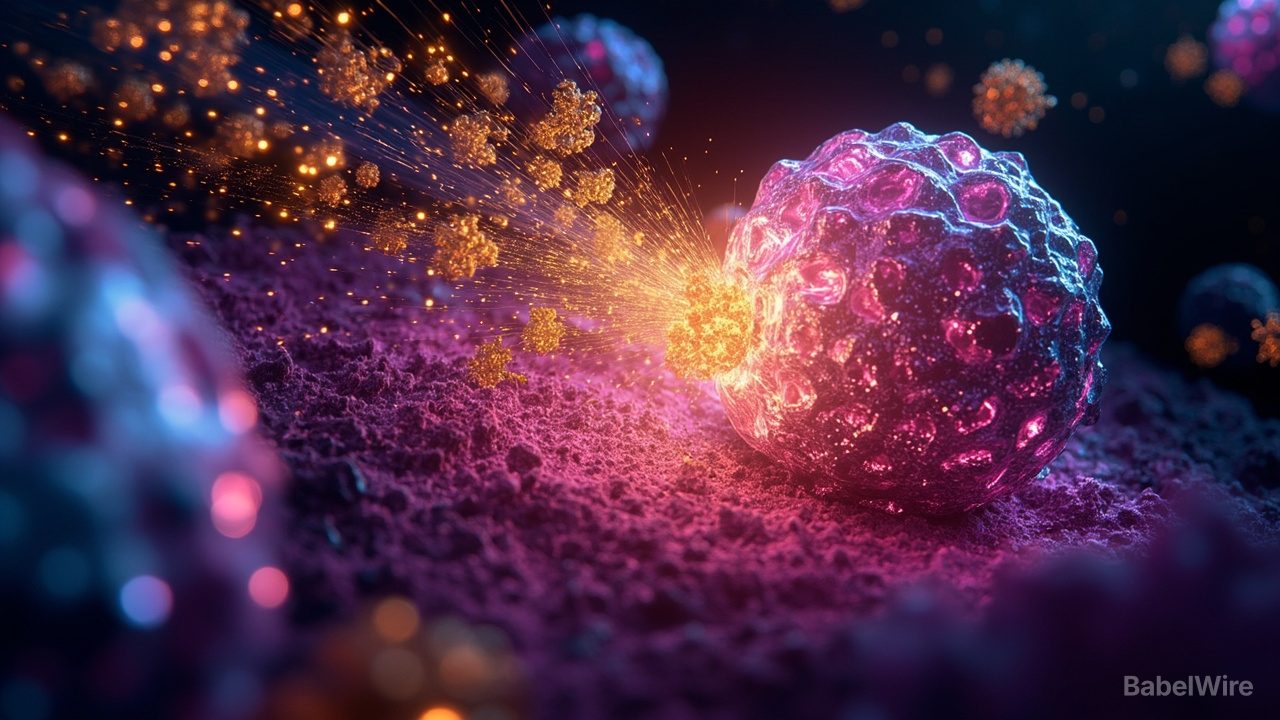
In a breakthrough that turns one of cancer's own inhabitants against it, researchers at the University of Illinois Chicago have developed a new anti-cancer therapy inspired by bacteria that naturally live inside tumors. The therapy, a synthetic peptide called aurB, effectively shut down tumor growth in animal models of prostate cancer when combined with radiation — with no signs of toxicity.
The study, published in the journal Signal Transduction and Targeted Therapy and featured by ScienceDaily on July 7, represents a novel approach that targets cancer at its most fundamental level: the mitochondria, the tiny power plants that fuel cell growth.
"The mitochondria are very important for a cell to survive; they are the energy factories," said Dr. Tohru Yamada, senior author and associate professor at UIC's College of Medicine. "Many cancer cells exhibit altered mitochondrial number and activity, because a cancer cell has to grow aggressively and rapidly. Therefore, the mitochondria would be an ideal target for cancer therapy."
The team began by analyzing DNA from breast tumor samples to identify which bacteria reside within them. One bacterium stood out — it contained a cupredoxin protein called auracyanin, a copper-containing protein involved in electron transport. The researchers synthesized a peptide mimicking this protein and named it aurB.
Molecular experiments revealed that aurB works by entering tumor cells and binding directly to ATP synthase, the enzyme responsible for producing the cell's main energy currency. By blocking this process, aurB effectively starves the cancer cells.
When tested in p53-inactive cell lines and mouse models of hormone therapy-resistant prostate cancer — notoriously difficult to treat — the combination of aurB with radiation significantly decreased tumor growth. Importantly, the therapy showed no apparent toxicity to healthy tissues.
"The combination significantly enhanced the activity of the peptide and the tumor became much smaller," Yamada said. "This approach is promising."
Crucially, unlike previous bacterial-inspired cancer therapies, aurB does not rely on the p53 tumor-suppressor gene, which is mutated in many cancers. This makes it potentially effective against a broader range of tumors regardless of p53 status.
The team has patented aurB and is exploring pathways to human clinical trials. Yamada believes this is just the beginning: "There are many other bacterial proteins that could be a source of cancer drugs. We simply haven't tried them yet."