Console launches are usually stories about chips. This one may be a story about commodity memory.
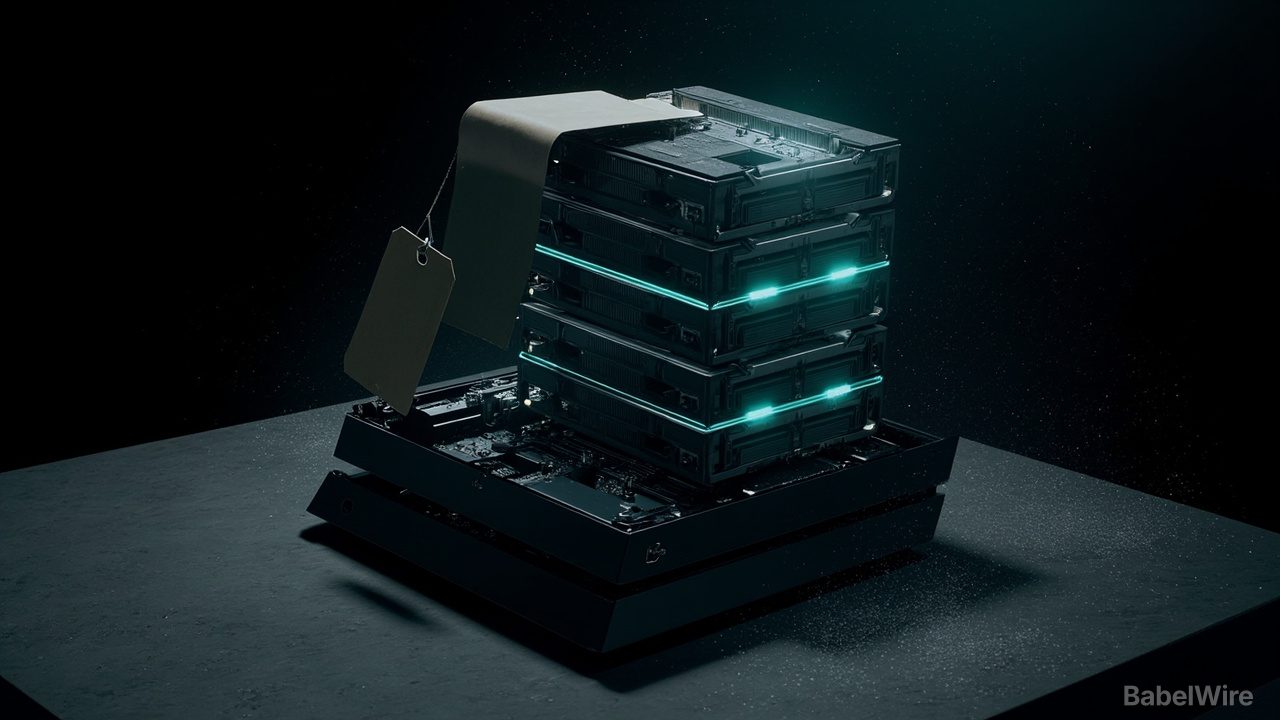
A leak reported by Golem puts the RAM and SSD for the PlayStation 6 at more than $680 combined. Read that number carefully, because it is easy to misread: it is a component figure for two line items, not a bill of materials and certainly not a retail price. The console still needs an APU, a cooling system, a chassis, a power supply, a controller, assembly, shipping and a retail margin. A figure of that size for memory alone implies a machine priced well past anything a PlayStation has launched at.
The context is what makes it credible rather than exotic. Memory has been the quiet crisis of 2025 and 2026. The datacentre buildout behind AI training and inference has consumed DRAM and NAND capacity at a rate the consumer electronics industry did not plan for, and contract prices have moved accordingly. When hyperscalers buy memory, they buy it by the warehouse and they buy it first; device makers get the remainder at a price set by someone else's demand curve. Both Sony and Microsoft have already raised prices on their current consoles in multiple markets, in some cases more than once — a thing that almost never happened in earlier generations, where prices fell over a console's life.
For a console specifically this is worse than it looks, for a structural reason. Consoles are the last mass-market hardware sold on a razor-and-blades model: the box is priced near or below cost, and the money is made on software, subscriptions and store commissions. That model can absorb a chip cost overrun, because chip costs fall with process maturity and volume. It absorbs a memory shock far less gracefully, because DRAM and NAND are commodities whose price is set by a market the console maker does not participate in — and whose marginal buyer is now a company building datacentres.
The strategic consequence is different from a delay. A delay is recoverable. A pricing reset is not: once a generation launches at $700 or above, the proposition that a console is the cheap way to play stops being automatically true, and the comparison set shifts to gaming PCs, handhelds and streaming. That is a much harder argument to win with a business model that has not changed in twenty years.
Two caveats belong in plain sight. This is a single leak, unverified, and leaks about unannounced hardware components should be treated as directional rather than precise. Sony has confirmed that work on a next-generation console is under way but has not announced a date or a price, so every figure attached to the PS6 is currently speculation with a decimal point.
What is not speculation is the direction of memory pricing, and that is the part console buyers should care about. Even if this specific number is wrong by a third, the shape of the problem holds: the cost of the boring parts of a console — the RAM, the flash storage — is now a bigger planning risk than the cost of the interesting one.