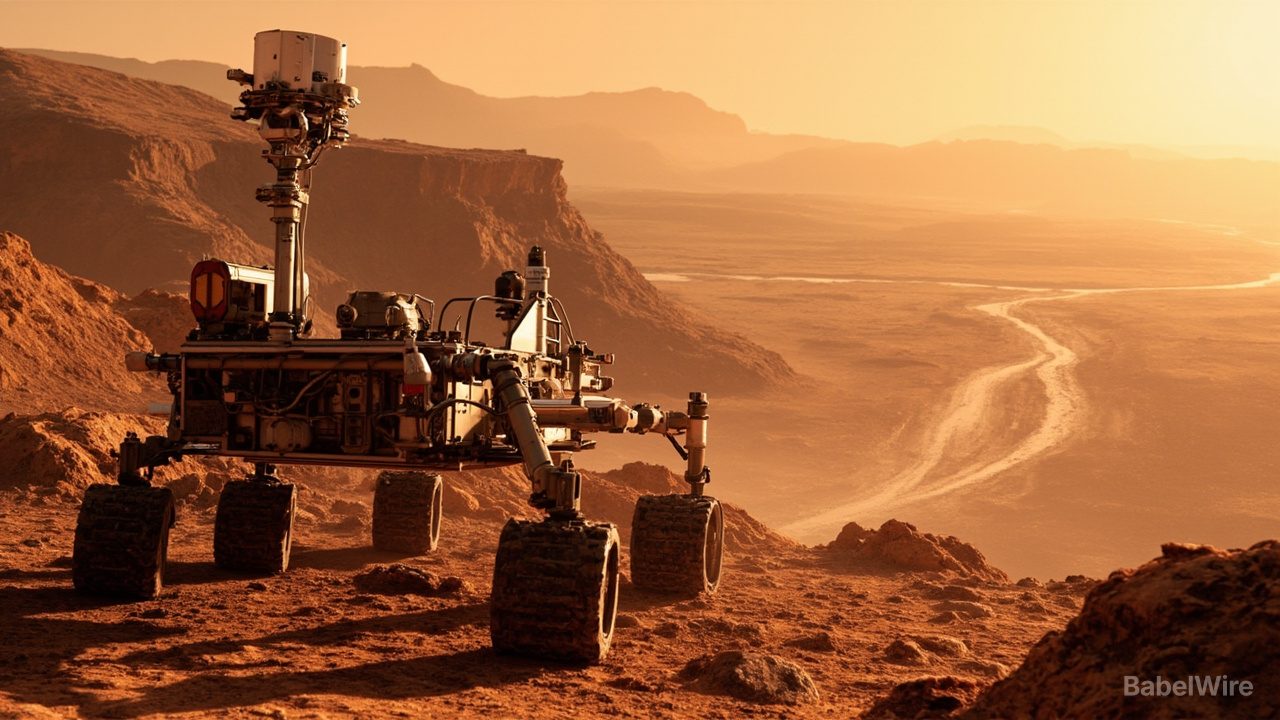
NASA's Perseverance rover has detected complex carbon molecules in Martian rocks along a dried-up river that carried water into the planet's Jezero crater billions of years ago, according to a study published in Science Advances.
Measurements from the rover's Sherloc instrument identified organic carbon — known as macromolecular carbon (MMC) — in mudstones from the Bright Angel outcrop as Perseverance trundled along Neretva Vallis, the ancient riverbed. MMC can originate from living organisms such as fossilized microbial matter, though geological processes and meteorite impacts can also produce it.
The mudstone rocks at Bright Angel caused a stir in 2024 when Perseverance discovered intriguing surface spots and nodules resembling features produced by fossilized microbes on Earth. Sean Duffy, then acting head of NASA, said at the time: "This very well could be the clearest sign of life that we've ever found on Mars."
Tests on the Cheyava Falls mudstone revealed macromolecular carbon on its surface, suggesting it was recently exposed to the Martian environment or resistant to radiation and chemical oxidation that typically destroy organic compounds on the dusty landscape.
The discovery means NASA rovers have now found organic-bearing mudstones more than 2,000 miles apart on Mars — the others were reported by the Curiosity rover exploring Gale crater. The authors write that this "indicates that the habitability of Mars, and the availability of organics, may have been widespread across the planet billions of years ago."
NASA's rovers are not equipped to determine whether the carbon came from ancient microbes or nonbiological processes. Definitive answers would require Earth-based laboratory analysis of returned samples. NASA's Mars sample return mission was effectively scrapped in January, though a revised mission is now being planned for the 2030s. China is aiming to return its own Martian samples in 2031.
"The best way to determine the biogenicity of these rocks is to conduct these follow-up analyses on Earth," said Dr. Kyle Uckert, a research scientist at NASA's Jet Propulsion Lab and co-author on the study.