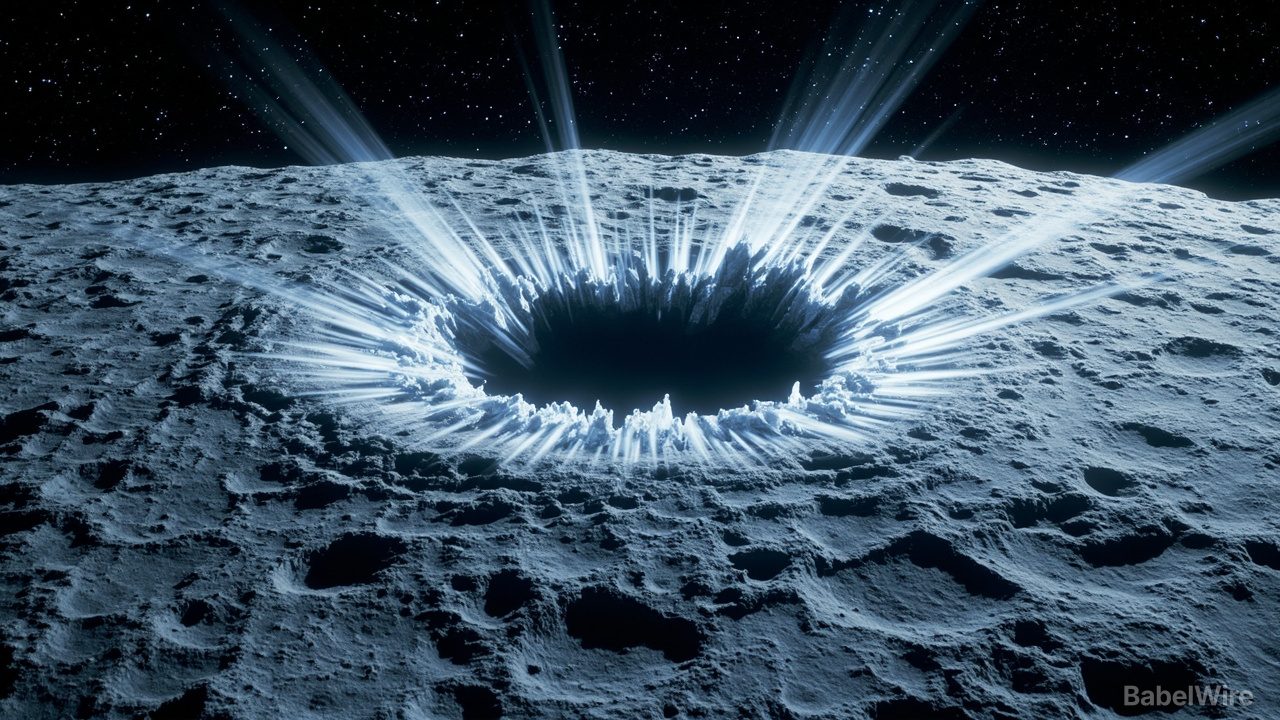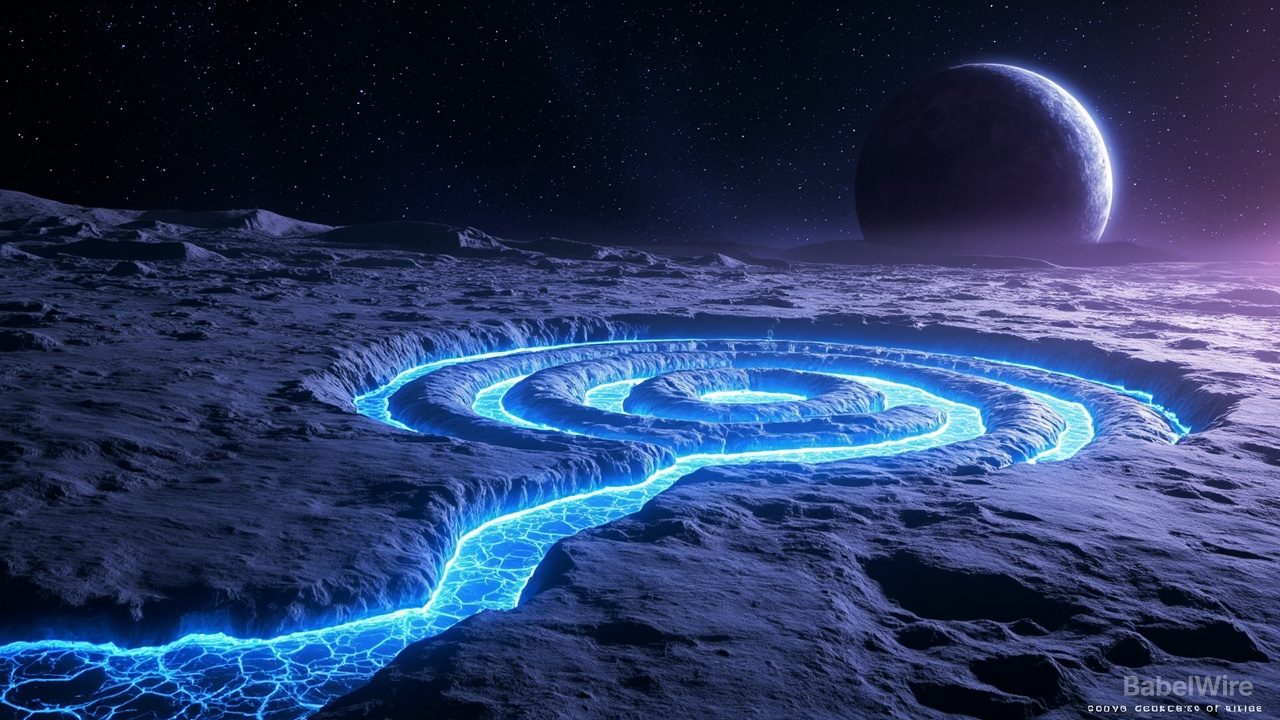
Water ice buried deep inside the moon's shadowed polar craters may be findable simply by listening to the right vibrations. A study published July 31 in Science Advances by geologists at the University of Maryland, Lawrence Berkeley National Laboratory and the University of Hawaii shows that seismic waves could locate and map ice hidden beneath the lunar surface.
Frozen soil and dry soil behave very differently when a seismic wave passes through them: ice stiffens whatever it is mixed into, making vibrations travel two to three times faster than through dry dirt, and ice-rich zones can bounce seismic energy back like an echo off a wall. The team tested the idea three ways — freezing crushed volcanic rock from Arizona that mimics moon dust and X-raying how ice settles into the gaps between grains, modeling temperature maps of the moon's south polar region to identify craters cold enough to preserve ice for billions of years, and running computer simulations of small moonquakes rippling through underground ice. In every case, the ice left clear and measurable marks on the seismic data.
The timing is pivotal: NASA's Artemis program is targeting the moon's south polar region for crewed landings in 2028, and buried ice could provide drinking water, breathable oxygen and rocket fuel — resources that would let missions live off the land instead of hauling supplies from Earth. China's Chang'e-7 mission, which carries a seismometer, is expected to land near Shackleton Crater in late 2026, in the vicinity of numerous suspected ice deposits, giving researchers a chance to test their predictions within a couple of years.
Beyond its practical value, lunar ice is a scientific archive. Because the moon's rocks date back roughly four billion years, ice trapped undisturbed in shadowed craters could reveal how water was delivered to the early solar system — and ultimately how Earth's oceans formed.