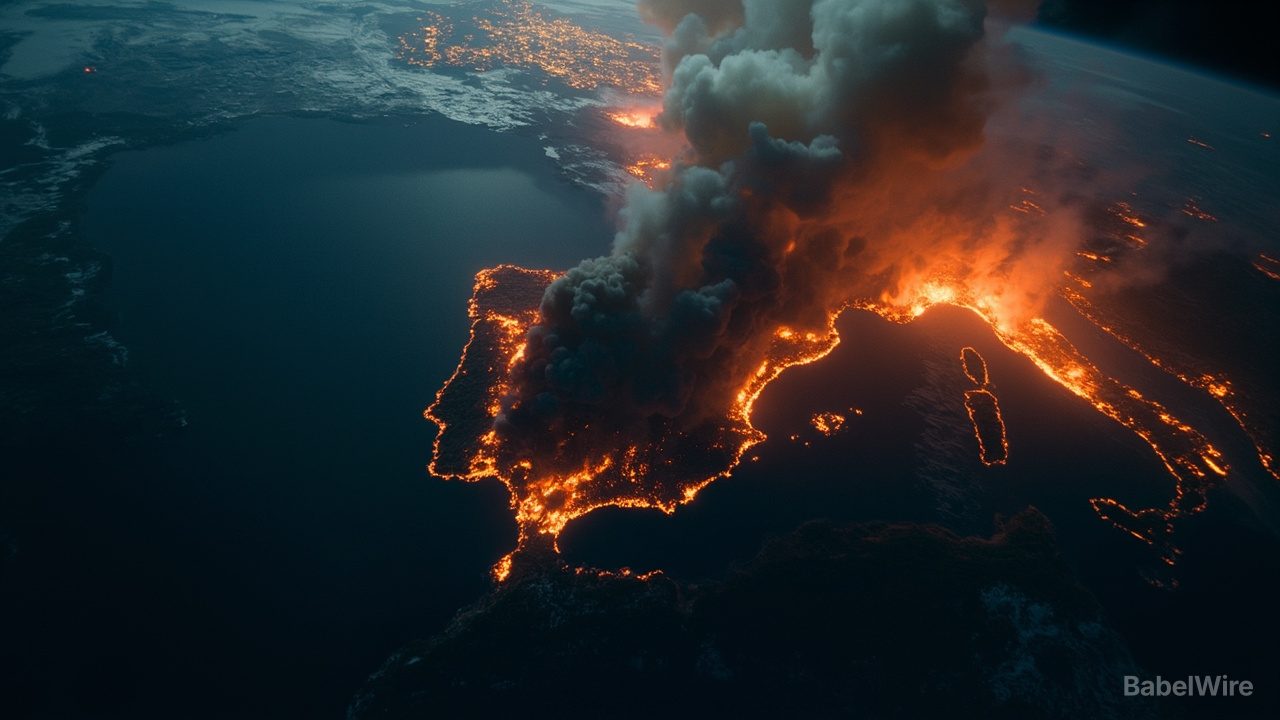
Satellite imagery is revealing the scale of the wildfires that have upended summer in Spain and France — including the largest fire ever recorded in Spain and the first 'fire cloud' ever documented from a French blaze.
NASA's Earth Observatory, using data from Landsat 9, released images on July 31 showing charred landscapes west of Madrid and around Bordeaux. The Spanish fire near Ávila, which began in mid-July, has burned around 50,000 hectares — the largest on record in the country's history, surpassing the 2025 Larouco blaze. By July 24 it had merged with neighboring fires, pushing the total burned area to 77,000 hectares, roughly the size of New York City. Hundreds of thousands of people were evacuated, and hundreds of homes were destroyed as flames tore through towns, campgrounds, and marinas around the Burgohondo reservoirs.
A similar crisis unfolded in southwestern France, west of Bordeaux. One of the largest fires of the decade there has charred more than 42,000 hectares and devastated the village of Le Porge. Across France, fires have burned more than 90,000 hectares — more than any season in decades, according to the European Forest Fire Information System. On July 25, conditions grew so intense near Bordeaux that French firefighters reported a pyrocumulonimbus, a towering 'fire cloud' that draws convective energy from the heat of a blaze. International fire scientists note it is the first ever reported from a fire in France.
Environmental analysis by The State of Wildfires Project explains why the landscape was primed to burn: unusually wet winter weather boosted vegetation growth, then a series of sweltering heat waves and drought parched it, and winds reaching 65 kilometers per hour provided the final trigger. Satellite monitoring confirms Europe is on track for its worst wildfire season ever recorded, with more than 250,000 hectares burned by late July.
Firefighters and military personnel in both countries gained the advantage by late July, allowing authorities to lift evacuation orders. But forecasters warn that hot, dry conditions persist, keeping the risk of new blazes high in the coming days.