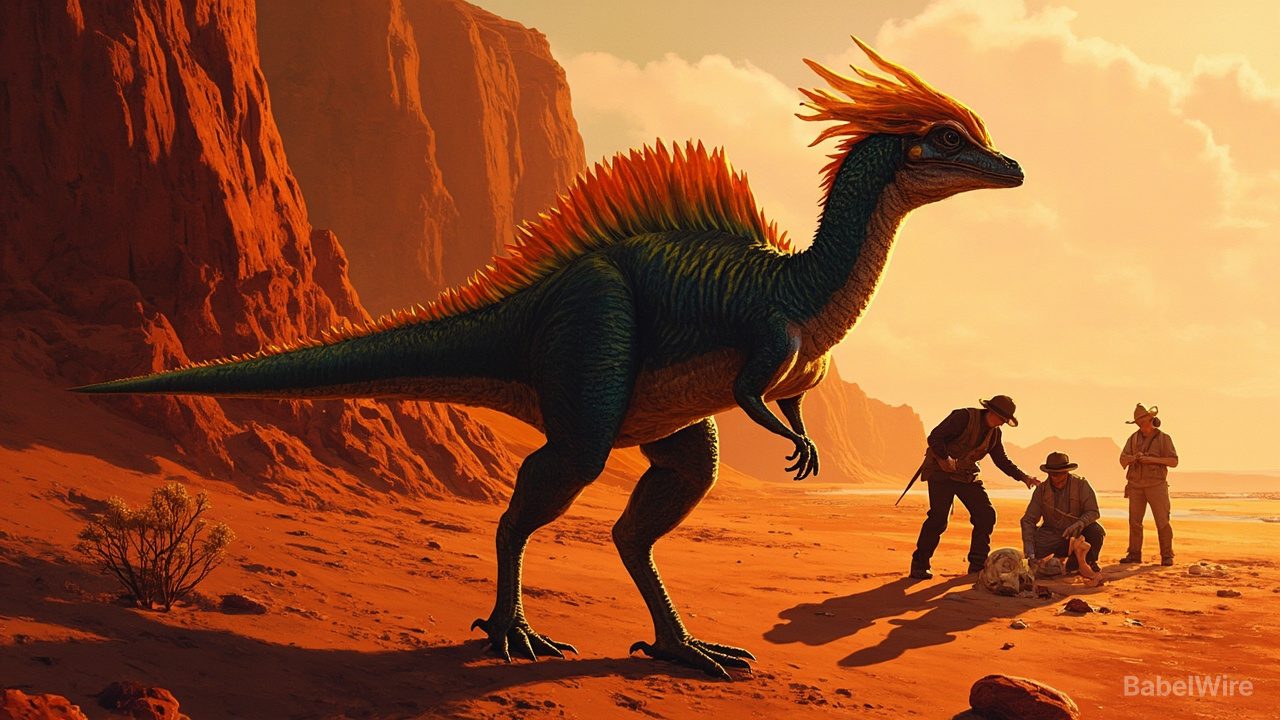
The New Mexico Museum of Natural History and Science announced Tuesday that its paleontologists had identified a new species of bird-like dinosaur, named Dinevenator robustus, from a fragment of skull discovered in San Juan County in 2005. The findings were published in the journal Fossil Studies.
The fossil, found by paleontologist Robert Sullivan south of Kirtland, was initially thought to belong to a dromaeosaur — a relative of Velociraptor. But colleague Steven Jasinski noticed the skull bone was thicker than any dromaeosaur's, and other features convinced him it was something new.
The name honors the Diné — the Navajo people — on whose lands the scientists were allowed to search for fossils. 'Venator' is Latin for 'hunter', and 'robustus' refers to the thickness that sets the animal apart within the troodontid family. Troodontids were two-legged, omnivorous dinosaurs that lived between 66 and 160 million years ago.
Jasinski described the animal as 'very robust, very thick, kind of beefy' for its group. The scientists estimate it measured 8 to 10 feet long and weighed 150 to 300 pounds, making it one of the largest known troodontids. It lived 70 to 75 million years ago, during the Late Cretaceous — a period of northwestern New Mexico that researchers say has been overlooked for over a century and is only now yielding its secrets.