Mars has been described as geologically dead for most of the time we have been looking at it. A paper published Wednesday in Science Advances argues that the better description is dormant.
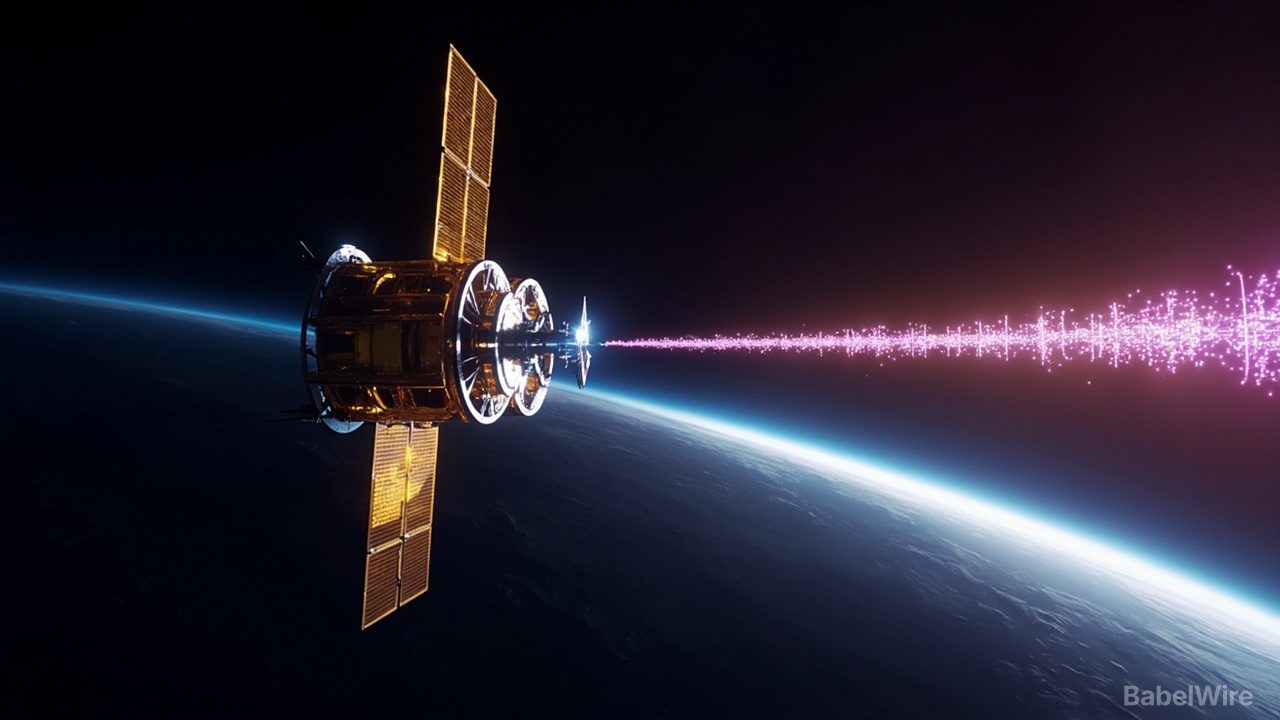
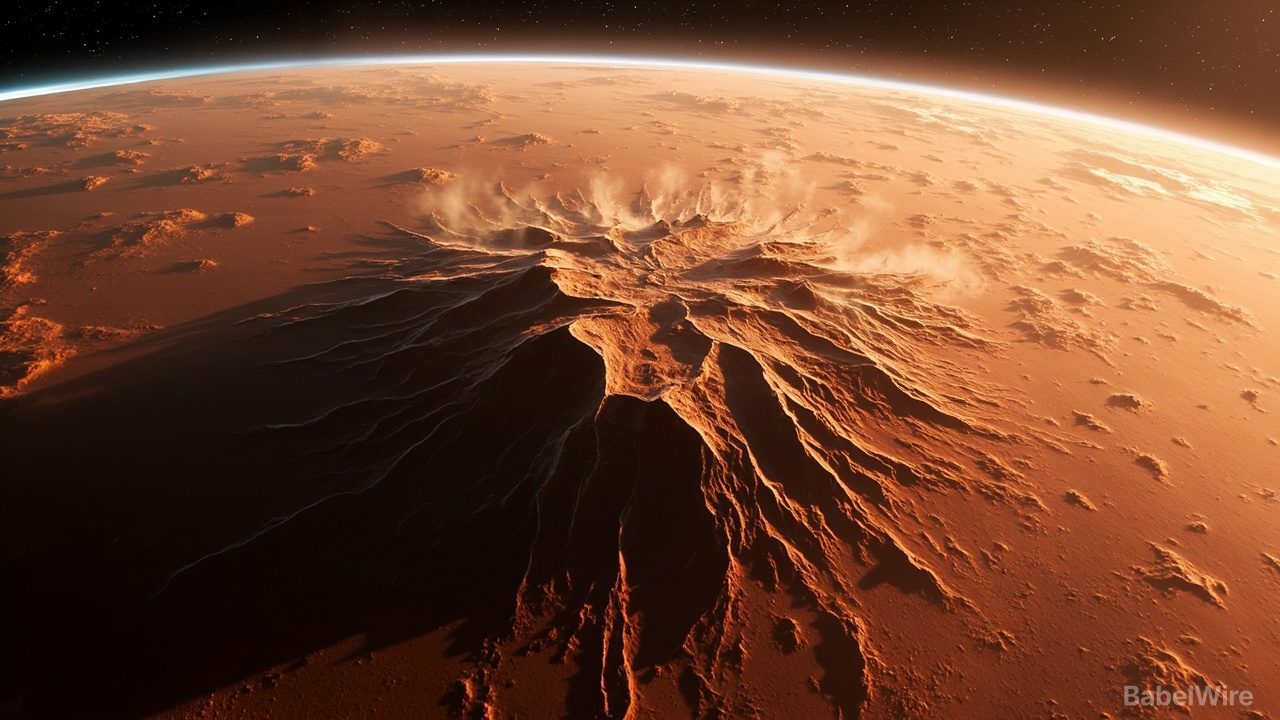
Using data from the European Space Agency's ExoMars Trace Gas Orbiter (TGO), an international team led by Alexander Trokhimovskiy of the Space Research Institute in Moscow and co-led by Daniel Mège of the Polish Academy of Sciences reports hydrogen chloride (HCl) in the Martian atmosphere above fissures on the flanks of Alba Mons, the largest volcano on Mars by surface area. The gas is a common component of volcanic emissions on Earth, where it is released as chlorine-bearing compounds in rising magma decompress.
The anomaly was seasonal before it was geological. Hydrogen chloride on Mars normally peaks in the northern hemisphere's winter and largely vanishes in summer, a pattern tied to the planet's dust and water cycles. But the TGO teams kept seeing spikes in early northern summer, always in the same place: over the Alba Mons fissures. That combination of timing and location should not happen.
The follow-up joined atmospheric chemistry to geology. TGO's Atmospheric Chemistry Suite traced the gas, and its CaSSIS camera found what the researchers describe as fresh, narrow fissures — in some cases hundreds of metres long — with associated colour changes on the surface, the kind of discolouration left around fumaroles on Earth. The preferred mechanism: magmatic gases rise through the cracks, are blocked by ice during the brutal Martian winter (down to about -120°C), and escape when that ice sublimates in early summer. The seepage is thought to connect to a dormant magma chamber — volcanic plumbing, not an eruption.
That distinction is the story. Mars hosts the tallest volcano in the solar system, Olympus Mons, and its surface was shaped by ancient volcanism. Orbital imagery suggests some flows are only a few million years old, and NASA's InSight seismometer detected marsquakes. But no one has ever observed an eruption or a new lava flow. Confirmed active volcanism in the solar system is an exclusive club: Earth, Venus and Jupiter's moon Io. This result would add a fourth body, quietly venting rather than erupting.
The caveats are real. The team's conclusion is that volcanic seepage is the most likely origin, reached by eliminating plausible atmospheric chemistry — not by sampling magma. A single instrument's spectral detections at the edge of sensitivity, interpreted through a seasonal model, is strong evidence but not a photograph of a vent. Independent confirmation would need either more TGO seasons or a landed instrument that can measure the gas and its isotopes near the source.
Why it matters beyond the volcano itself is heat, and therefore habitability. A magma chamber that still exists implies the crust retains enough thermal energy to drive hydrothermal systems: rising magma meeting underground water, creating warm, chemically rich pockets shielded from the surface. Life on Earth is thought to have begun in comparable settings. Mège has said that looking for Martian life in the seeping fissures of Alba Mons would make a lot of sense — a concrete target, not a metaphor.
It also reframes the planet's timeline. If Mars is merely sleeping, the window in which subsurface environments could have supported microbes may not be entirely closed. That does not mean anything is alive there. It means the search has a place to dig that is not a dried-up lakebed.
Sources
- science.orgScience Advances — Enigmatic HCl detections as a potential signature of igneous activity on Mars
- physics.ox.ac.ukUniversity of Oxford Department of Physics — European orbiter detects hints of volcanic activity on Mars
- reuters.comReuters — Pungent gas above Martian fissures hints at ongoing volcanism