When Spanish conquistadors arrived in the Americas in the late 15th century, they carried muskets, armor, horses — and an invisible weapon far more lethal: smallpox. Now, for the first time, scientists have recovered direct molecular evidence of the virus that devastated indigenous populations across Mesoamerica and South America.
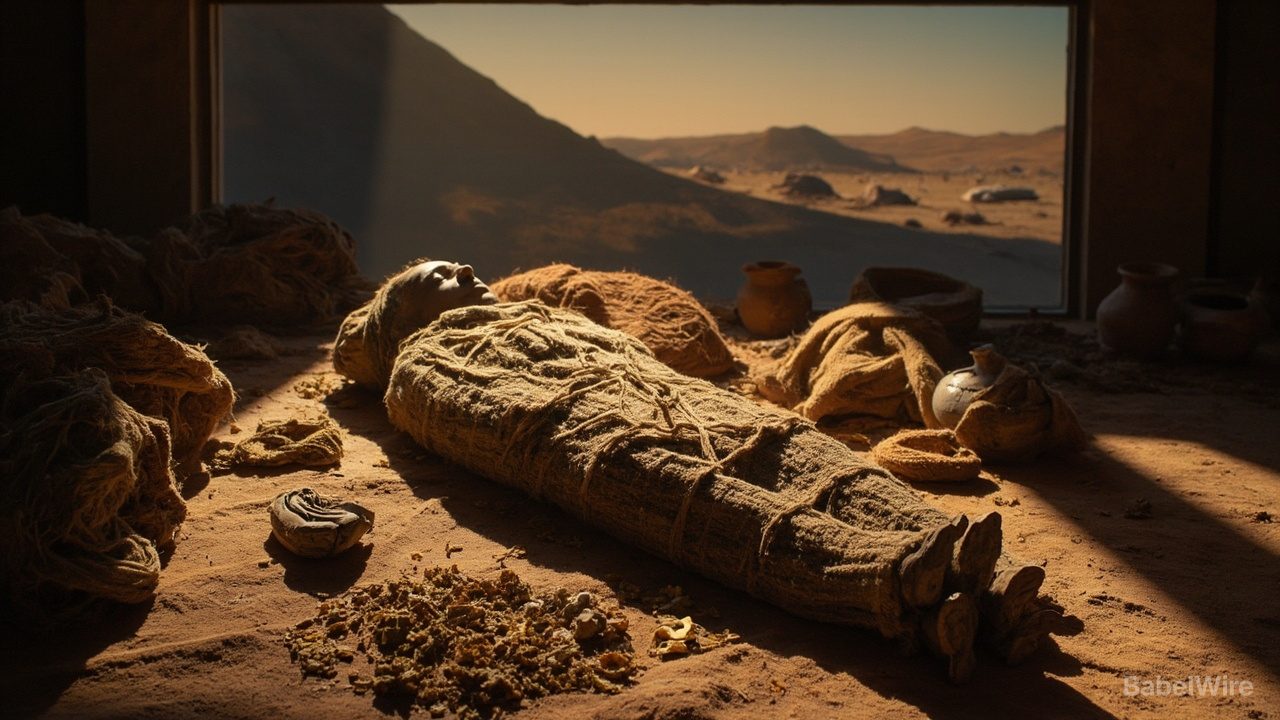
Researchers from Trinity College Dublin and the University of Chile extracted ancient variola virus DNA from two naturally mummified individuals found at the Inca archaeological site of Camarones 9, near the Pacific coast of northern Chile. One was a woman aged 30 to 35; the other a young man of 18 to 20. Both were buried in bundles wrapped in camelid wool blankets with accompanying grave goods.
The genomes, published Thursday in the journal Science, reveal an extinct lineage of the smallpox virus that sits evolutionarily between strains known from medieval Europe and those that circulated in later centuries. This places the virus squarely at the time of early Spanish colonization — the period when smallpox first ravaged the Americas.
'The earliest documented smallpox outbreak in the Americas occurred on the island of Hispaniola in 1518,' said lead author Bruno Romero Gonzalez, a geneticist at Trinity College Dublin. The virus triggered a catastrophic population collapse: in some estimates, smallpox and accompanying diseases killed roughly 90% of the indigenous people of the Americas.
Smallpox delivered not just physical devastation but a psychological blow. Its rapid and deadly spread — causing high fevers, bleeding pustules and severe disfigurement — led many indigenous people to believe their traditional gods had abandoned them against the spiritual force backing the Spanish invaders.
The analysis of the two genomes showed they were nearly identical, suggesting both victims were infected during the same outbreak or by the same circulating strain. Remarkably, the researchers found that the virus had undergone a long period of genetic evolution up to the 16th century, but that this evolution decelerated sharply during the major epidemics of Spanish colonization — only picking up again after the first vaccine was introduced in 1796.
This pattern suggests the virus had reached an evolutionary optimum, spreading efficiently through populations that had no prior immunity and thus no selective pressure to adapt further. It was, in evolutionary terms, already perfectly suited to its catastrophic mission.
The last naturally occurring smallpox case was recorded in Somalia in 1977, and the World Health Organization declared smallpox eradicated worldwide in 1980 — the first and still only human infectious disease to be eliminated. These ancient genomes now provide a window into the pathogen's evolutionary history that was previously inaccessible, revealing how colonial-era epidemics shaped viral evolution in real time.
Sources
- reuters.comSmallpox DNA recovered from Spanish conquest-era Chilean mummies — Reuters
- nytimes.comAncient Smallpox May Have Been More Diverse Than Expected — NYT
- eurekalert.orgAncient smallpox genomes reveal how European colonization shaped the virus — EurekAlert
- newscientist.comSmallpox DNA in ancient Inca mummies shows virus came from Europe — New Scientist