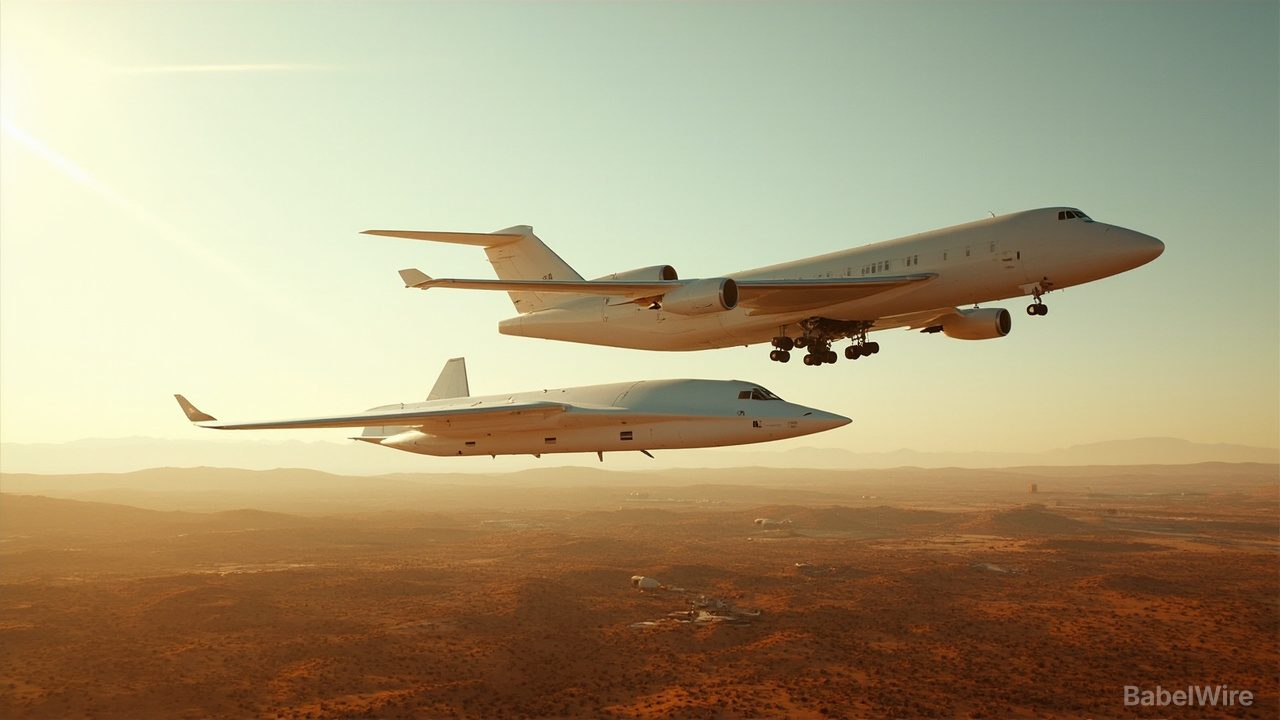
Virgin Galactic's first Delta-class spacecraft has a name, a destination and a revised date. The name is Apeiron, chosen by public poll. The destination is Spaceport America in New Mexico, where it arrived on Wednesday on a captive-carry flight under the company's Eve carrier aircraft, after leaving the factory in Mesa, Arizona.
The date is the problem. First commercial flight for the lead ship is now expected in early Q2 2027, the company said this week — later than the February 2027 target it set previously, which was itself later than the late-2026 plan before that. The second ship is expected to begin commercial operations in late Q2 or early Q3 2027.
Virgin Galactic attributes the slip to avionics software integration and validation, which it describes as an exhaustive testing process due to conclude at Spaceport America as the ship is readied for its flight test series. That is a plausible and specific explanation — and it is also the third revision of a schedule in roughly a year.
The gap matters commercially. VSS Unity, the SpaceShipTwo vehicle that carried the company's paying customers, was retired in June 2024. When Apeiron enters service, Virgin Galactic will have gone nearly three years without a commercial flight — and without the revenue that comes with it, in a business whose fixed costs (a spaceport, a carrier aircraft, a factory, engineering staff) do not pause.
The Delta class is the company's answer to the cadence problem that defined Unity. Unity was effectively hand-built and flew rarely; the Delta ships are designed for series production at Mesa, with the economics resting on flying often enough to spread those fixed costs across many tourists a year rather than a handful.
What Wednesday's rollout does not show is whether the software problem is closed. A captive-carry flight moves the vehicle; it does not fly it. The flight test series at Spaceport America is where avionics integration gets proven — and until it runs, the Q2 2027 date is a plan, not a schedule.
For customers holding reservations — some for well over a decade, at ticket prices that have climbed into the hundreds of thousands of dollars — the practical question is unchanged: the ship exists, it is in New Mexico, and what stands between them and the edge of space is now software validation rather than hardware.