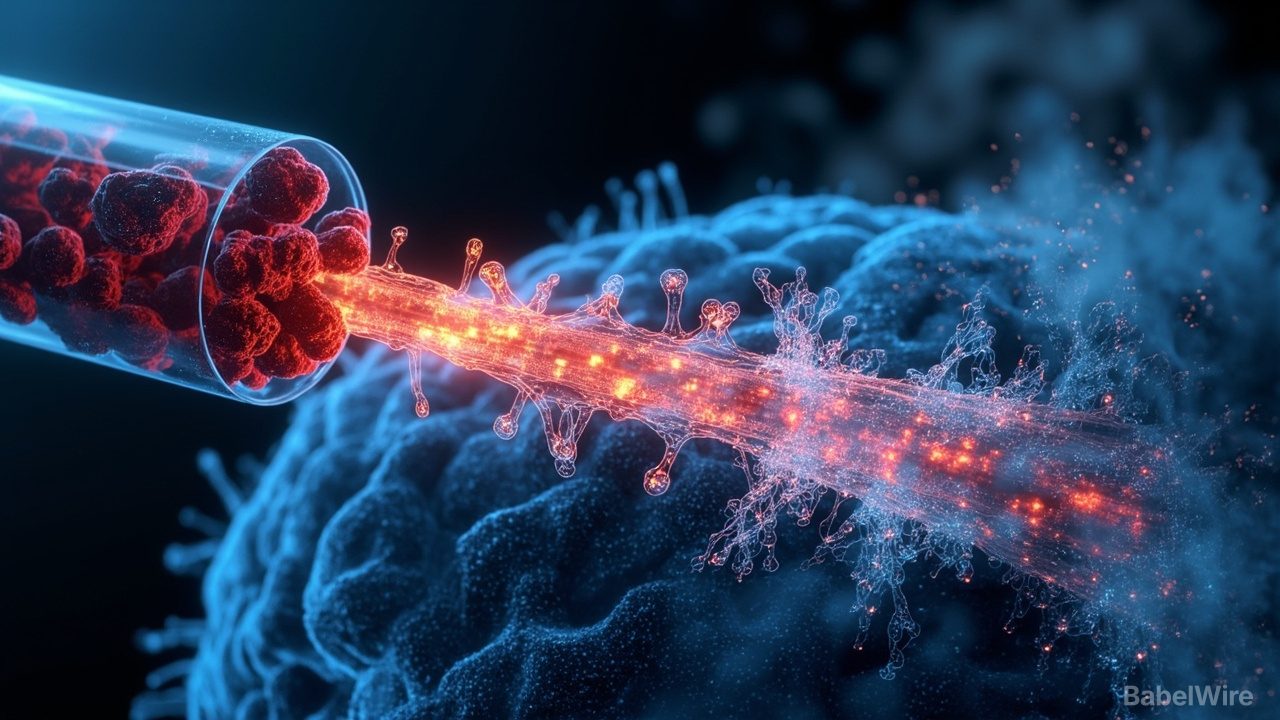
For decades, neuroscientists have treated the brain as an immune "closed system": its specialized defense cells, the microglia, were thought to be established before birth and self-sustaining for life. A new Stanford study published in Nature overturns that picture.
Researchers at Stanford Medicine found that large numbers of immune cells from the bloodstream begin entering the human brain as early as middle age — and once inside, they transform into microglia, taking their place among the brain's native immune population.
"We usually think of the brain as a closed system," said Julia Belk, a postdoctoral scholar in pathology and the study's first author. "What we found is that actually a lot of immune cells enter the human brain during aging."
The discovery grew out of an earlier finding: people carrying certain mutated blood-stem-cell clones — a condition called clonal hematopoiesis — were significantly less likely to develop Alzheimer's. That raised a heretical question: could blood-derived immune cells actually be interacting with the brain?
To find out, Belk, senior authors Siddhartha Jaiswal and Howard Chang, and colleagues compared immune cells from paired blood and post-mortem brain samples collected at Stanford and the University of Washington's Alzheimer's Disease Sequencing Project. Because immune cells divide constantly, the team traced their family trees using naturally accumulated DNA mutations as shared markers of ancestry — "somewhat like a consumer ancestry testing service," as Jaiswal put it.
Matching mutations in blood and brain cells confirmed that peripheral immune cells had entered the brain. The process appears to be uniquely human: the researchers found no evidence of it in mice or non-human primates.
Beyond rewriting the textbook view of brain immunity, the work suggests new therapeutic possibilities. If blood-derived immune cells can reach the brain, they might be engineered to seek out and break down the amyloid and tau aggregates associated with Alzheimer's disease — possibly given preventively, before damage accumulates.
"The life history of blood stem cells could influence the risk of brain diseases by altering the microglia," said Jaiswal, an associate professor of pathology at Stanford Medicine.
"I think this is exciting because this is also a uniquely human feature of aging that we had no idea about," Belk said.
Sources
- sciencedaily.comImmune cells flood into the aging brain, Stanford scientists discover — ScienceDaily
- news.stanford.eduResearchers rethink the aging brain's immune system — Stanford News
- brainresilience.stanford.eduAging brains welcome reinforcements from outside immune cells — Stanford Brain Resilience
- nih.govImmune cells cross blood-brain barrier during human aging — NIH Research Matters