Volkswagen and Audi are recalling around 954,000 vehicles in Germany — and roughly 2.86 million worldwide — to replace a single fastening screw that can corrode, shear off and, in the worst case, cost a driver the ability to steer.
Germany's Federal Motor Transport Authority (KBA) published the recall on 22 September 2026. It covers Volkswagen Golf, Golf Variant, Tiguan, Touran and Caddy models built between 24 September 2013 and 1 July 2024, and the Audi Q3 built between 31 October 2017 and 23 May 2024. Volkswagen accounts for 2,159,054 vehicles worldwide (895,832 of them in Germany); Audi for 696,547 (58,555 in Germany). The KBA lists the campaigns as 17016R for Volkswagen (manufacturer code 48VS) and 17014R for Audi (48LG).
How a bolt becomes a steering failure
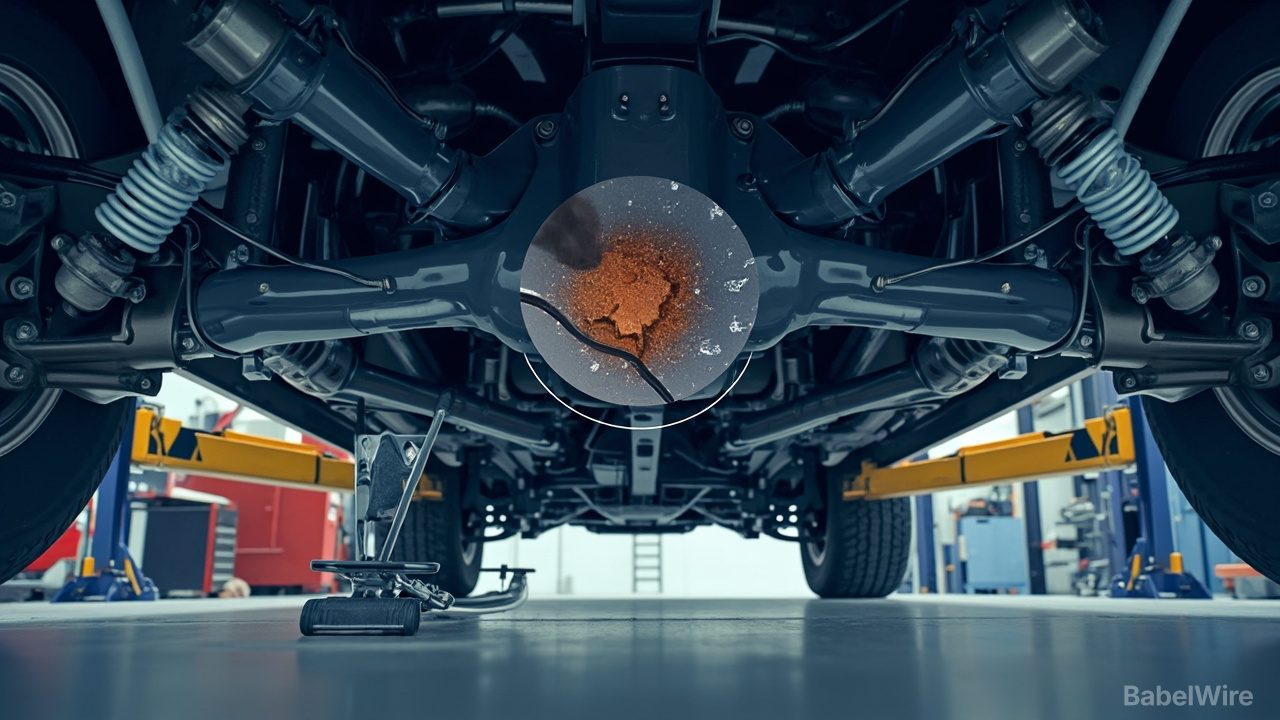
The part in question is the right-hand fastening screw connecting the rack-and-pinion steering gear to the front-axle subframe. Over a vehicle's life, moisture can reach the screw. Combined with oxygen and residues from road salt, that can cause corrosion that reduces the screw's effective cross-section. Under repeated high load — above all when manoeuvring and parking at low speed — the weakened screw head can snap.
A sheared screw does not mean instant loss of steering: the steering gear remains attached at a second mounting point. If that remaining connection is then stressed further, however, the gear housing itself can break — and at that point steering is gone. Neither the KBA nor the manufacturers list reliable early warning signs. Unusual play in the steering, a changed steering feel, or knocking and banging noises from the front axle could point to the problem; if they appear, the car should not be driven further but inspected by a workshop or towed.
The fix, and what owners should do
Dealers replace the existing screw with a more corrosion-resistant variant. For the parallel US recall, Volkswagen describes a screw with a highly corrosion-resistant polymer coating; whether the German campaign uses exactly the same specification is not clear from the available KBA documents, and Volkswagen has not published technical details such as material, strength class or tightening torque for the German market. The repair takes a little over an hour, according to media reports, and is free for owners.
Volkswagen estimates that only around one percent of the recalled vehicles actually have dangerously rusted screws; the large volume reflects a precautionary sweep of every combination of part and production window. The KBA says no injuries or damage have been linked to the German campaign so far — though that absence of reports is not proof that a failure is technically impossible.
Owners may keep driving until the appointment, but should book one promptly, avoid unnecessary trips and skip tight turning manoeuvres that load the steering. The decisive piece of information is the 17-digit vehicle identification number (VIN) in field E of the registration document — model year or first registration alone is not enough to tell whether a car is affected. Volkswagen owners can call 0800 8655792436 (recall code 48VS); Audi Q3 owners 0800 28 347 378 423 (48LG). Any authorised dealer can check the VIN. Used and imported cars keep the same VIN, so the check still works after a change of owner — and sellers should tell buyers about an open recall.
Ignoring a safety recall has consequences: the KBA can pass vehicle data to the registration authority, which may declare the car unfit for road use under §5 of the Vehicle Registration Ordinance. After a crash, an unaddressed recall can also become relevant to liability and insurance questions.