Venus has long been dismissed as a geologically dead world — a hellish neighbor with a runaway greenhouse atmosphere, scorching temperatures, and a surface thought to have frozen in time over 100 million years ago. New research from ETH Zurich shatters that assumption.
Published in Nature Geoscience, a study led by Master's student Xi Yang under Professor Taras Gerya at the Department of Earth and Planetary Sciences presents the first high-resolution, 3D computer simulations of Venus's rift valley systems. The results are unequivocal: Venus remains tectonically alive.
Rift Valleys on a Planetary Scale
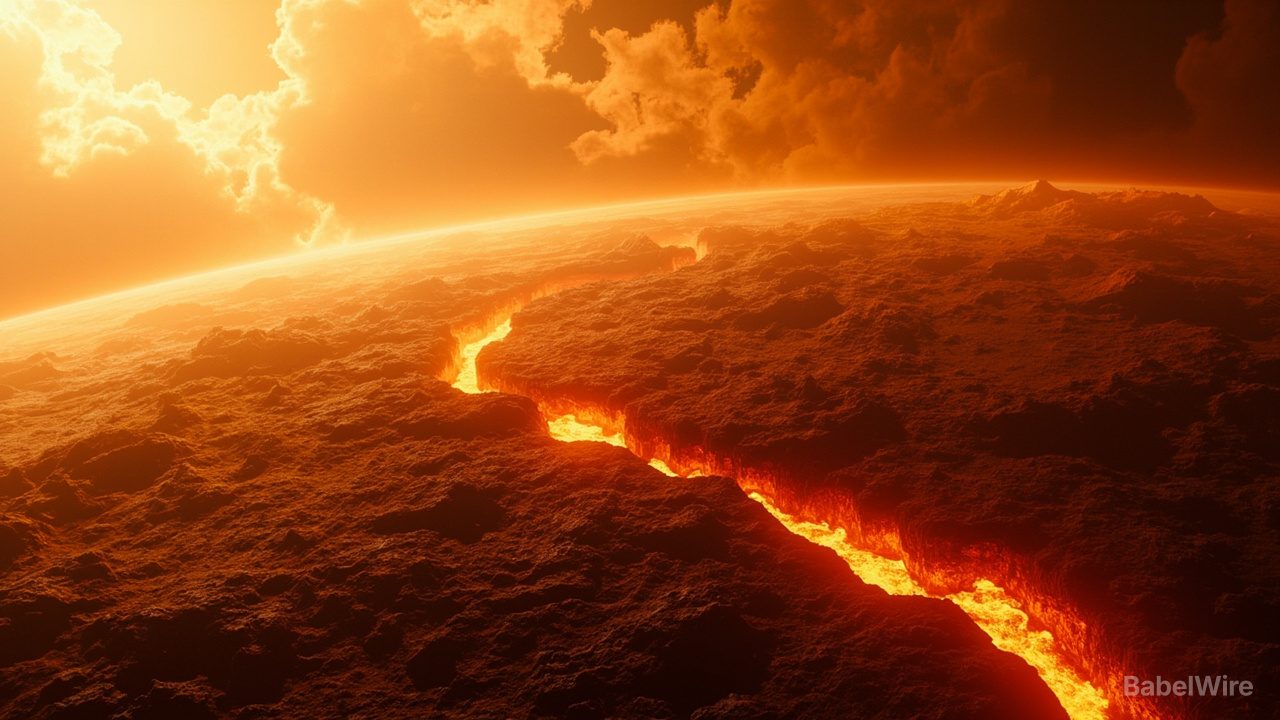
Venus hosts some of the largest rift valleys in the Solar System. These features — similar to the African Rift Valley on Earth — can span up to 10,000 kilometers across the Venusian surface. Until now, planetary scientists believed these rifts formed more than 100 million years ago and were mere remnants of a more active past.
The ETH team's 3D simulations tell a very different story. Their models show that broad ridges, known as rift flanks, form along the edges of rift valleys when the rifts are geologically young — either still actively moving or having only recently ceased motion. Critically, these rifts are widening at a rate of 3 to 10 centimeters per year, comparable to continental drift rates on Earth.
How the Flanks Reveal Age
The simulations demonstrate that rift flanks degrade over time through a process called crustal relaxation — distinct from erosion on Earth, where water and wind wear features down. On Venus, the flanks simply subside after tectonic movement stops. Wide, high flanks indicate youth; narrow, low flanks betray old age.
When the researchers compared their model output to actual radar images captured by NASA's Magellan probe in the 1990s, they found a perfect match: many Venusian rift flanks are broad and elevated, exactly as predicted for recently active features.
"The results help us to better assess the tectonic activity on Venus," says Professor Gerya. The study suggests some rift valleys formed relatively recently in geological terms, and that the planet's interior is far more dynamic than previously believed.
Why It Matters Now
Interest in Venus is surging. NASA and ESA are preparing multiple missions to explore Earth's neighboring planet, including ESA's EnVision orbiter — scheduled for launch in the early 2030s — in which ETH Zurich geophysicists are directly involved, developing instruments to analyze the planet's surface from core to upper atmosphere.
The new findings will help mission planners identify the most geologically active regions worthy of close examination. Understanding Venus's present-day tectonics also provides crucial clues about how rocky planets — including exoplanets — form and evolve.
Beyond Tectonics
The research adds to a growing body of evidence that Venus is far from dormant. Earlier studies have detected active volcanoes on the planet, and the new rift simulations paint a picture of a world that may still be tearing itself apart from within — alive, dynamic, and waiting to be explored.