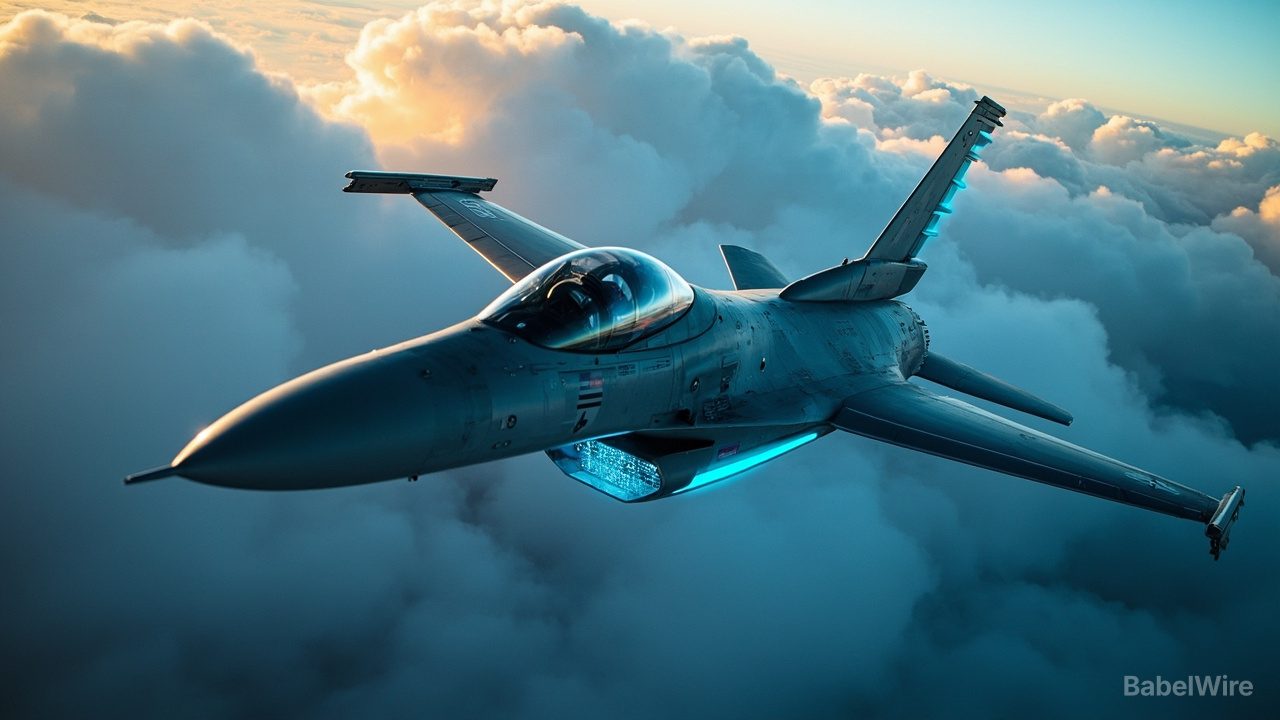
A US Air Force F-16 Fighting Falcon has been flown under artificial intelligence control for the first time, marking a milestone in the military's push to retrofit existing fighters with autonomous capabilities. The aircraft, modified under the VENOM program (Viper Experimentation and Next-generation Operations Model), carried a safety pilot who could take back control at any moment — but during key phases of flight, an onboard AI agent was the one flying.
The heart of the modification is the VENOM Autonomy Kit (VAK), which lets a pilot toggle between traditional human control and AI control with the flip of a switch. The kit builds on DARPA's earlier Air Combat Evolution (ACE) program, which demonstrated AI dogfighting aboard the experimental X-62A VISTA aircraft, and will serve as a cornerstone of the agency's new Artificial Intelligence Reinforcements (AIR) program.
The first phase of flight operations began in June 2026 at Eglin Air Force Base in Florida, when modified aircraft flew piloted missions to verify the new hardware and software. In July, the program transitioned to missions in which the onboard AI assumed autonomous control during portions of flight while the safety pilot continuously monitored performance. The campaign is led by the Air Force's 40th Flight Test Squadron with the 96th Test Wing and 53rd Wing, following years of ground verification.
The choice of the F-16 is significant: its mature fly-by-wire architecture and decades of well-understood operational history make it an ideal testbed, and a retrofit approach could extend the lives of hundreds of aging fighters without waiting for purpose-built autonomous aircraft. The technology is also expected to feed into the Collaborative Combat Aircraft concept, in which human pilots command teams of uncrewed jets.
Brigadier General James Valpiani, DARPA's program manager, said AI is especially useful for threats out of the pilot's line of sight, but acknowledged that "many hard questions remain concerning the performance and trustworthiness of combat AI in the extreme fog and friction of modern warfare." Critics continue to warn about delegating life-or-death decisions to machines — an ethical debate that is now airborne.