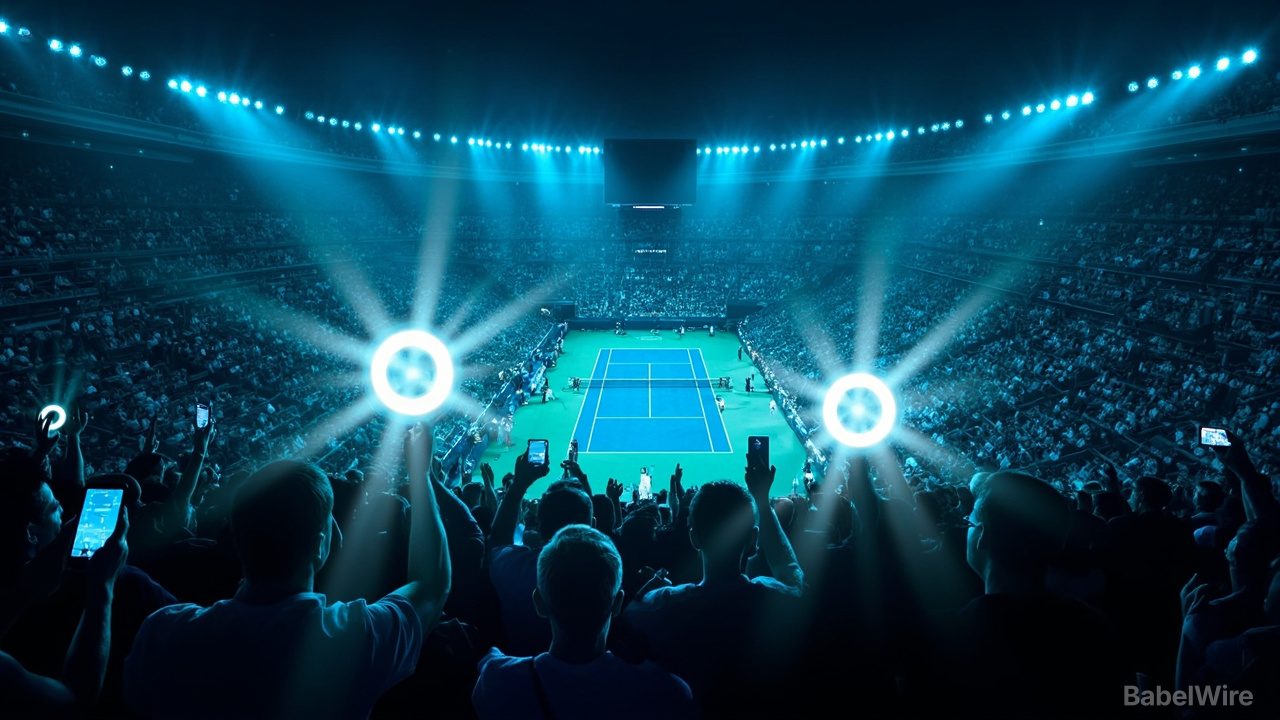
At this year's US Open, the biggest on-court disruption did not come from a player. During Naomi Osaka's first-round match against Anastasia Zakharova, a luxury suite packed with ring-light-wielding influencers became so distracting that the chair umpire paused play and pleaded over the microphone: "Guys, please, in the suite behind me, please thank you guys, please take your seat." Elsewhere in the Billie Jean King National Tennis Center, creators asked staff to take full-flash photos of them mid-rally, and another incident interrupted Madison Keys' match against Alina Korneeva. The videos went viral, and Osaka later urged influencers to have "respect" for tennis. "If you come to a sporting event, you have to respect the sport," she said, adding that it "has to be managed a lot better, especially in the situation like first-round match."
The USTA has been courting creators itself. Media operations director Jeanmarie Daly said last month that the tournament was "almost doubling" the number of creator credentials, with close to 100 influencers at this year's event — up from 54 in 2025 — around 20 of them dedicated to food-and-beverage content alone. USTA spokesperson Brendan McIntyre stressed that the disruptive suite group was not credentialed by the organization. Two lifestyle influencers whose badge photos went viral on Instagram — Meg Radice and Audrey Jongens — lost their credentials after posting them; McIntyre said they were "improperly submitted" on a staff list provided by a food vendor. After the backlash, the USTA put up signs asking spectators to refrain from flash photography or other lighting.
The episode is a snapshot of a larger economic trend: US creator ad spend reached $37 billion in 2025 and is projected to hit $44 billion this year. Brands increasingly treat influencers as their marketing channel — and, as The Verge's analysis points out, the very behavior brands reward (constant content, "main character energy") is what annoys everyone around it. The responsibility, it argues, lies with the companies that hire creators.
Callaway learned that the hard way. An ad produced by Good Good — a YouTube channel turned sports-apparel company — spoofed the film "Obsession": cofounder Garrett Clark grins while shoving professional golfer Alexis Miestowski to the ground as she reaches for his Callaway-branded driver. Viewers called it a mockery of violence against women; Callaway apologized, pulled the ad and cut ties with Good Good. CEO Chip Brewer said "mistakes were made" and conceded Callaway had approved the video before it went up.
Sources
- theverge.comContent creators drop the ball (The Verge)
- the-independent.comHow influencers sparked fury at the US Open as 'tennis etiquette' broken during Naomi Osaka match (The Independent)
- sports.yahoo.comNaomi Osaka Finally Calls Out US Open's Influencer Problem (Yahoo Sports)
- newsday.comInfluencers at the U.S. Open causing some problems (Newsday)