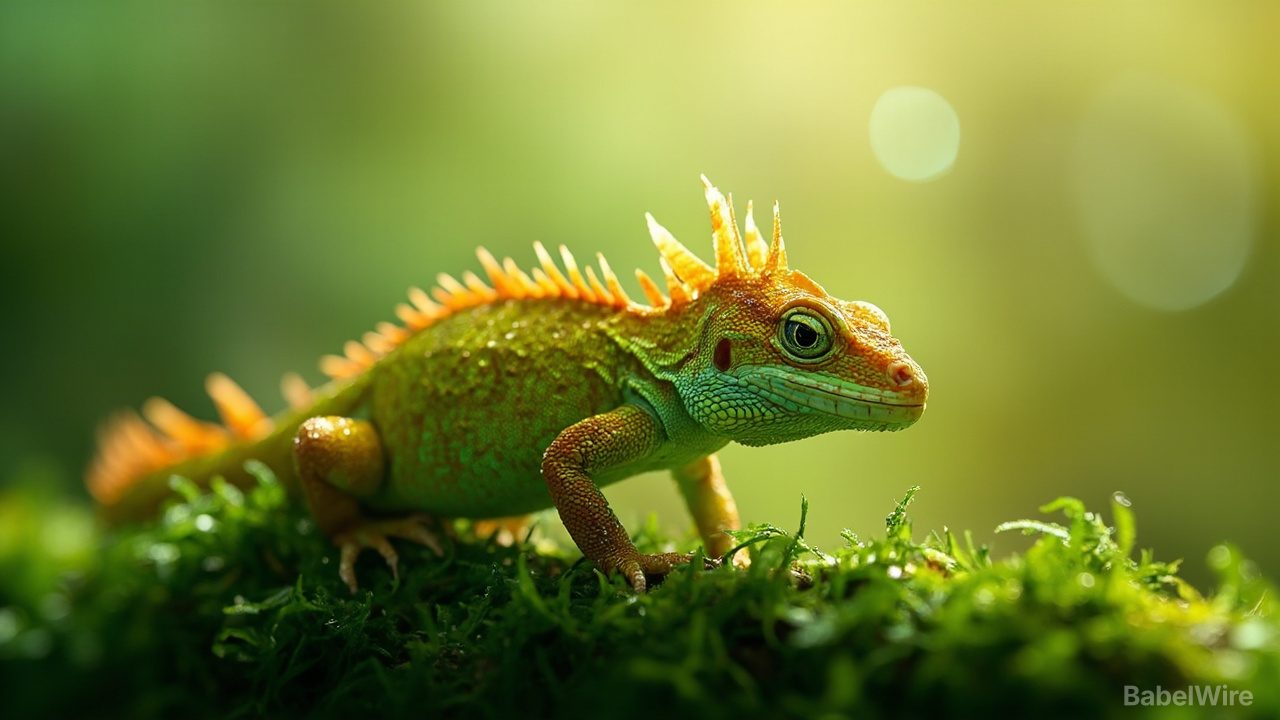
Scientists have described a new species of lizard from the high mountain forests of western Thailand — and given it a name straight out of fantasy television: Acanthosaura syrax, after Syrax, the dragon ridden by Queen Rhaenyra Targaryen in House of the Dragon.
The lizard belongs to a group known as mountain horned dragons, agamid lizards recognized by the spiny crests running along their neck and back. It was discovered in the evergreen forests of Mae Wong National Park, in Tak-Kamphaeng Phet Province, at elevations above 1,300 meters, where it appears to live nowhere else. The find, published in the open-access journal ZooKeys, brings the total number of known species in the genus Acanthosaura to 23.
The research team, led by Poramad Trivalairat of Chulabhorn Royal Academy and Kasetsart University, chose the name deliberately. In the fantasy world, Syrax is known for its striking yellow coloring, its comparatively modest size next to other dragons, and for producing an unusually large number of eggs. All three qualities are echoed in the real animal: A. syrax has yellowish-green tones, is one of the smallest members of its genus, and lays notably large clutches of eggs for its size. The team proposes "Syrax mountain horned dragon" as the English common name.
Beyond the name, the lizard stands out for having the smallest neck and back crest scales recorded in the genus, for lacking the black eye patch seen in several related species, and for a distinctive dark collar marking. DNA analysis of two genes confirmed it is genetically distinct from its closest relative, A. lepidogaster, and from every other known species in the group. Because the species appears confined to a narrow band of high-altitude forest, its populations naturally scattered by rugged terrain, the researchers say it is vulnerable to habitat pressure — and are calling for stronger protection of Mae Wong's high-elevation forests, suggesting the tiny dragon could serve as a flagship species alongside the Asian forest tortoise, Oldham's leaf turtle and the Indochinese tiger.
Sources
- blog.pensoft.netPensoft Blog: New Mountain Dragon Lizard From Thailand Named After Syrax From House Of The Dragon
- doi.orgTrivalairat et al., ZooKeys 1287: 47-76 (2026)
- phys.orgPhys.org: New species of mountain horned dragon identified in Thailand
- ndtv.comNDTV: New Lizard Species Discovered In Thailand Named After House Of The Dragon Character