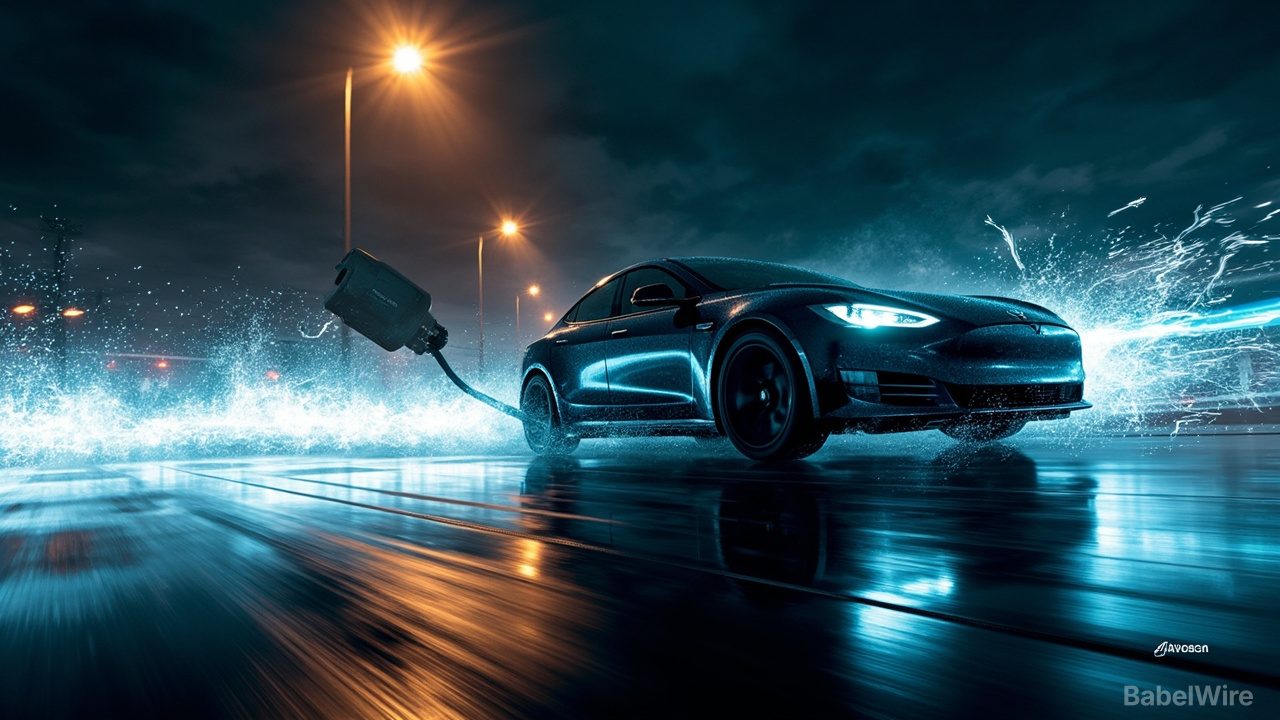
When a Tesla is charging, the plug is locked into the port and the car will not shift into drive until the cable is released — normally a sensible interlock. It is also, as owners learned in August, a trap in an emergency.
That month a gunman opened fire at a Supercharger station in Twin Falls, Idaho, killing four people and wounding seven, including a Tesla owner who was charging at the time. Drivers who tried to flee mid-charge found they first had to exit the car, walk to the charging port and release the handle. Owners began asking Tesla for a quick-release mechanism.
This week Tesla answered with a software update. The new "emergency drive away" feature lets a driver override the charging lock and pull away with the handle still attached. Shifting into drive triggers an alert asking the driver to confirm they need to get away; the handle then breaks away and falls to the ground. Both the car and the charging handle will sustain damage — which is why Tesla stresses the feature is only for emergencies. "Deliberate misuse will invoke additional penalties," the company said on X, without specifying what those penalties are. The feature is available only in the United States, "for now."
Tesla did not mention the shooting in its announcement, but the connection is hard to miss, and the framing is notably American: The Verge notes there are an estimated 500 million firearms in private hands in the US.
The idea is not new. In 2024 a startup called EVject built a breakaway adapter that let drivers leave a Supercharger without getting out of the car. Tesla sued, saying its testing found the adapter could overheat. The automaker dropped the case later that year, and EVject maintained its product was safe. Tesla's own version arrives as a built-in software feature rather than an accessory — a reminder that some safety updates are shaped as much by a country's gun violence as by its engineering.