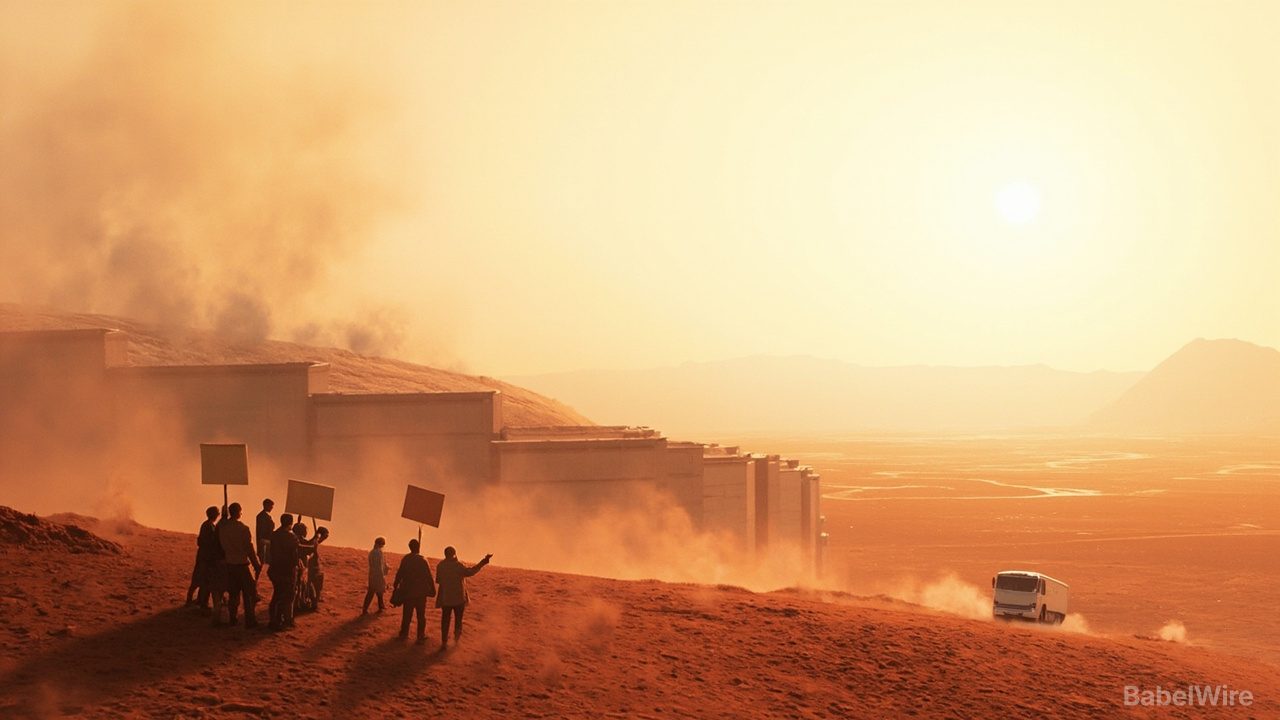
A grassroots campaign calling itself the 'Data Center Revolt' has brought its bus tour to Box Elder County, Utah, where a proposed AI data center backed by investor and TV personality Kevin O'Leary has become one of the most contested developments in the state's history.
The project, called Stratos, would be built by O'Leary's firm and is pitched as a massive AI compute campus. After sustained local opposition it has been scaled back substantially — a retreat residents attribute to the backlash and which they say still does not make it acceptable. The county has imposed a 180-day moratorium on data center development.
Two separate legal fights are running. Residents organised as the Box Elder Accountability Referendum, or BEAR, gathered signatures for a public vote; the county attorney rejected their application, and the group is now suing to overturn that decision. A separate lawsuit challenges the project's approval directly. A ruling on the referendum question was pending after a hearing in mid-September.
The dispute escalated further when O'Leary publicly claimed on social media and Fox News that China was funding opposition to Stratos; Utah critics sued him and Fox over the accusation, and O'Leary has moved to have that suit dismissed.
The advocacy group Humans First, which describes itself as conservative and pro-technology, is driving the national bus tour. Its senior adviser Kylie Jane Kramer framed the issue in local, not ideological, terms: 'That doesn't mean that just because I use electricity, I want a power plant in my backyard. Just because I drive a car does not mean I want a six-lane highway driving through my neighbourhood.'
The Stratos fight has become a template for a broader US pattern: data-center siting is shifting from a zoning formality to a political flashpoint over water, power, land and local consent — even in states that have courted the industry.