For one 20-something defender of Scotland's Stirling Castle, death came from above — and arrived very, very quickly. Known to archaeologists as Skeleton 150, the man was killed more than 700 years ago by a massive blow that shattered his skeleton in dozens of places before pinning him to the ground.
In a presentation at the biannual European meeting of the Paleopathology Association in Berlin last week, University of Bradford bioarchaeologist Jo Buckberry called the skeleton the first confirmed evidence of trebuchet trauma in the archaeological record. "The breaks indicate a very large area of impact and devastation," she says. "It's likely the individual was killed by a siege engine." Independent expert Lukas Waltenberger, a forensic osteologist at Vilnius University, calls it convincing: "It seems like a high-velocity, high-force, high-speed impact in a short amount of time."
Skeleton 150 came to light in 1997, when excavations beneath Stirling Castle's chapel uncovered graves holding nine skeletons dating to the early 1300s — a period of intense conflict between English and Scottish forces. Stirling, the gateway to Scotland on the road to Edinburgh, changed hands five times between 1296 and 1304, when it finally fell to Edward I after an extended siege. The bodies were buried inside the chapel, an unusual practice at the time and a strong hint that they died during a siege, when burial outside the walls was impossible.
Buckberry counted more than 160 separate fractures on the 165-centimeter-tall remains: a skull smashed in 61 places, a deep zigzag break to a shoulder and nearly 60 strange, zigzagging breaks to the ribs. "It's very clear the energy is going through the chest," says Uppsala University biological anthropologist Patrick Randolph-Quinney, who worked on the analysis. "The individual is pinned to the ground quite quickly afterwards." The pattern ruled out a head-first fall from the walls, trampling by horses and post-burial damage. The closest parallels Buckberry found in forensic literature were car crashes and people hit by trains — but how do you get that in 1304?
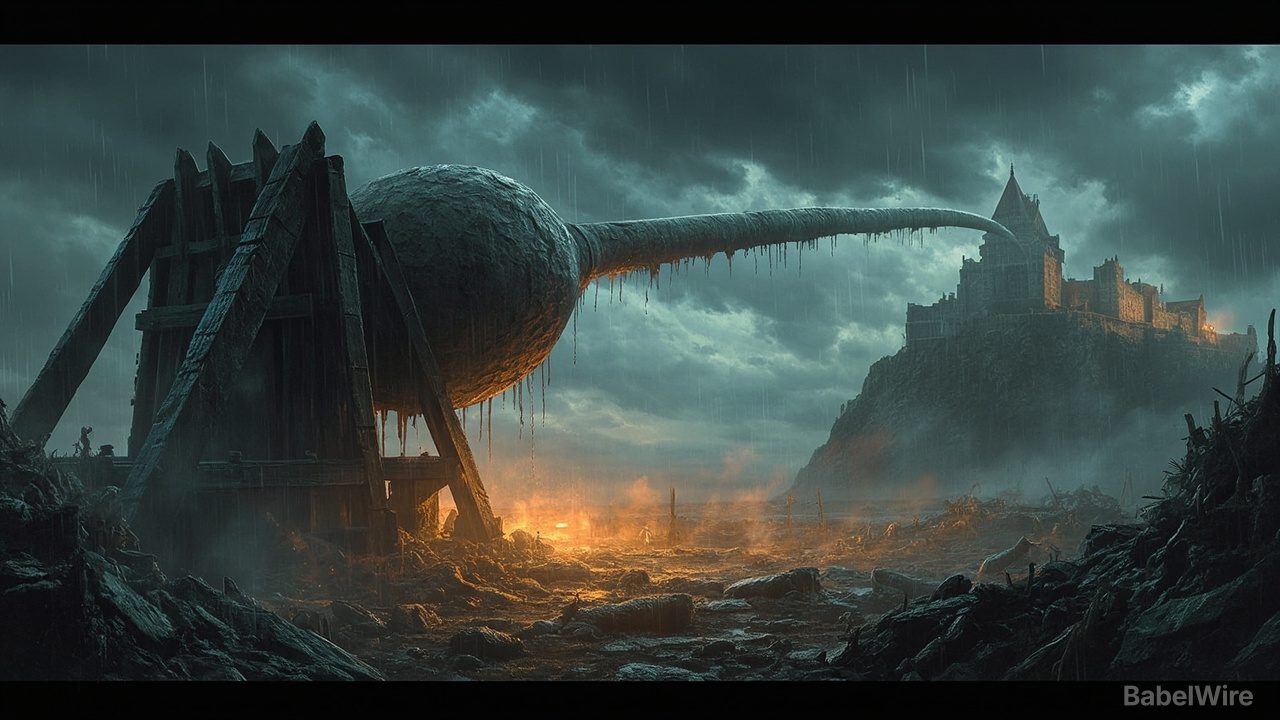
The answer, she argues, is in the history books. Edward I's forces deployed the trebuchet, first documented in the 12th century, capable of hurling boulders weighing more than 100 kilograms hundreds of meters. The one built at Stirling — dubbed "War Wolf" — "was the biggest trebuchet ever built at that point," Buckberry says. Eyewitness accounts record it tearing through two stone walls "as an arrow would fly through a piece of cloth." No chronicle mentions trebuchet casualties at Stirling, but the injuries suggest at least one defender was hit from behind by a flying boulder launched by War Wolf or one of the other siege engines outside the walls. "It's a huge amount of energy delivered in milliseconds," Waltenberger says. "In skeletons from past times you rarely see this."