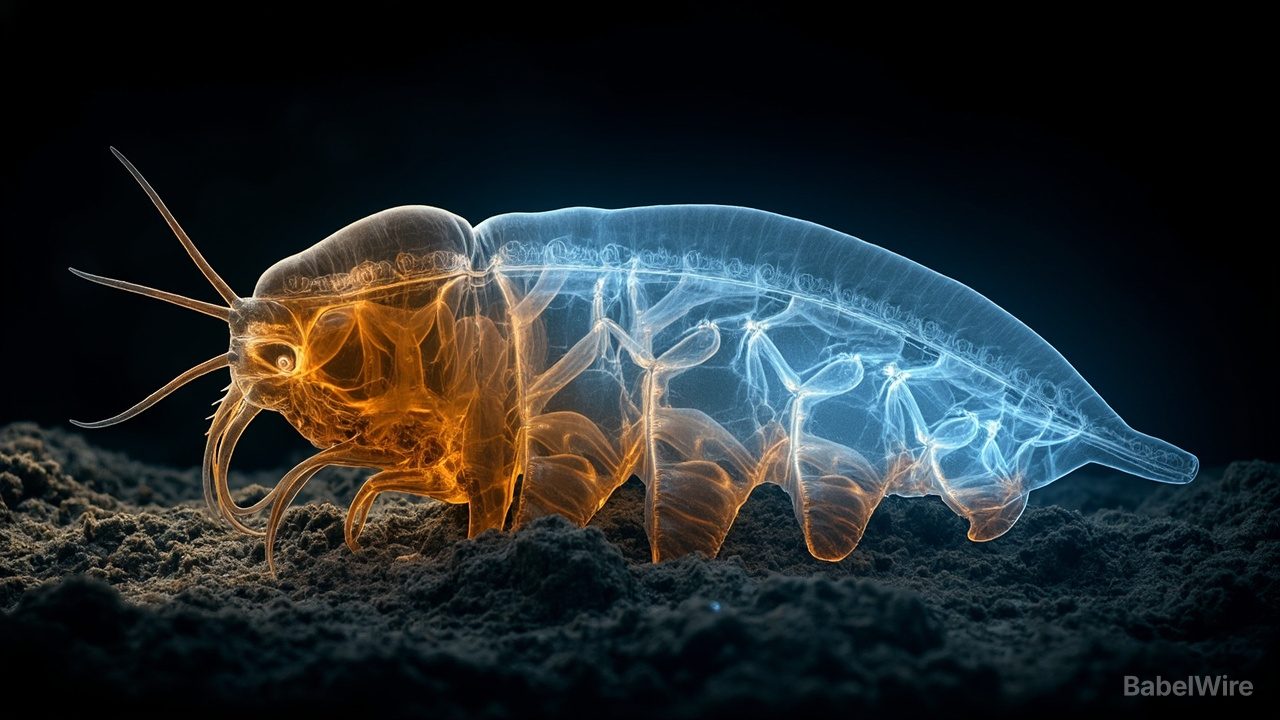
A fossil barely bigger than a thumbnail has pushed back the evolutionary origin of spider fangs by millions of years. Researchers from Yunnan University and the University of Leicester used X-ray tomography to peer inside a specimen of Urokodia, a 2–3 cm marine creature from the early Cambrian, and found the earliest known chelicerae — the pincer- or fang-like appendages that define spiders, scorpions, and ticks.
The discovery, published in Nature on the 42nd anniversary of the fossil's home site in Chengjiang, China, predates the previous record holder by 14 million years. The scans revealed soft anatomy preserved in a "mummified" state, including two pincer-like limbs positioned just behind the creature's eyes, plus what may be early book gills similar to those of horseshoe crabs.
"Suddenly we noticed the pincer-like limbs at the front of the animal," said Professor Yu Liu of Yunnan University. "We knew immediately that this was a very exciting fossil and indeed a distant ancestor of living chelicerates like scorpions and spiders."
Chelicerates today number more than 100,000 species and include some of the most successful hunters on land. Urokodia lived in a rich Cambrian ecosystem of more than 200 animal types, offering a rare window into the dawn of animal life — and showing that even the spider's famous fangs began as humble pincers on a small sea creature.