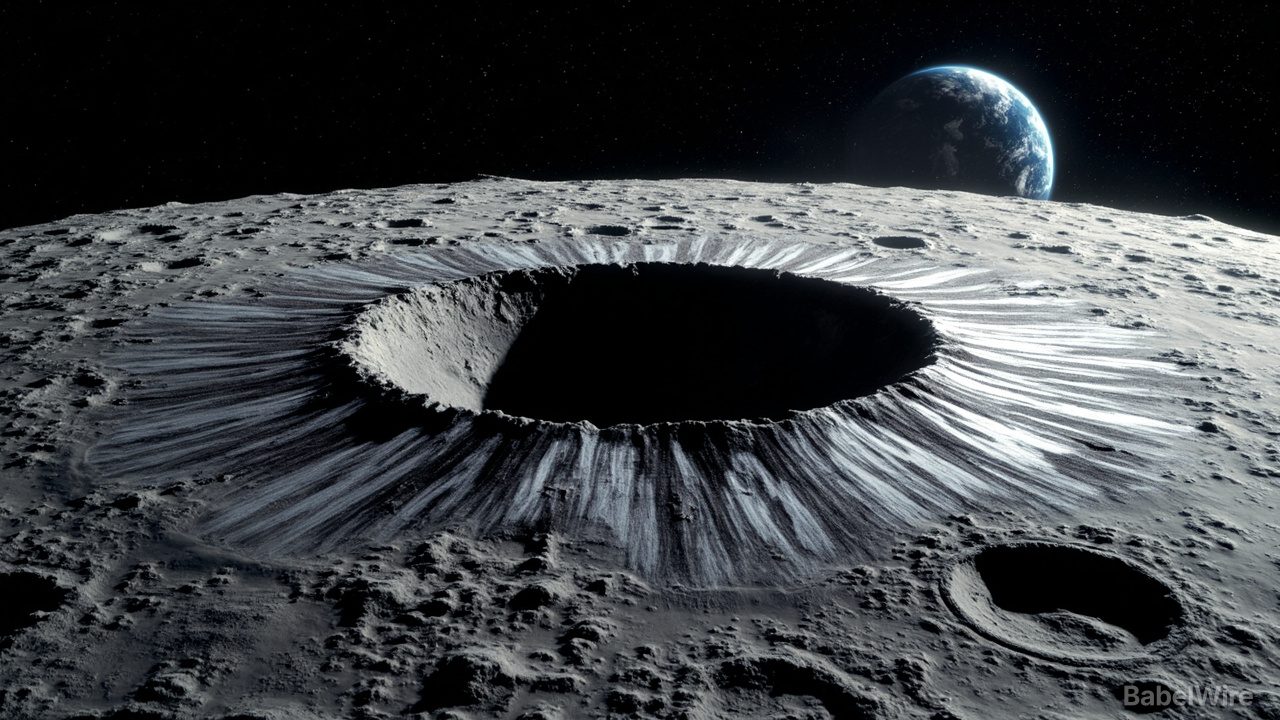
A SpaceX Falcon 9 upper stage — spent after a mission over a year ago — struck the Moon near Einstein Crater on August 5, 2026, at roughly 5,400 miles per hour. NASA's Lunar Reconnaissance Orbiter (LRO) has now photographed the aftermath: a newly formed crater approximately 60 feet (18 meters) wide, surrounded by bright and dark streaks of debris blasted across the lunar surface.
The images reveal that the impact excavated fresh material buried beneath the Moon's weathered top layer, offering scientists a rare glimpse of pristine subsurface regolith. The bright streaks indicate material that has been exposed to space weathering for a shorter time, while the darker streaks represent older, more mature surface material displaced by the impact.
Space debris impacts on the Moon have become increasingly common as commercial launch activity accelerates. The Falcon 9 stage had been drifting in a heliocentric orbit since its original mission before gravitational perturbations sent it on a collision course with the Moon.
The LRO, which has been orbiting the Moon since 2009, continues to serve as NASA's primary tool for monitoring lunar surface changes, including new impact craters.