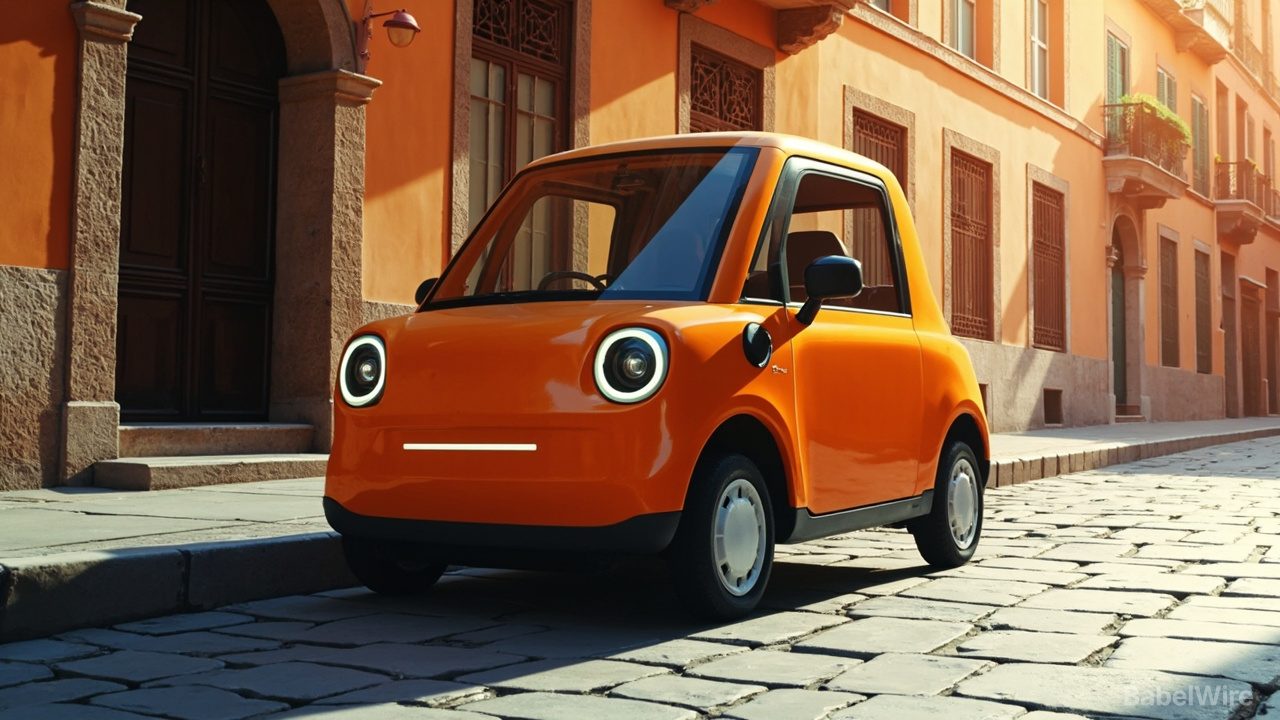
Smart is bringing back the two-seat city car, and this time it comes with a range figure that would have been unthinkable for its ancestor. The new 2 is an electric two-seater with almost 300 km of range, according to Golem — a return to the idea that made the brand: a car sized for a city rather than for the road between cities.
The original fortwo was a solution to a specific problem. In dense European centres, most cars carry one person and occupy a parking space built for five, and the fortwo was the honest answer: a very short, very narrow two-seater that could park nose-in where a normal car could not fit at all. It was also, for most of its life, expensive relative to its size and limited relative to the trips it could make — a trade-off buyers accepted because the use case was narrow by design.
That trade-off is what the electric era changes. A 300 km figure is not a touring range, but it is not a compromise range either: it covers a week of urban driving with spare capacity and makes the occasional intercity trip plausible rather than impossible. City cars stopped being toys when their batteries stopped being small.
The segment they are returning to, however, is not the one the fortwo left. Cheap compact electric vehicles — several of them Chinese, several built for exactly the buyer who once looked at a fortwo — have reset expectations on price and equipment across Europe. The brand's structure matters here too: smart Automobile is a joint venture between Mercedes-Benz and Geely, which gives it access to Chinese engineering and cost structures while trading on a European design heritage — a combination the segment's economics increasingly demand.
What the 2 has to answer is not whether a two-seater can be electric. That question is settled. It is whether a two-seater can be cheap enough to sell at the volume the segment now requires, and whether buyers who have been offered a compact four-seater for the same money can be persuaded that less car is, for their city, more.