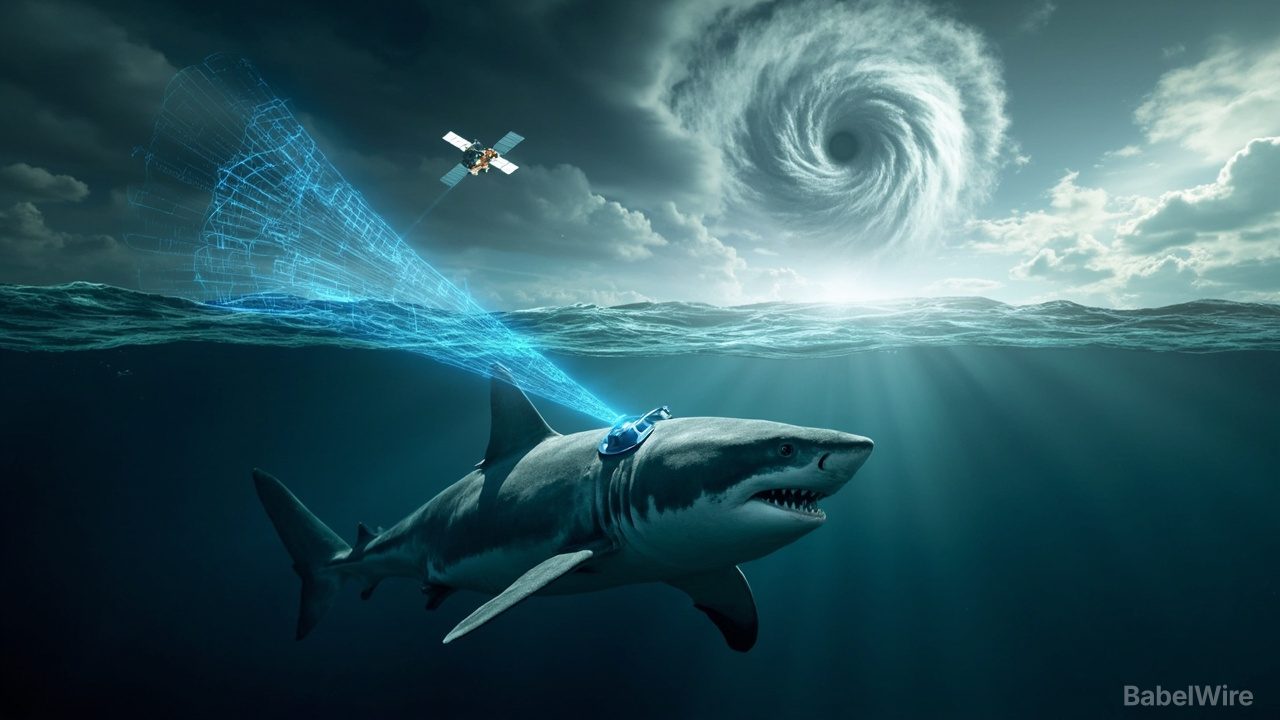
Researchers at the University of Delaware are turning sharks into living ocean sensors, attaching small electronic tags to the animals off the U.S. East Coast to gather measurements that could sharpen hurricane intensity forecasts.
The tags — known as CTD tags — record electrical conductivity (a proxy for salinity), temperature and depth as the sharks swim and dive. Every time a tagged shark breaks the surface, the device transmits its data to orbiting satellite receivers. The team, led by marine scientist Aaron Carlisle, is selecting species that surface often enough to transmit regularly and range across waters that are difficult and expensive for scientists to monitor: shortfin mako sharks, blue sharks, smooth hammerheads and juvenile great white sharks.
The science hinges on the ocean's "mixed layer" — the warm surface waters that feed hurricanes. "We are really most interested in the heat content of the top layer of the ocean," Carlisle said. "Warmer mixed layer equals stronger hurricane, as it holds the heat that feeds hurricanes." The data could also help scientists study the Mid-Atlantic's seasonal "cold pool," a layer of cold bottom water that can influence how quickly hurricanes intensify.
"Animal-borne sensors have been used successfully by oceanographers for years, particularly on elephant seals in polar regions where scientific observations are scarce," Carlisle noted. Sharks offer an alternative: they are abundant, widely distributed and easier to access than some protected marine mammals. Until now, shark tagging has mostly served animal-tracking research — mapping migrations and habitats — rather than oceanography.
The tagging season began in early May, when highly migratory sharks move closer to shore from their winter grounds. Researchers travel 30 to 40 miles offshore, set baited lines and typically wait two to three hours for a bite. Once a shark is caught, the process is fast: "like a pit crew" in an auto race, Carlisle says, with the tag attached to the dorsal fin in under five minutes. The tags are built with materials designed to corrode and eventually fall off, and each shark receives a health check before release — a stressed or harmed animal might not behave naturally, which would skew the data.
The work is part of a broader effort to fill gaps in ocean observation that leave forecasters blind to the conditions that fuel rapid intensification — a phenomenon that has caught coastal communities off guard in recent hurricane seasons.
Sources
- timesofindia.indiatimes.comTimes of India: US scientists are tagging sharks with ocean sensors
- nypost.comNY Post: Scientists using sharks to predict intensity of East Coast hurricanes
- maracoos.orgMARACOOS: Sharks Equipped with Sensors Provide New Clues for Hurricane Intensity Forecasts
- marinetechnologynews.comMarine Technology News: Sharks Fitted with Sensors to Help Hurricane Predictions