A tumor is rarely a single uniform mass, and that diversity is exactly what lets some cancer cells escape precision drugs. Researchers at Washington University School of Medicine in St. Louis have now turned this weakness into a treatment strategy: they modified existing antibody-drug conjugates (ADCs) so that two of them click together inside the body and strike multiple targets at once.
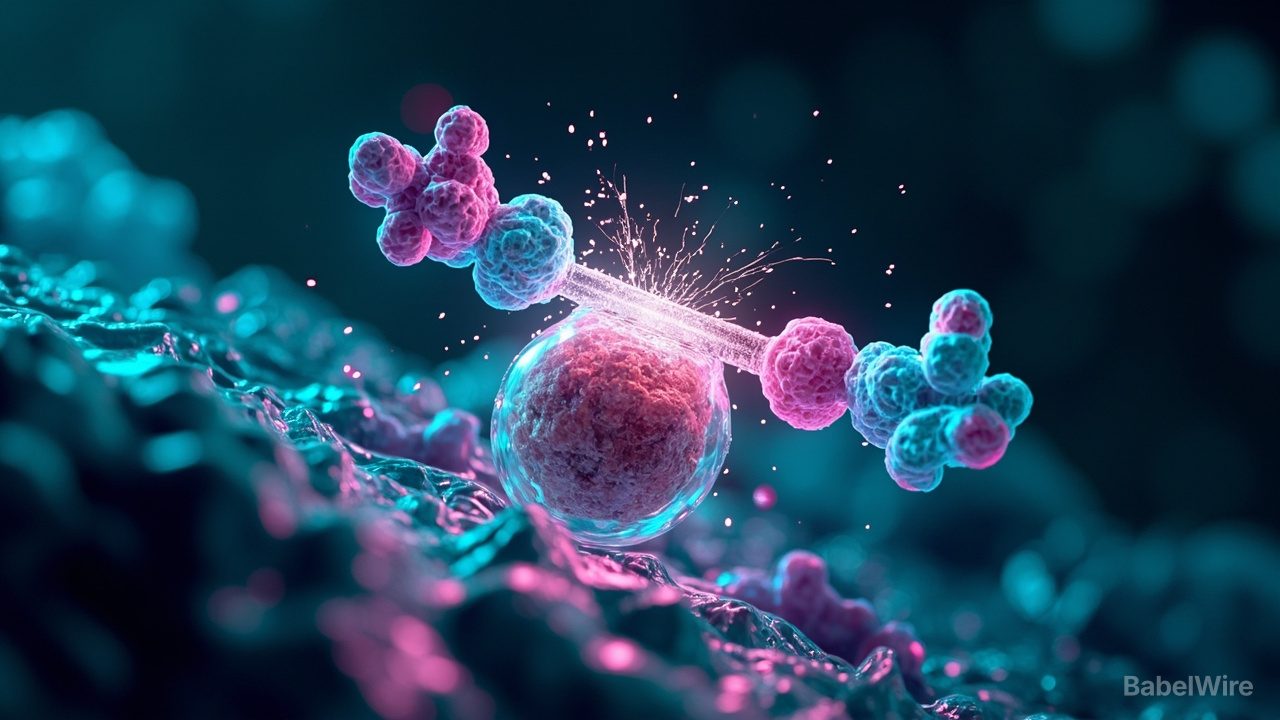
The approach uses click chemistry — a technique in which specially designed molecular components snap together quickly and selectively. In the new system, patients receive one antibody that recognizes a tumor receptor, followed about 24 hours later by a second antibody carrying both a cancer-killing drug and the matching 'click' connector. Once inside the body, the two antibodies bind together, allowing the assembled treatment to attack HER2 at two sites or recognize both HER2 and EGFR simultaneously.
In mouse models of pancreatic, gastric and breast cancer, the self-assembling drugs accumulated inside tumors at far higher levels than the FDA-approved ADCs they were built from — likely because clustering on the cell surface encouraged cells to pull more of the toxic payload inside. The survival gains were most dramatic in pancreatic cancer: up to 90% of treated mice remained alive 120 days after treatment, versus less than 80 days on average for mice given standard ADCs. The team also tuned the system to reduce drug buildup in the liver.
'We've shown that when two cancer-targeting antibodies bind together inside the body, they accumulate at the tumor more effectively and improve treatment response,' said senior researcher Patrícia M. Ribeiro Pereira. Because the molecular connectors take only one to three days to manufacture, existing approved antibodies can be recombined for each patient's tumor profile — no new drug platform required.
The findings, published in Nature, are still preclinical. But Ribeiro Pereira says the platform could eventually be aimed at hard-to-treat cancers, including brain tumors: 'The drug development process doesn't need to start from the beginning — we can use drugs that are already FDA-approved, which could help bring improved treatments to the clinic more quickly.'