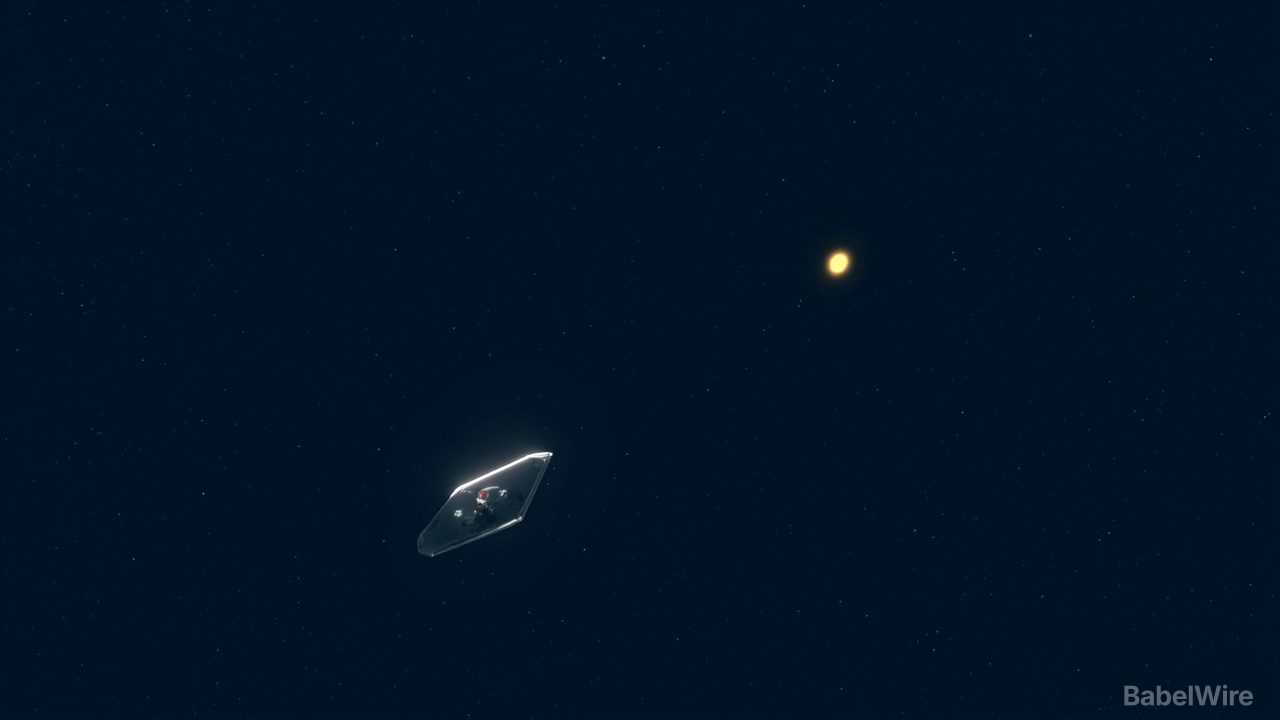
Astronomers using four telescopes at the European Southern Observatory Very Large Telescope in Chile have discovered the fastest star ever observed in the Milky Way. The star S301 reaches speeds exceeding 15,000 miles per second, roughly 8% of the speed of light, as it orbits Sagittarius A*, the supermassive black hole at the center of our galaxy.
The discovery was published in the journal Nature by researchers at the Max Planck Institute for Extraterrestrial Physics. PhD student Felix Mang first noticed a faint flicker of light in infrared data showing an unusually high velocity. Over the following years the team tracked S301 and determined it follows an extremely elongated elliptical orbit with a period of just 8.7 years.
What makes S301 scientifically significant is its extreme proximity to Sagittarius A*. Because it passes so close to the black hole, the stars orbit is sensitive to how the black hole warps surrounding space-time. This makes S301 the first star that could potentially be used to directly measure the spin of a quiescent supermassive black hole, a feat previously achieved only for actively feeding black holes in other galaxies.
Determining the spin of Sagittarius A* could reveal how the black hole formed and provide insights into the early history of the Milky Way. Erin Kara, an astrophysicist at MIT not involved in the study, called the result really exciting and said it sets the stage for unprecedented measurements of black holes in the next decade.
Sources
- nature.comDiscovery of a star sensitive to the spin of Sagittarius A* - Nature
- npr.orgFastest star whips around galaxy center black hole - NPR
- theguardian.comAstronomers detect fastest known star in Milky Way - The Guardian
- sciencenews.orgRecord-breaking star could reveal black hole spin - Science News