For as long as people have traveled by sea, ships have needed protection from water, salt, microorganisms, and marine worms. A new study published in Frontiers in Materials is helping fill a gap in understanding the organic waterproofing materials used in ancient shipbuilding.
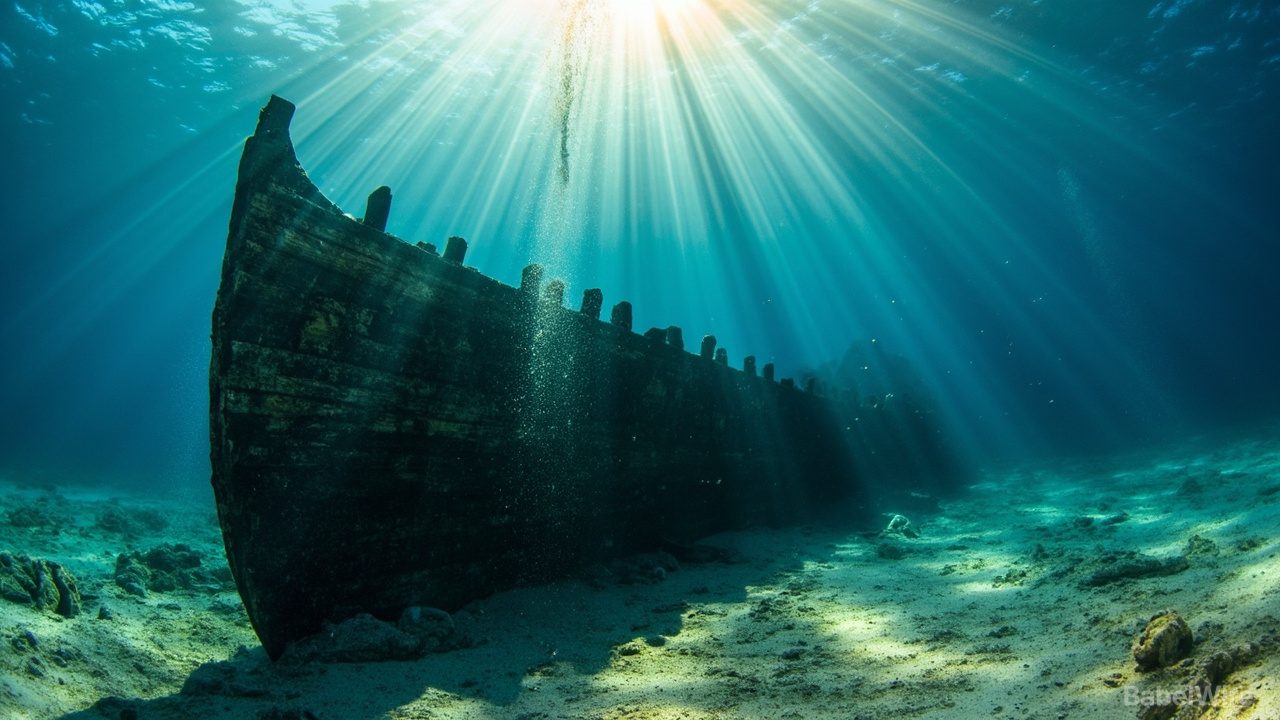
Researchers in France and Croatia analyzed the protective coating on the Roman Republic shipwreck Ilovik-Paržine 1, which sank about 2,200 years ago off the coast of what is now Croatia. They found two different kinds of coating: one made of pine tar (pitch), and the other a mixture of pine tar and beeswax.
The beeswax-and-tar mixture, known to Greek shipbuilders as zopissa, improves adhesive flexibility and is easier to apply when hot. It represents an early form of composite material technology.
Because pitch is naturally sticky, it captures pollen from nearby vegetation and preserves it for long periods. By studying the trapped pollen, researchers reconstructed the landscapes surrounding the ship when repairs were made. The pollen pointed to Mediterranean and Adriatic coastal forests, riverbank vegetation, and mountain trees from the northeastern Adriatic coast.
The analysis suggests the vessel received four to five separate batches of coating over time, with materials from different Mediterranean locations. Earlier research pointed to Brundisium (today Brindisi, Italy) as where the ship was built, while other coatings may have been applied along the northeastern Adriatic coast near where the wreck was found.
While it seems obvious that ships sailing long distances need repairs, it is simply not easy to demonstrate this, said lead author Dr. Armelle Charrié. Pollen has been very useful in identifying different coatings where the molecular profiles were identical.