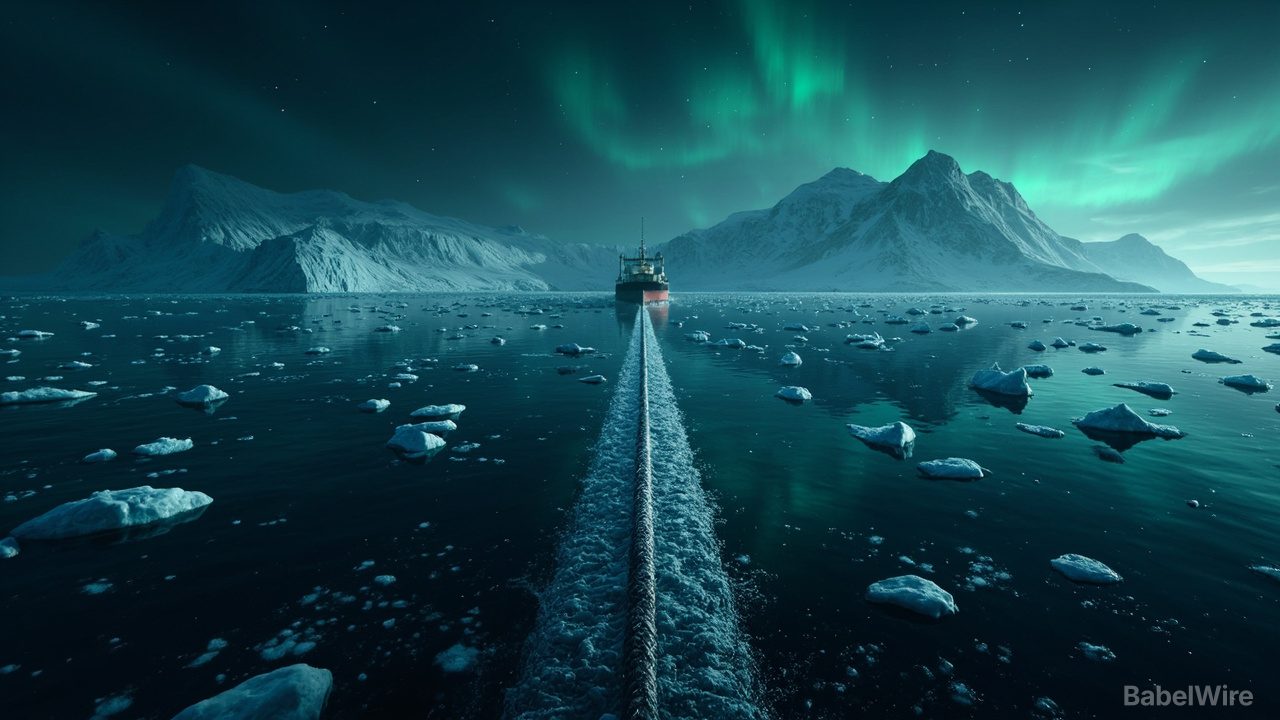
The European Union plans to build the first subsea internet cable connecting Europe directly to Greenland. The Pan-Arctic Cable project could also extend to Canada and eventually link with Japan and South Korea — notably bypassing the United States.
The project is named as a flagship in a joint communication from the European Commission published on October 20, 2026, setting out a new European Arctic strategy. The document backs "a sovereign, secure and resilient submarine cable connection linking Greenland directly to the EU" and suggests "like-minded partners like Canada" could be a stepping stone for future expansion toward Asia. Through the Connecting Europe Facility Digital programme, the EU has already put up $119 million (107 million euros) to advance Greenland's secure and sovereign connectivity and to fund the cable plan.
The political context is unusual. Repeated attempts by the Trump administration to claim Greenland were formally settled in September 2026 by a trilateral security agreement between the United States, Greenland and Denmark, which preserves Greenland's autonomous status within the Kingdom of Denmark while expanding US military access. But relations between Washington and its allies in Europe and Canada have grown strained since the US launched trade wars with multiple countries and took an increasingly pro-Russia stance on the war in Ukraine.
Security is the second driver. More than 90 percent of communications between Europe and Asia run through undersea cables in the Red Sea, according to TeleGeography, and maintaining them has become riskier since open warfare resumed between Yemen's government and the Houthi faction this year, with Houthi forces firing missiles and drones at commercial ships in the Bab el-Mandeb Strait and the wider Red Sea.
Why it matters. For decades, cable routes were an exercise in network economics: you landed where the traffic was. That logic is being replaced by geopolitics. "It is interesting that this project is even being considered, because five years ago it would have seemed like not a particularly commercially attractive proposition," Elisabeth Braw, a senior fellow at the Atlantic Council who leads its Threats to the Global Maritime Order Initiative, told Ars Technica. "But the fact that it's being considered is very much on trend and a sign of our times."
The threat picture is concrete. Russian- and Chinese-linked commercial ships have severed European cables in the Baltic Sea by dragging anchors for long stretches; in spring 2026, NATO forces confronted Russian submarines practising how to disable undersea cables in Arctic waters near Norway. In the Pacific, Chinese-linked ships have severed cables near Taiwan. Iran has threatened to charge fees to cable operators running through the Strait of Hormuz. The EU's strategy responds with an Arctic Cable Hub to monitor, protect and support repairs, plus investment in "smart technologies on cables that act as early warning systems" for potential threats.
The obstacles are real: installing and maintaining cable in icy Arctic waters requires more European icebreakers, and several earlier pan-Arctic projects foundered — including Arctic Connect, halted in May 2021. A separate effort, Norwegian firm Bulk Infrastructure's Leif Erikson system, began looking for a Canadian majority partner for a direct transatlantic link in September.
One caveat: this is a strategy with money attached, not a cable in the water. The engineering, the icebreaker fleet and the financing beyond the EU's initial $119 million all remain open questions.