NASA's Pandora mission, the agency's newest exoplanet explorer and the first satellite launched through its Astrophysics Pioneers program, has officially begun studying worlds beyond our solar system. Over its year-long primary mission, Pandora will observe at least 20 exoplanets repeatedly, measuring their atmospheric composition to determine the presence of hazes, clouds, and water.
The mission addresses a fundamental problem in exoplanet science: when telescopes analyze a planet's atmosphere during a transit — when the planet passes in front of its star — the starlight that grazes the planet's atmosphere also carries the star's own chemical signature. Stellar surfaces are not uniform; they have hotter bright spots and cooler dark regions that change as the star rotates. These variations can distort the atmospheric signals scientists are trying to measure.
Pandora is designed to solve this by simultaneously observing both the planet and its host star in visible and near-infrared light. Over 24-hour observation windows repeated 10 times per target, Pandora will collect enough data to disentangle the planetary signal from the stellar noise.
Water is one of the most important molecules we can measure to understand the composition and physical conditions of an exoplanet atmosphere, said Benjamin Rackham of MIT. But features on the star can distort the water signal we are searching for. Pandora is designed to separate these signals cleanly.
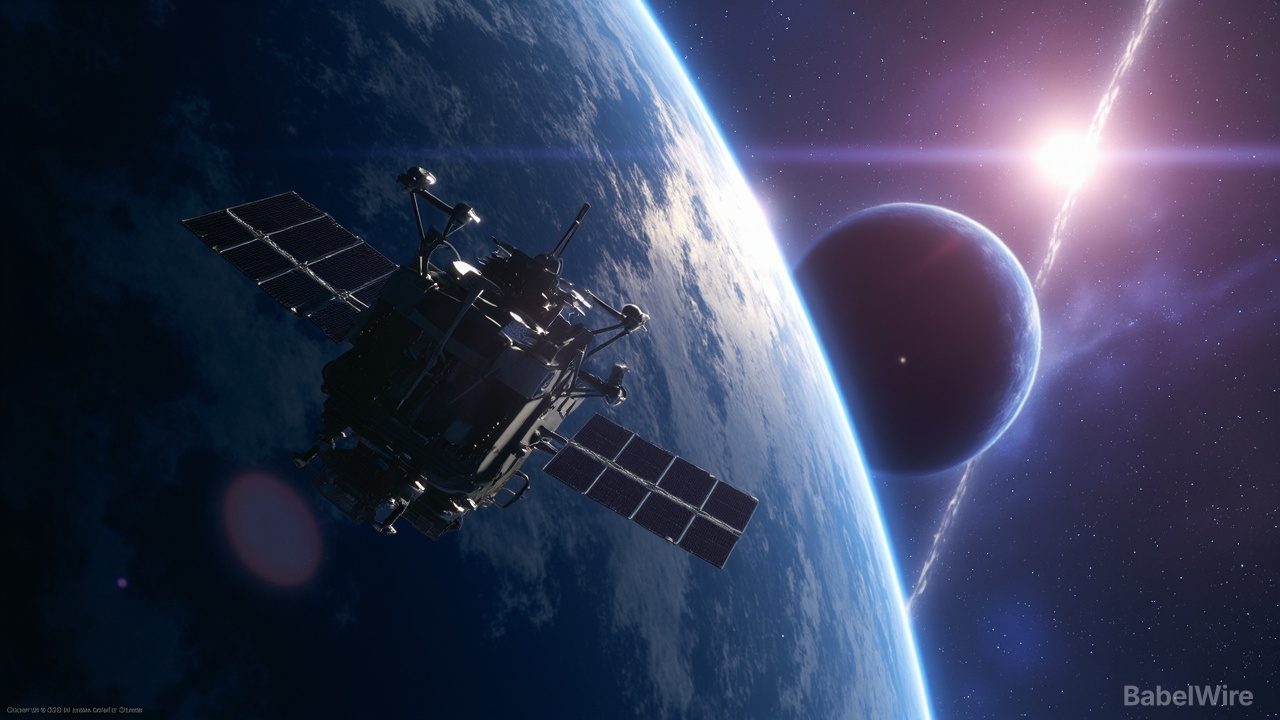
The satellite carries a novel all-aluminum telescope about 18 inches in diameter, and its near-infrared detector is a spare originally developed for the James Webb Space Telescope. Pandora launched into low Earth orbit on January 11, 2026, aboard a SpaceX Falcon 9.
Pandora's data will help close a major gap in our knowledge about planets and their host stars, said Elisa Quintana, the mission's principal investigator at NASA Goddard. The results will lay a foundation for interpreting future Webb observations and studies focused on finding habitable worlds.
The mission is led by NASA's Goddard Space Flight Center, with project management and engineering from Lawrence Livermore National Laboratory. Data is available through the NASA Exoplanet Archive.