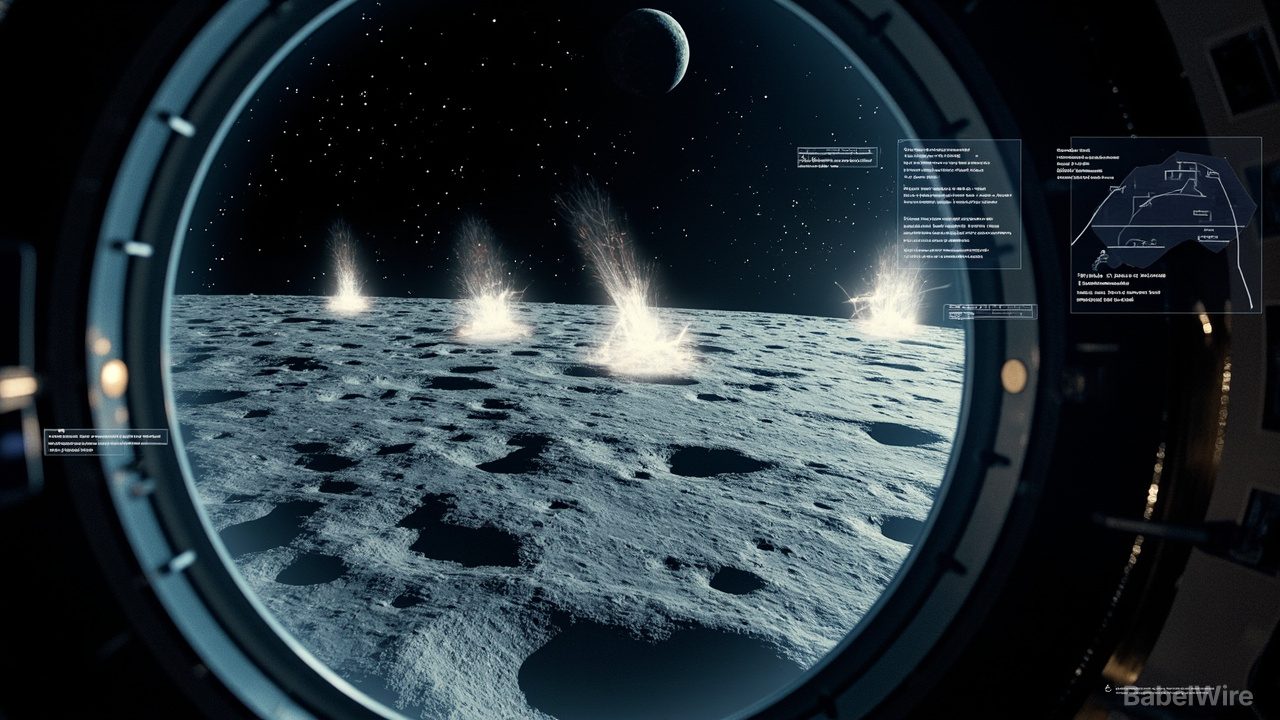
Microbes carried by future astronauts to the Moon could survive for at least one Earth day in cold, shadowed niches around the lunar South Pole, according to a NASA-led study published in Science Advances.
The research found that some common species of bacteria and fungi — the kinds of organisms that naturally accompany humans — could remain viable in permanently shadowed regions near the Moon's poles, where temperatures plunge below minus 200 degrees Celsius. The findings suggest lunar polar regions may be less hostile to microbial survival than previously assumed.
The study does not encompass microbial growth, only survival, and scientists stress this does not mean the Moon could support a self-sustaining microbial ecosystem. However, the results have significant implications for planetary protection protocols as NASA's Artemis program prepares to return humans to the lunar surface.
The discovery raises questions about the risk of contaminating the Moon with Earth-origin organisms, which could interfere with future scientific experiments designed to search for native lunar chemistry or signs of past biological activity. It also has implications for the search for life on other celestial bodies — if microbes can survive in lunar polar conditions, similar environments on Mars or icy moons might also harbor dormant organisms.
Scientists suggested that carefully designed experiments in the permanently shadowed regions could test the real-life limits of microbial survival in an environment that cannot be replicated in laboratories on Earth.