NASA has published the bulk of the science from Artemis II. The release runs to roughly 800 gigabytes: more than 11,000 full-resolution images and videos from the crew's handheld cameras and Orion's own cameras, around 8.5 hours of spoken observations, astronaut notes, transcripts and annotated photographs.
It is, by NASA's account, the first set of planetary science data collected away from Earth — and largely directly by humans — in more than half a century. Alongside the raw archive the agency published three documents: the Artemis II Preliminary Lunar Science Report, the Lunar Science Operations Report and the Lunar Science Data User Guide. The data sits in NASA's Planetary Data System, with a separate, friendlier science page for non-specialists.
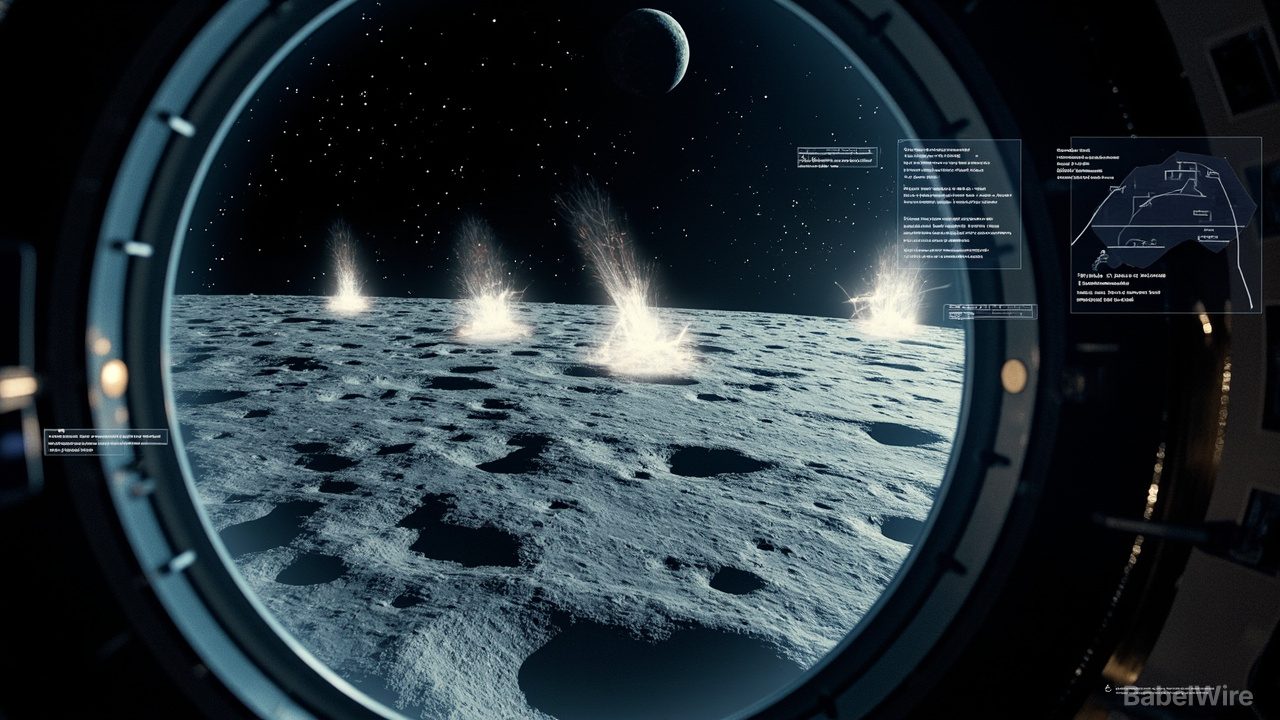
The most concrete early finding is also the most cinematic. During the 54-minute eclipse observed by the Orion crew, the astronauts saw five extremely faint "pinprick" flashes on the lunar surface from about 46,000 miles away. Mission scientists confirmed the flashes came from small rocky fragments striking the Moon, not from instrument artefacts or background noise. Recording them improves estimates of how often centimetre-scale debris hits the Moon — a direct input into the risk calculus for future bases, vehicles and crews on the surface.
Other results are quieter but no less useful. The images document differences in colour, brightness and texture across lunar regions, which researchers can compare with composition maps previously gathered from orbit. Photographs taken near the terminator — the boundary between lunar day and night — show in unusual detail how terrain and visibility change when the sun is very low on the horizon, exactly the conditions NASA expects near the south pole, where the next Artemis landings are aimed. That is practical navigation data as much as science.
Most of the work has not happened yet. The archive is aimed primarily at planetary geologists, flight engineers, heliophysicists, and specialists in telecommunications, remote sensing and meteoroid impacts — and NASA's own reports frame the release as a starting point, not a conclusion.