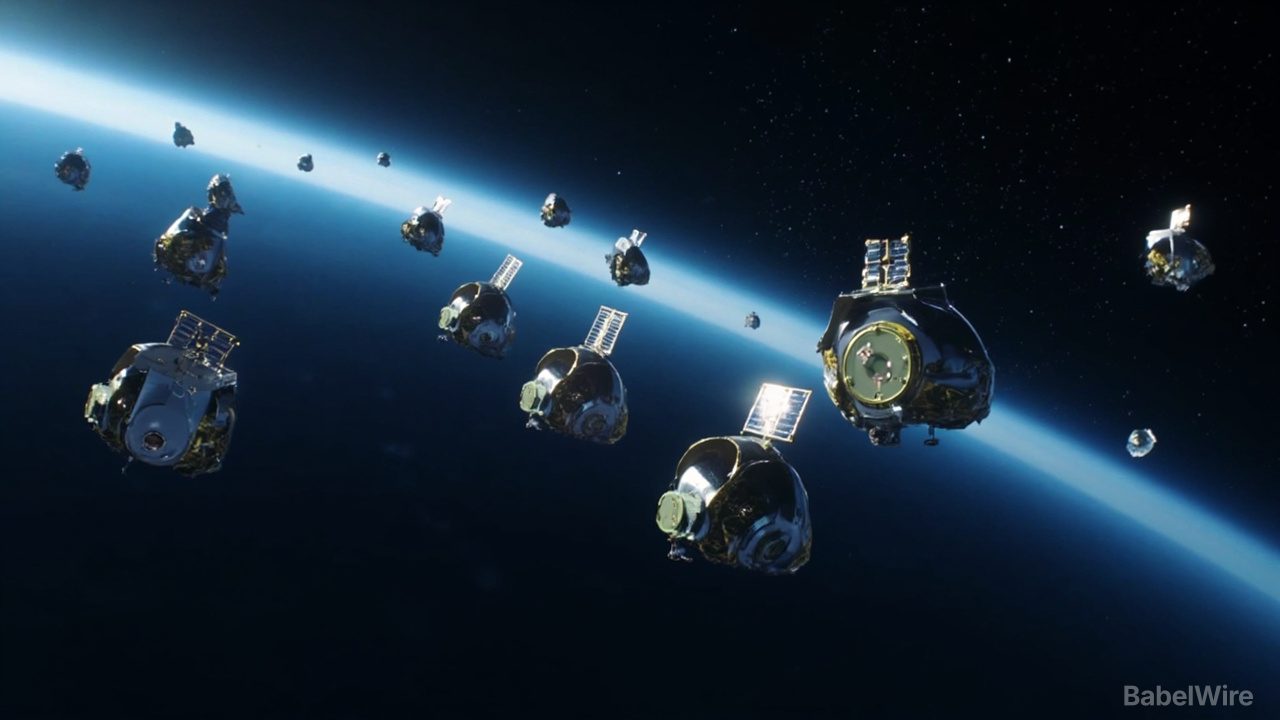
NASA has successfully flight-tested a navigation system that allows satellites to determine their position in orbit without relying on GPS — a capability that could be critical for future lunar and deep-space missions. The system, called Falcon — Fast Autonomous Lost-in-space Catalog-based Optical Navigation — was demonstrated on NASA Starling mission swarm of small satellites.
The technology works by having satellites identify and track other objects in orbit — including other spacecraft, defunct satellites, and debris — using onboard cameras. By matching observed objects against a catalog of known orbital bodies, the satellites can calculate their own position and trajectory without any external signal.
NASA said the Starling swarm successfully extended its time in space after proving the system works, and that coordinated networks of multiple GPS-free satellites will be critical to supporting surface operations for future human exploration of the Moon and Mars. The demonstration addressed a long-standing concern: GPS signals weaken dramatically beyond Earth orbit and are unavailable on the lunar surface.
The announcement, made on August 26, comes as space agencies worldwide prepare for an era of increased lunar activity. With multiple nations planning crewed Moon landings by 2030, autonomous navigation that does not depend on Earth-based infrastructure is seen as an essential capability for sustained lunar presence.