Next-generation solid-state batteries promise higher energy density and greater safety than today's lithium-ion batteries — but they have been plagued by a persistent problem: the formation of tiny lithium metal spikes called dendrites that cause the batteries to short-circuit and fail.
Now, researchers at MIT and the Technical University of Munich (TUM) have uncovered exactly why those dendrites form, and more importantly, how to stop them. Their findings, published today in Nature Nanotechnology, could accelerate the development of solid-state batteries that charge faster and last far longer.
The Culprit: Grain Boundaries
Solid electrolytes — the materials that conduct ions between a battery's electrodes — are made of many tiny crystals packed together, each just a micron or so in size. The boundaries where these crystals meet have long been suspected of seeding dendrites, but the exact mechanism remained unknown.
"Grain boundaries are like the weather: everyone talks about it, but nobody does anything about it," says Professor Harry Tuller of MIT, senior author of the study. "In this paper, we've decided to do something about grain boundaries."
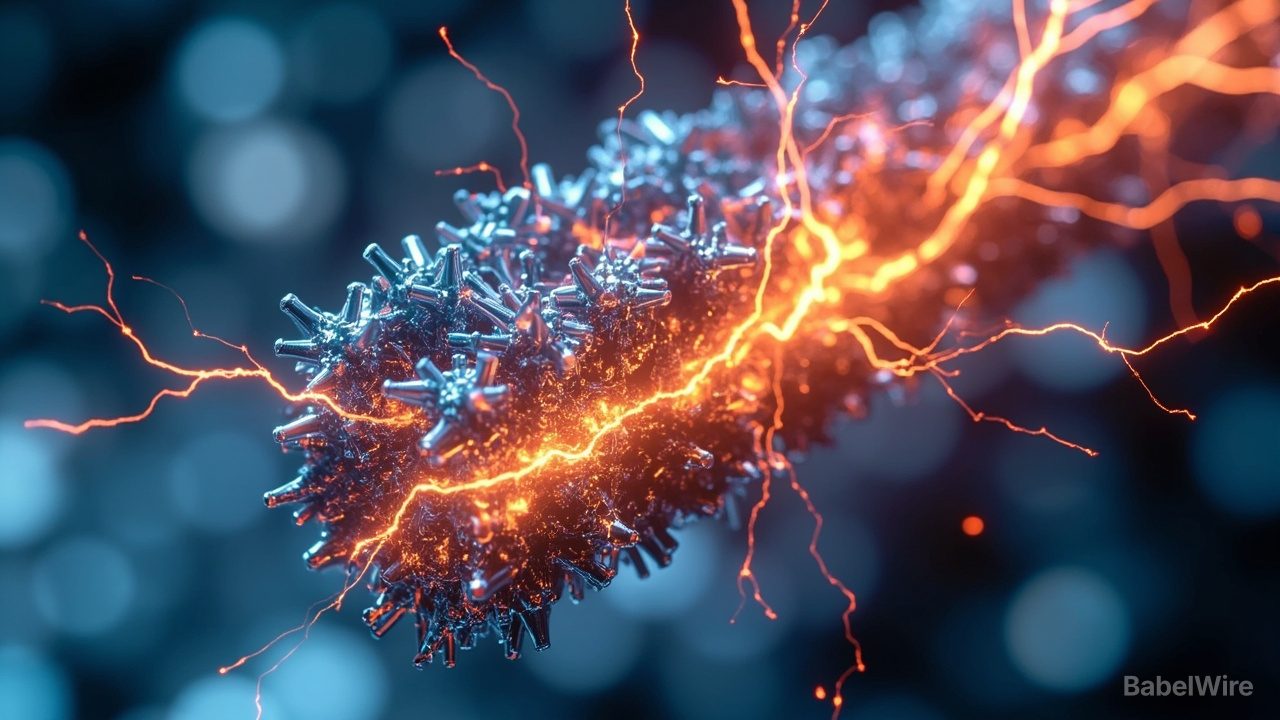
The team discovered that the cores of these grain boundaries carry a local electrical charge, building up electric fields that hinder the movement of lithium ions while simultaneously causing a build-up of electrons. Those electrons can then reduce lithium ions in the boundary region, forming the lithium metal dendrites that eventually short-circuit the battery.
A 300% Improvement
The researchers used their understanding to adjust the material processing conditions of a common solid electrolyte called LLZO (lithium lanthanum zirconate), minimizing the negative charges at the grain boundaries.
The result was dramatic: the modified electrolyte achieved a critical current density more than 300 percent higher than the baseline sample. Higher current density means faster charging and discharging, while also delaying short-circuiting to extend battery life.
"For the last 30 years, the world has been dominated by lithium-ion batteries, but there is a growing recognition that other battery types are needed," explains Professor Jennifer Rupp of TUM, who led the study. "This work gives us the fundamental understanding of the space charge interface at the grain boundary. If understood properly, we can come up with engineering concepts to increase cycle life and ultimately a better battery."
Safety Implications
Beyond performance, the discovery has major safety implications. Dendrite-induced short circuits are a known fire risk in batteries.
"Fires are currently a huge issue in the battery industry," Rupp says. "By showing how to engineer these space charges in a controlled way, which is new in the field, we can have a strong impact on safety."
The research team included collaborators from the University of Antwerp and used techniques ranging from electron microscopy to machine learning modeling and electrochemical impedance spectroscopy.
The findings present a clear roadmap for battery researchers worldwide to accelerate the development of high-performance, longer-lasting solid-state batteries — a key technology for electric vehicles, portable electronics, and grid storage.