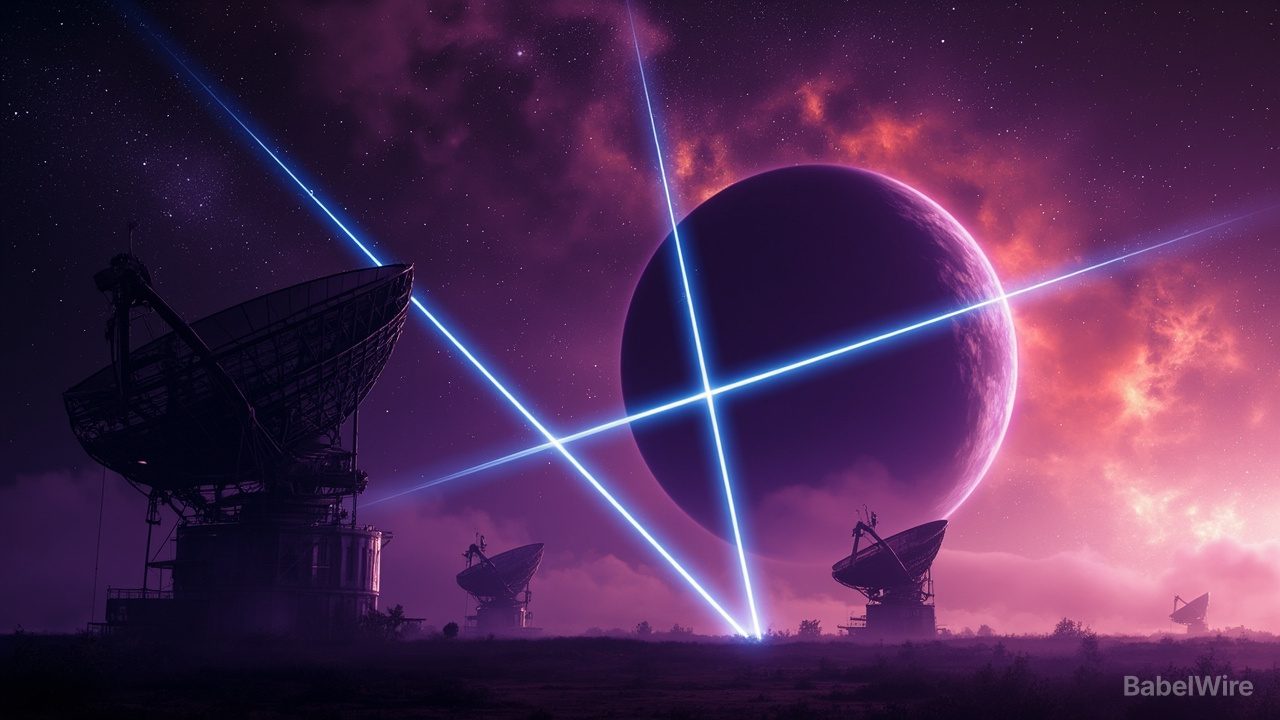
Astronomers have conducted an unusually powerful radio survey of exoplanet K2-18b, one of the most promising known worlds for the search for extraterrestrial life, using both the Very Large Array (VLA) in New Mexico and the MeerKAT telescope in South Africa simultaneously.
K2-18b is a sub-Neptune exoplanet orbiting within the habitable zone of a red dwarf star 124 light-years from Earth. It gained global attention in 2023 when the James Webb Space Telescope detected carbon-bearing molecules including methane and carbon dioxide in its atmosphere — with hints of the possible biosignature gas dimethyl sulfide (DMS), which on Earth is primarily produced by marine phytoplankton.
The dual-telescope survey represents one of the most sensitive searches for technosignatures — artificial radio signals that could indicate the presence of advanced technology — ever conducted on any exoplanet. By coordinating the VLA and MeerKAT, the team achieved unprecedented detection capabilities across a wide frequency range.
"K2-18b is one of the very few places where we have both evidence of potential habitability and the technological capability to listen for signals," the research team noted. The combined observing power allowed scientists to search for narrow-band signals that would stand out from natural astrophysical emissions.
No confirmed artificial signals have been reported from the survey. However, the observation campaign demonstrates a new capability in the search for extraterrestrial intelligence (SETI): the ability to conduct coordinated, multi-observatory searches targeting the most astrobiologically promising exoplanets.
K2-18b remains a prime target for further observation. The James Webb Space Telescope is scheduled for additional atmospheric characterization, and future radio surveys with even greater sensitivity are being planned. Whether or not the survey detects a signal, the work establishes the observational framework for a new era in the search for life beyond Earth — one that combines atmospheric biosignature searches with technosignature surveys targeting the same worlds.