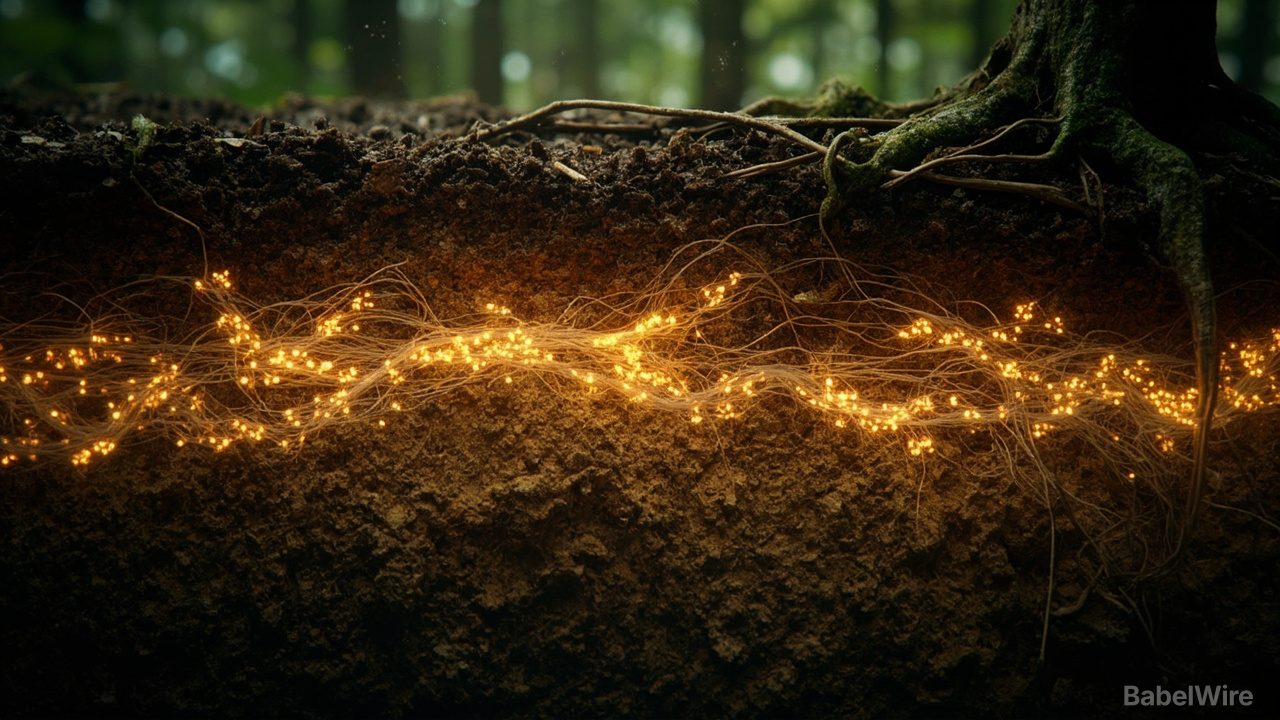
The question in Quanta Magazine's latest feature sounds simple — how do fungi keep the planet healthy? — and the answer runs through almost every ecosystem on Earth.
Fungi are the planet's principal decomposers. Without them, dead wood, leaves and animal matter would pile up rather than return their carbon and nutrients to circulation. Most land plants also live in partnership with mycorrhizal fungi: the fungal filaments extend far beyond the plant's roots, delivering water, phosphorus and nitrogen in exchange for sugars made by photosynthesis. A large share of terrestrial plants depends on some form of this arrangement.
The contested part is what those partnerships add up to at planetary scale. Underground fungal networks can move nutrients and carbon over long distances, which produced the popular 'wood wide web' framing — a cooperative internet of the forest. Recent reviews argue that this story runs ahead of the evidence: some exchanges look less like trade and more like exploitation, and the direction of carbon flow is hard to measure in the field.
That uncertainty matters for policy as much as for ecology. If mycorrhizal fungi lock away meaningful amounts of soil carbon, they belong in carbon accounting, forestry practice and farm management; if the effect is smaller or more variable than advertised, those interventions may not pay off.
Quanta's piece walks through what is established — decomposition, nutrient cycling, the ubiquity of fungal partnerships — and where the open questions sit. It is worth reading in full for the researcher-by-researcher nuance.