A New Commander Aboard the ISS
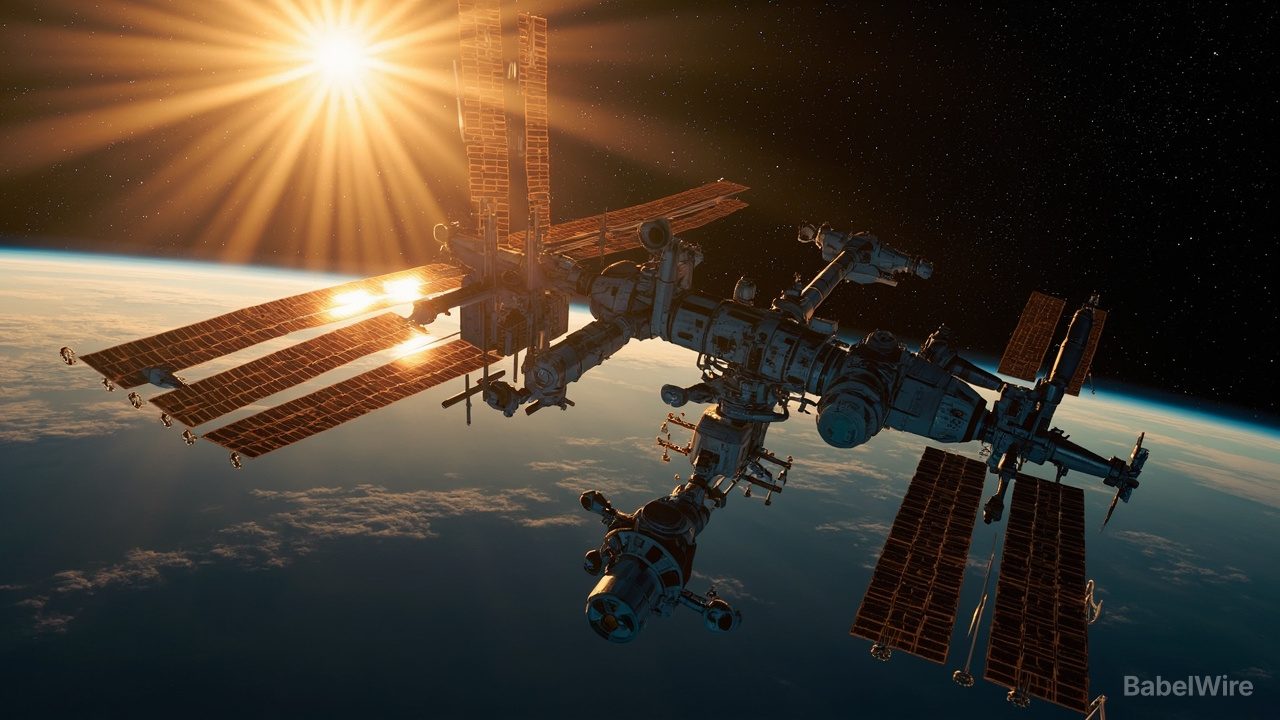
Today, July 25, 2026, NASA astronaut Jessica Meir officially took command of the International Space Station during a formal change-of-command ceremony streamed live on NASA+ at 9:40 AM ET.
Roscosmos cosmonaut Sergey Kud-Sverchkov handed over control of the orbiting laboratory to Meir, marking the beginning of Expedition 75. Following the ceremony, three Expedition 74 crew members departed the station aboard their Soyuz spacecraft to return to Earth.
Jessica Meir: From Marine Biologist to Space Commander
Meir's journey to the commander's seat is remarkable. A marine biologist by training with a Ph.D. from UC San Diego's Scripps Institution of Oceanography, Meir was selected as a NASA astronaut in 2013. Her first spaceflight was in 2019, when she spent 205 days aboard the ISS and made history by participating in the first all-female spacewalk alongside Christina Koch.
In early 2026, Meir returned to space as the commander of NASA's SpaceX Crew-12 mission, launching to the ISS to join Expeditions 74 and 75. Her second journey to the station positioned her to take the ultimate leadership role on humanity's premier orbital outpost.
What Expedition 75 Means
As commander, Meir is responsible for the safety and well-being of the crew, the successful execution of the scientific research agenda, and the coordination of visiting vehicle operations. Expedition 75's research portfolio includes hundreds of experiments in biology, biotechnology, physical sciences, and Earth observation — many of which take advantage of the ISS's unique microgravity environment.
Notably, Meir's command comes at a time of heightened activity around the station. With commercial crew vehicles from SpaceX and Boeing's Starliner now routinely ferrying astronauts, and international partners including JAXA, ESA, and Roscosmos continuing their collaborative science programs, the ISS remains a busy hub of orbital activity.
A Symbol of International Cooperation
The change-of-command ceremony — a tradition that has marked every ISS expedition since the station became permanently crewed in November 2000 — symbolizes the enduring spirit of international partnership in space exploration. Despite geopolitical tensions on Earth, the ISS partnership continues to demonstrate that nations can work together toward common goals beyond the bounds of our planet.
Meir herself embodies this international character: an American astronaut commanding a Russian-outfitted segment of a station built by 15 nations, orbiting Earth at 28,000 kilometers per hour.
Looking Ahead
Expedition 75 is expected to continue through the northern autumn, with additional visiting vehicles, spacewalks, and research milestones on the schedule. Meir's leadership will guide the crew through a packed mission profile that includes robotics operations, maintenance activities, and the ongoing work of pushing the boundaries of human knowledge in space.
As she settles into command, Meir joins an elite group of only a few dozen humans who have ever held this responsibility — guardians of humanity's permanent presence in orbit.