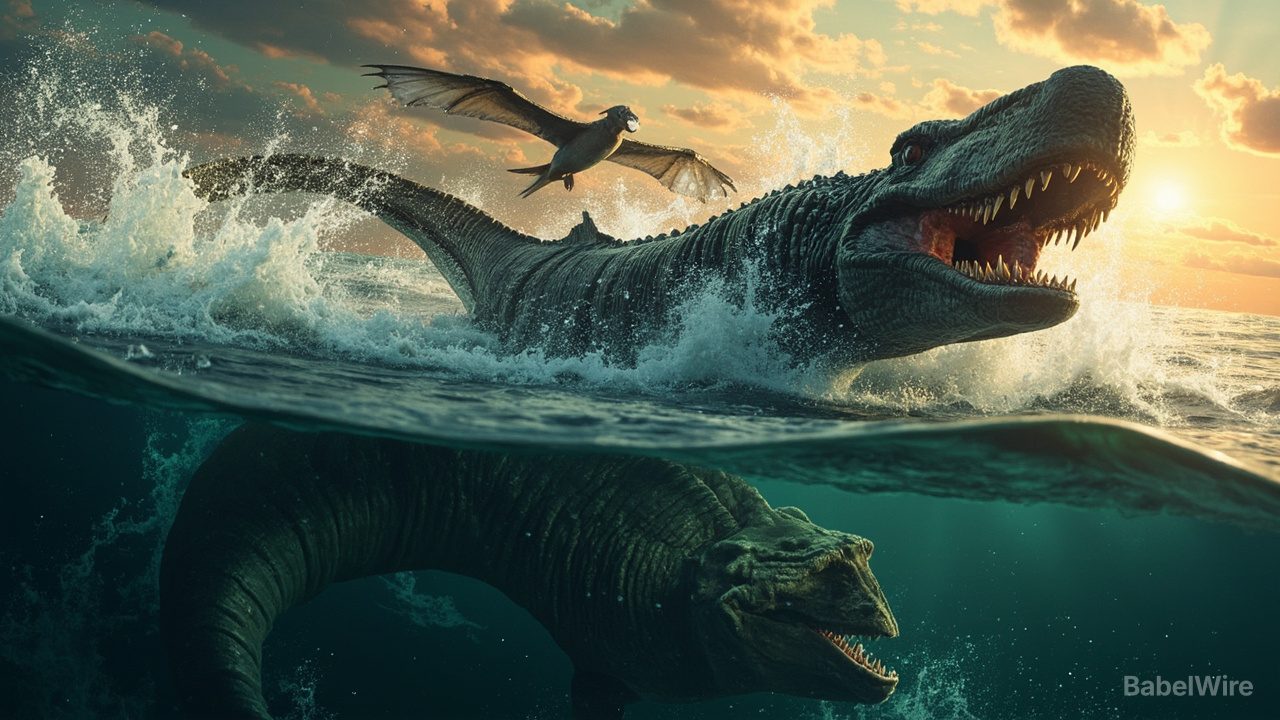
A spectacular fossil from Queensland, Australia, has preserved an entire prehistoric drama: a flying reptile eaten by an ichthyosaur, whose carcass was then attacked by one of the largest predators of the ancient Eromanga Sea. The specimen, nicknamed "B.O.B." (Bag of Bones), was found by amateur fossil hunters during a public fossicking trip near Richmond in 2019 and has taken museum staff hundreds of hours to prepare.
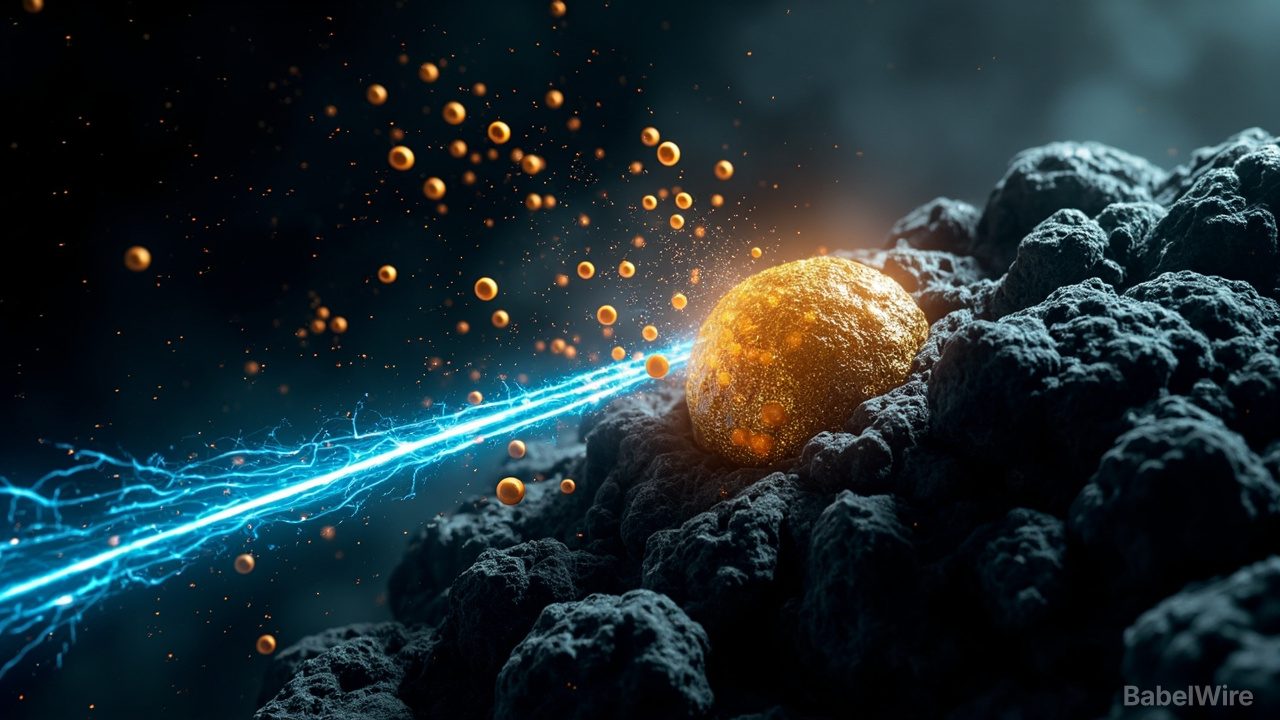
The adult Platypterygius australis ichthyosaur — a streamlined marine reptile about six to seven meters long — came from the Lower Cretaceous Toolebuc Formation, over 100 million years old. Instead of breaking open several unusual rock concretions preserved behind the skull, researchers used neutron tomography at ANSTO to peer inside without damaging the fossils. The scan revealed fragments of fish, cephalopods, and two pterosaur bones, including part of a lower jaw that belonged to an ornithocheiroid — a group of large flying reptiles. It is the first definitive fossil evidence that an ichthyosaur ate a pterosaur.
The story does not end there. The ichthyosaur's skeleton is littered with massive bite marks: crushed and split vertebrae, missing rib sections, and one vertebra with a rib jammed against a broken margin, suggesting forceful jaw processing. Based on the size and spacing of the marks, researchers conclude that Kronosaurus queenslandicus — a roughly ten-meter pliosaur and apex predator — was almost certainly responsible. The flying reptile became food for the ichthyosaur, and the ichthyosaur became food for a giant pliosaur.
"It's one of the clearest examples ever discovered of a three-tier predator interaction and offers an unprecedented snapshot of behaviour in Australia's Cretaceous seas," said Dr. Dean Lomax, a leading ichthyosaur expert. The study, led by Matt White of the University of New England and published in the journal Gondwana Research, was described by lead author White as unlike anything the team had seen before: "I was amazed by the size of the ichthyosaur, and shocked to see it littered with bite marks and partially exposed pterosaur remains behind the skull."
The discovery shows that ancient ecosystems were far more complex than once appreciated — even successful hunters could quickly become victims. The fossil, curated at the Kronosaurus Korner Museum, is one of the clearest examples yet discovered of a three-tier marine food web from the Mesozoic.
Sources
- phys.orgPhys.org — 'Bag of Bones' preserves rare three-tier prehistoric meal
- blog.everythingdinosaur.comEverything Dinosaur — Ichthyosaur Ate a Pterosaur Demonstrated in New Study
- abc.net.auABC News Australia — Fossilised remains of prehistoric predators unearthed in outback Queensland
- smithsonianmag.comSmithsonian Magazine — Rare Fossil Reveals a Three-Tier Food Chain Frozen in Time