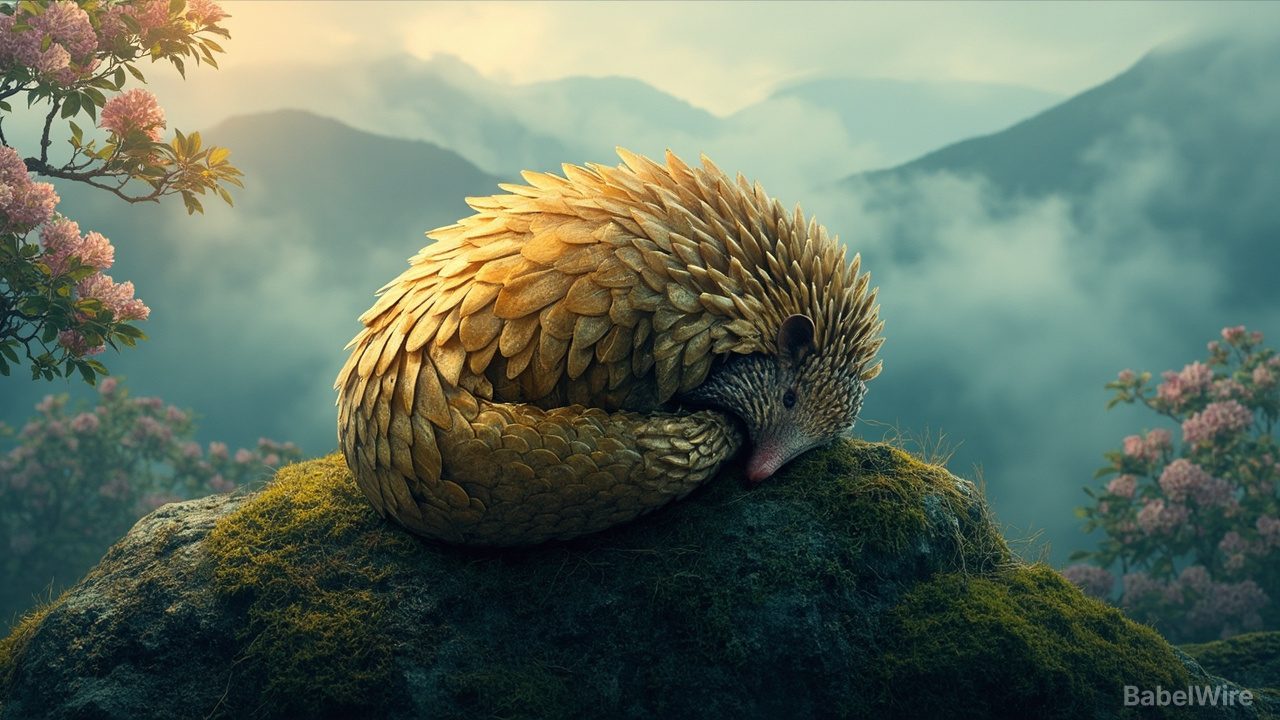
Pangolins — the scaly, pinecone-shaped mammals found only in Africa and Asia — are the most highly trafficked mammals on Earth, targeted relentlessly by poachers for their scales, which are used in traditional medicine. Now, researchers have confirmed that a previously unrecognized species has been hiding in the foothills of the Himalayas.
Published in Communications Biology, the study resolves a years-long taxonomic puzzle. In 2025, scientists had split what was known as the Chinese pangolin into two species: one in China and another in the Himalayan foothills across Nepal, India, Bhutan, and Myanmar, which they named Manis indoburmanica. But taxonomic naming follows the rule of priority — the earliest valid name wins.
Enter a pangolin skin collected in 1836, stored at the Natural History Museum in London for nearly 190 years. Researchers successfully extracted and sequenced its DNA, finding that modern Himalayan pangolins match the 1836 specimen — meaning the correct name is Manis aurita, a name that predates indoburmanica.
"We can't protect what we do not know," says Anderson Feijo of the Field Museum. "Now that we have confirmed that this other species of pangolin exists, we can use that information to help protect these endangered animals."
The Himalayan pangolin (M. aurita) differs from its Chinese cousin in subtle but meaningful ways: a larger body, a longer tail, and smaller ears — the very feature that gave aurita its name. The two species occupy non-overlapping ranges.
The practical implications go beyond taxonomy. Pangolin scales are what authorities typically encounter in illegal seizures — not whole animals — making it difficult to trace where they came from. The DNA methods in this research could let investigators analyze confiscated scales, determine which species they belong to, and pinpoint the poaching regions under greatest pressure.
"This finding marks the culmination of more than five years of research," says first author Narayan Koju of Nepal Engineering College. "The confirmation of Manis aurita as a valid species demonstrates the importance of museum collections, international collaboration, and long-term research."
The study involved researchers from Guangzhou University, the Chinese Academy of Sciences, the Smithsonian, the University of Washington, and multiple other institutions.