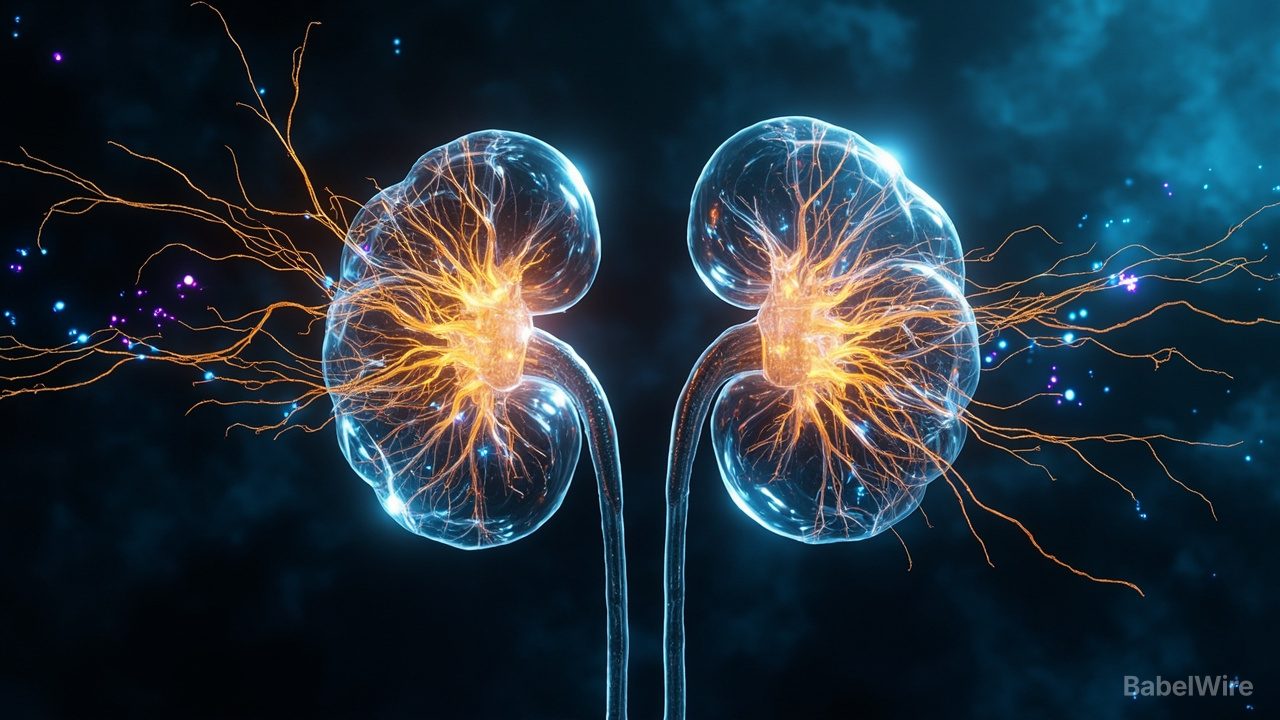
A surprising discovery has revealed that the kidneys may control water retention through an additional, previously unknown pathway — a finding that rewrites what medical textbooks have taught for generations.
Researchers, whose work was published this week, found that kidney function is more complex than the standard model of water regulation suggests. For decades, medical education has centered on the renin-angiotensin-aldosterone system (RAAS) and antidiuretic hormone (ADH) as the primary mechanisms by which kidneys manage the body's water balance. The new discovery reveals a supplementary cellular signaling pathway that operates independently of these well-known hormonal controls.
What the Discovery Shows
The newly identified pathway involves a specific set of cellular receptors and signaling molecules in the kidney's collecting ducts — the final segment where the body decides how much water to retain versus excrete. When activated, this alternative pathway can significantly alter water reabsorption even when the classic hormonal systems are blocked or inactive.
This means the kidneys have what amounts to a hidden backup system for controlling the body's hydration status, one that has been operating in plain sight but entirely unnoticed by scientists until now.
Why It Matters
The implications for medicine are immediate and far-reaching. Millions of people worldwide take medications that target the kidney's water-handling pathways — diuretics for hypertension, heart failure medications, and treatments for kidney disease itself. If a second, independent pathway exists, those medications may not be working the way doctors assumed.
For patients with treatment-resistant hypertension — whose blood pressure remains high despite multiple medications — the discovery offers a potential explanation: their bodies may be compensating through this newly discovered pathway. Similarly, in heart failure, where fluid retention is a critical problem, the finding opens up a completely new target for drug development.
Rewriting the Textbook
The discovery joins a growing list of fundamental biological findings in 2026 that have forced scientists to reconsider what they thought they knew about the human body. Earlier this month, researchers at UCLA discovered that aging muscle stem cells accumulate a protein called NDRG1 that acts as a brake on repair, while scientists also uncovered that a common type of stroke may have a very different cause than doctors once thought — enlarged and damaged blood vessels deep within the brain rather than fatty plaque-clogged arteries.
The kidney finding is particularly significant because water and electrolyte balance is one of the most fundamental physiological processes in the body. Every cell depends on precisely regulated fluid environments, and the kidneys are the master regulators of that balance. Discovering a new layer of control over this system is akin to finding a previously unknown planet in a well-mapped solar system.
What Comes Next
The research team is now working to identify the exact molecular components of the pathway and determine whether it can be targeted with existing drugs or requires entirely new compounds. Clinical trials investigating the pathway's role in specific disease states are expected to begin within the next 12 to 18 months.