**A new cosmic neighbor has joined our planetary family — and it is tantalizingly close.**
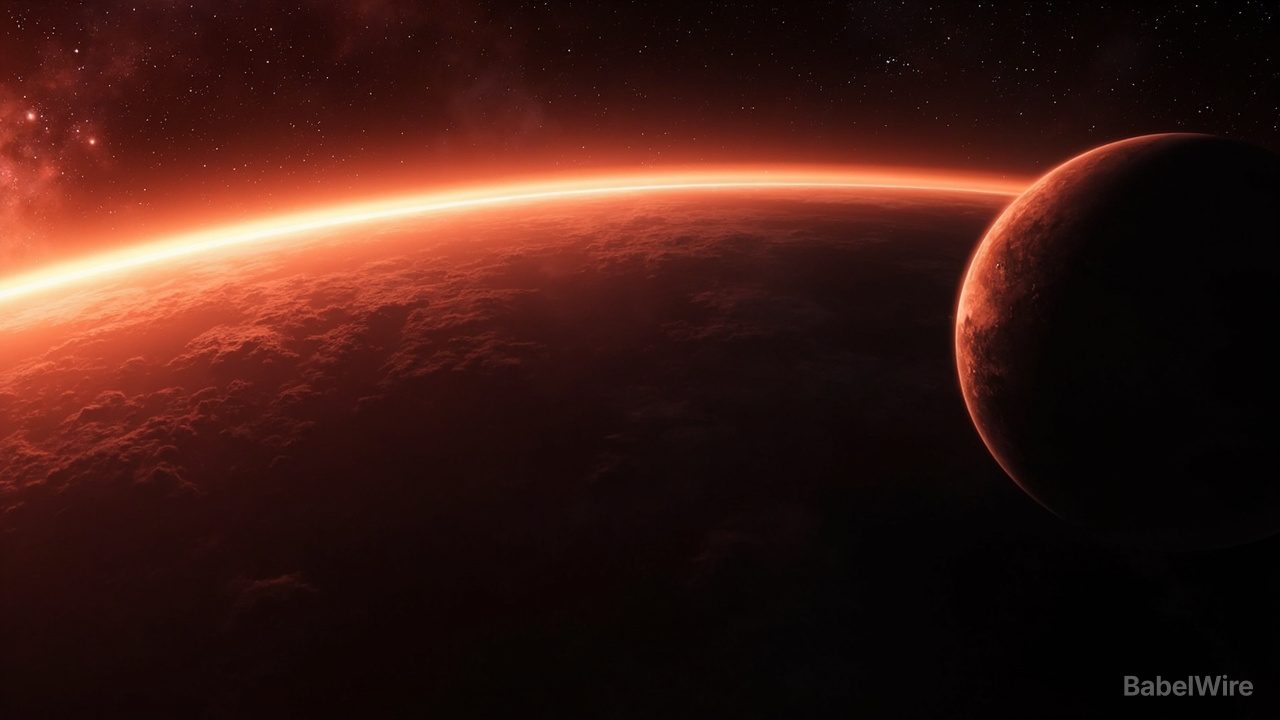
A team led by astronomers at the University of California, Irvine has announced the discovery of GJ 3378b, a super-Earth exoplanet orbiting a red dwarf star just 25 light-years from our solar system. The findings were published in The Astrophysical Journal.
"This one's exciting," said Paul Robertson, UC Irvine assistant professor of astronomy and lead author of the study. "It's one of our closest cosmic neighbors. 25 light-years sounds like a long way, but the Milky Way is about 100,000 light-years across, so in that respect, it's our next-door neighbor."
The planet is roughly twice the size of Earth and sits squarely inside its host star's habitable zone — the region where conditions might allow liquid water to exist on the surface.
"This super-Earth gets about 90% of the radiation from its host star as Earth gets from its sun, so it's right in the sweet spot," Robertson said.
The discovery was made using two powerful instruments: the Habitable-zone Planet Finder on the Hobby-Eberly Telescope at McDonald Observatory in Texas, and the NEID Spectrometer on the WIYN Telescope at Kitt Peak National Observatory in Arizona.
The big remaining question is whether GJ 3378b has an atmosphere. The planet sits at the edge of what astronomers call the "cosmic shoreline" — the boundary where stellar radiation can strip a planet's atmosphere away. Mars in our own solar system is thought to have suffered this fate.
"If you scale the Earth down to the size of an apple, its atmosphere would be about as thick as the skin of the apple," Robertson explained. "That's just enough to maintain the kinds of surface pressures where you can have liquid water."
What comes next: Astronomers will need to wait for NASA's planned Habitable Worlds Observatory, expected to launch in the 2040s, to directly image GJ 3378b and determine whether it has an atmosphere. If it does, the search for biosignatures — chemical signs of life — could begin in earnest.
"If a planet in the habitable zone has a proper atmosphere, we can justify further research looking for biosignatures, liquid water or other signs of life," said Gogod James, a UC Irvine student who worked on characterizing the planet.
The discovery adds GJ 3378b to a growing catalog of nearby exoplanets that may be hospitable to life — and at just 25 light-years away, it is one of the most accessible targets for future observatories.