More than 150 years after Charles Darwin's finches helped reshape biology, Galápagos plants are delivering another evolutionary revelation — this time about nature's remarkable flexibility in reinventing the same solutions with entirely different genetic tools.
A large international team including researchers from the Norwegian University of Science and Technology (NTNU), the Royal Botanic Gardens at Kew, and UC Davis has published findings in Nature Communications showing that Scalesia — giant daisies endemic to the Galápagos — repeatedly evolved the same heat-adapted leaf shape through different genetic pathways each time.
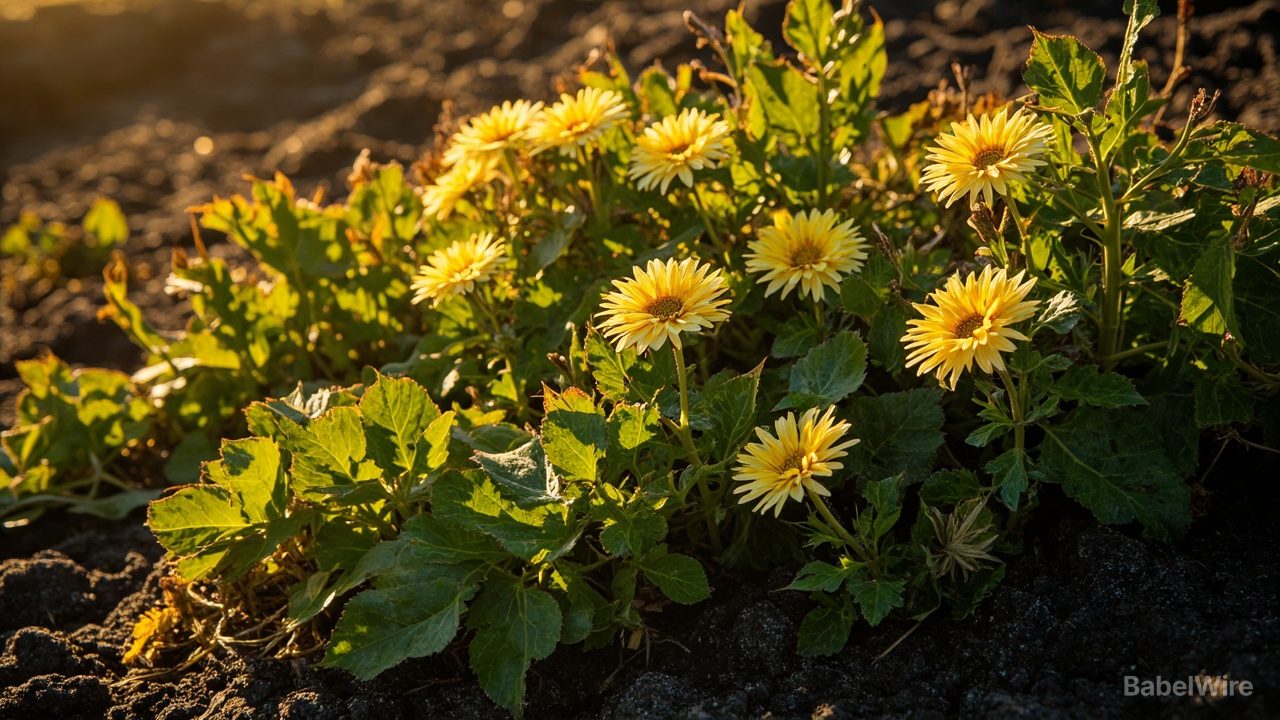
'The appearance of different species varies dramatically, from low shrubs to tall trees,' says Professor Michael D. Martin at NTNU. 'Most striking are the leaves, which range from large and entire to small and deeply lobed.'
Scalesia is a relatively young genus — every species that exists today emerged in the past million years. Despite that short evolutionary history, the plants have adapted to strikingly different habitats, from humid highland forests to hot, dry lowlands. The deeply lobed leaves often have intricate, serrated edges, thought to help plants survive hot, dry conditions by limiting water loss and releasing heat more efficiently.
The researchers analyzed the complete genomes of every known Scalesia species. Their results showed that deeply lobed leaves evolved independently several times in separate branches of the family tree. But the real surprise was how: each time this trait evolved, it did so through different genes — even though all of them belong to the same biological system controlling leaf development.
'Instead of being controlled by a single master gene, evolution appears to draw on an entire network of interacting genes, tweaking different components to produce similar outcomes,' explains first author Vanessa Bieker at Kew. 'This provides a clear example of parallel evolution: nature arriving at the same solution multiple times, but through different genetic pathways.'
The findings suggest evolution is not a one-way street with a single optimal solution, but a creative process that can remix genetic ingredients in different ways to achieve the same result. Rather than relying on one master gene, it appears to modify different parts of a larger genetic network.
Perhaps most exciting, the genetic evidence indicates that the evolutionary story of Scalesia is not finished. Populations within the same species show large genetic differences and have been isolated from one another for long periods, suggesting that new species may be forming right now.
'Populations within the same species show large genetic differences and have been isolated from one another for long periods. This means new species may be in the process of forming,' says Martin. The researchers argue that each isolated population should be managed as an individual conservation unit, which could reshape how conservationists protect Galápagos ecosystems.