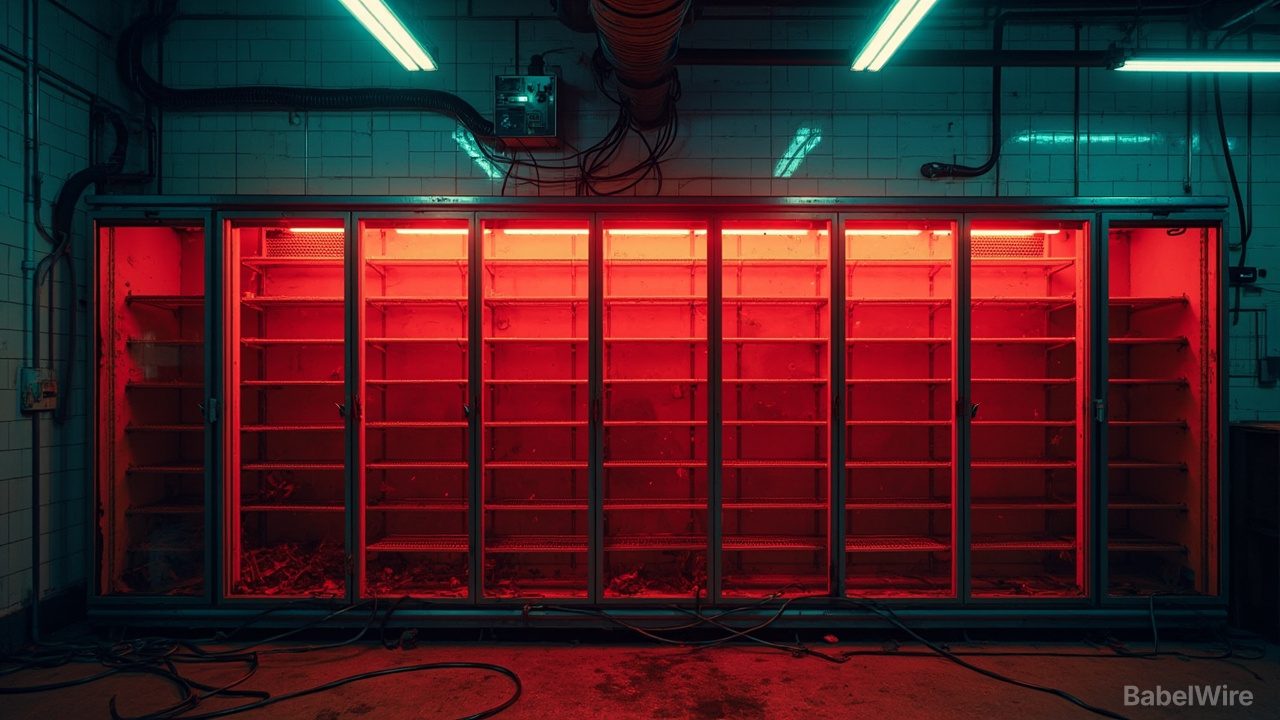
For six hours on 11 October, the refrigerators in hundreds of French supermarkets ran hot. Not cold — hot. Attackers had overridden the temperature controls on commercial refrigeration units overnight, and in at least 15 locations the heat was enough to start fires. By morning, staff at chains including Intermarché were wheeling boxes of spoiled meat and melted ice cream into dumpsters, and an empty frozen-food aisle became the image of the week.
On Monday, France named the author. Foreign Minister Jean-Noël Barrot said the operation was carried out by the Islamic Revolutionary Guard Corps, and Iran's ambassador was summoned to the foreign ministry in Paris. "This attack is unprecedented in both its scale and its level of aggression," Barrot said, adding that France would pursue sanctions at the European level against "all those responsible."
What the attribution actually says
The joint report from France's intelligence and cyber agencies is unusually specific. It names Shahid Kaveh — described as an offensive cyber unit tied to the IRGC — and three alleged associates: Hamid Reza Lashgarian, Mahdi Lashgarian and Reza Salarvand, whose photographs were included, and whose contact details Reuters said it could not immediately locate.
The unit worked, according to the report, through front groups masquerading as vigilante hackers, including "CyberAveng3rs" and "Cyber Isnaad Front." French investigators said they tied Shahid Kaveh to the intrusion through three converging lines of evidence: the digital infrastructure used to reach the refrigeration systems, the match between the intrusion pattern and earlier Shahid Kaveh operations, and traces of Farsi recovered from the attack infrastructure.
That is a technical attribution, not a legal one. Reuters reported that it could not establish exactly how the French reached their determination, and Iran's mission to the United Nations did not respond to requests for comment. Tehran routinely denies carrying out malicious cyber operations.
The scale was the point
The French report counts 700 commercial sites targeted. Most were supermarkets, but the campaign also reached small butcher shops, a slaughterhouse and factories processing food. The hacks set the thermostats so high, one supermarket owner estimated, that the total bill could run into tens of millions of euros nationwide.
What makes the incident notable is not sophistication but reach. The firm behind many of the affected units said several were obsolete or running outdated firmware — the kind of internet-reachable controller that sits in the back room of a shop, is never patched, and controls something a community depends on. The attack was cheap to repeat, and it was repeated.
Earlier this month, a second wave hit more than 100 establishments across Europe. It reached refrigerators used by French blood banks, forcing staff to move stored blood into other cold-storage units — an escalation from spoiled groceries to a medical supply chain.
The American precedent
The sabotage of European supermarket fridges was preceded by at least one similar incident in the United States. In August, refrigeration at half a dozen military commissaries went out of commission. Pentagon investigators are treating the failures as a suspected cyberattack and are working with French officials; a person familiar with the matter said the Pentagon considers Iran a suspect, and the investigation is ongoing. The Pentagon said on Monday it was "aware of speculation regarding a potential cyber incident" and could not comment further for security reasons.
Reuters also reported that Microsoft had privately tied Iran to the October French hacks at least two weeks before Monday's announcement, according to three people familiar with the matter. Microsoft declined to comment. Reuters could not independently establish a link between the commissary incidents, the French campaign and this month's European wave.
One episode in a wider digital war
The refrigerator attacks are part of the Iran war that began in February, a conflict punctuated by scattered digital disruption: hacks against the Los Angeles transit system in March, against US water treatment plants in July, and against ships bound for the United States in August. The targets share a profile — operational technology at the edge of the network, maintained by someone other than its manufacturer, rarely audited.
That is the uncomfortable lesson for defenders. No zero-day was required. A thermostat with a factory-default login and firmware from a previous decade is enough to empty a supermarket's shelves, and the same class of device sits in cold chains, hospitals and utilities across Europe.
What to watch
Whether the promised EU sanctions package materialises and names the individuals in the French report; whether other European capitals issue their own attributions; whether regulators finally treat commercial refrigeration controllers as critical infrastructure rather than shop equipment; and whether a third wave arrives. The pattern so far is that each round has been broader than the last.
Sources
- reuters.comEXCLUSIVE: French officials accuse Iran of being behind refrigerator hacks (Reuters)
- theguardian.comFrance blames Iran's Revolutionary Guards for cyber-attacks on supermarket fridges (The Guardian)
- golem.deGehackte Kühlanlagen: Frankreich beschuldigt Iran als Urheber von Cyberattacken (Golem.de)
- al-monitor.comFrench officials accuse Iran of being behind refrigerator hacks (Al-Monitor)



