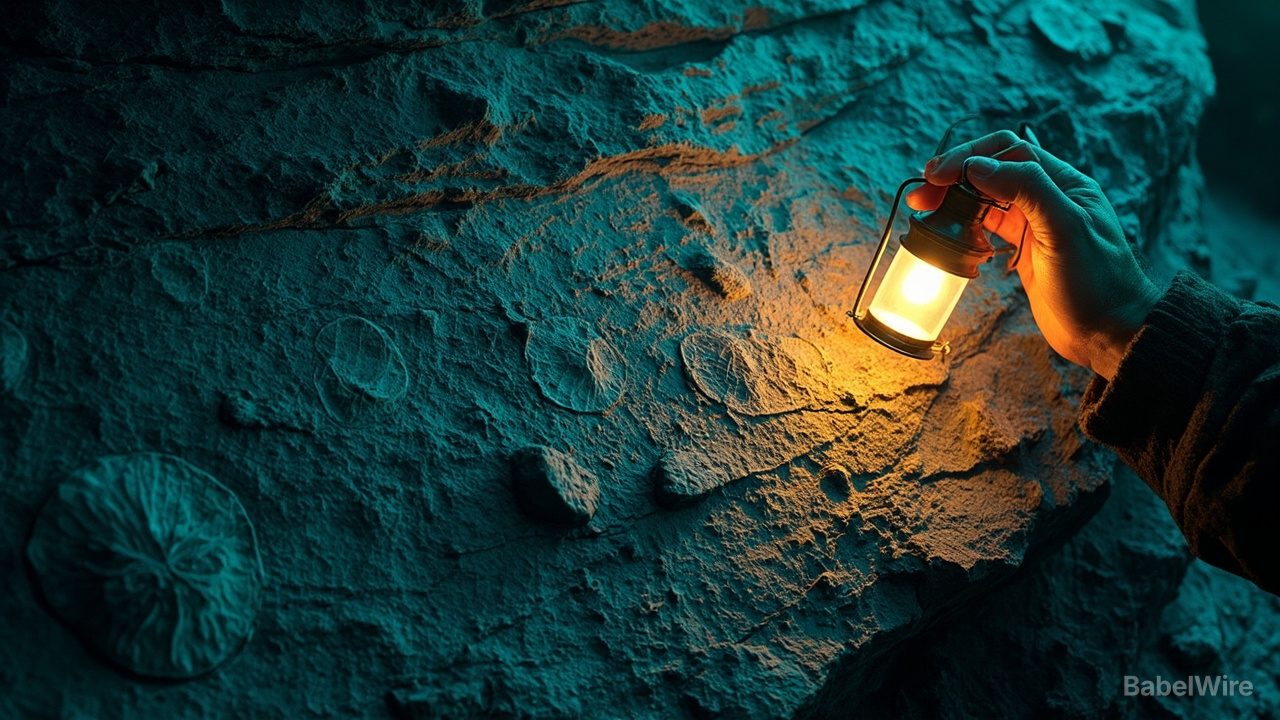
Scientists have uncovered a spectacular trove of 567-million-year-old fossils in a remote corner of Canada's Mackenzie Mountains that is rewriting the timeline of early animal life. The site, described in the journal Science Advances, contains more than 100 specimens of the Ediacaran biota — the strange, soft-bodied creatures that represent the first direct evidence of multicellular animal life.
The discovery pushes key evolutionary milestones back by five to ten million years. The fossils suggest that animal movement and sexual reproduction emerged earlier than previously thought, and they include the first White Sea assemblage fossils ever found in North America — including six groups never before recorded on the continent.
Among the stars of the site are Dickinsonia, a flat, mouthless animal that absorbed nutrients through its underside like a 'bathmat' or 'pancake'; Funisia, a tube-shaped organism that provides the oldest known fossil evidence of sexual reproduction; and Kimberella, a possible early mollusk relative and candidate for the oldest known bilaterian — the group with front, back, top and bottom that includes more than 99% of all animals.
The fossils also suggest that complex animal life may have first flourished in the deep, stable waters of the ancient ocean — a reversal of the pattern seen in later evolution. 'For 3 billion years, life on Earth was dominated by microbes,' said lead author Scott Evans of the American Museum of Natural History, who called the site's potential 'tremendous' for explaining how life first became large, complex and unmistakably animal. The specimens will eventually be housed at the Prince of Wales Northern Heritage Centre in Yellowknife.
Sources
- sciencedaily.com567-million-year-old fossils rewrite the dawn of animal life (ScienceDaily)
- theconversation.comRare 567-million-year-old fossils refine our understanding of early animal evolution (The Conversation)
- amnh.orgFossil Trove Expands Range of Squishy Early Animals (American Museum of Natural History)