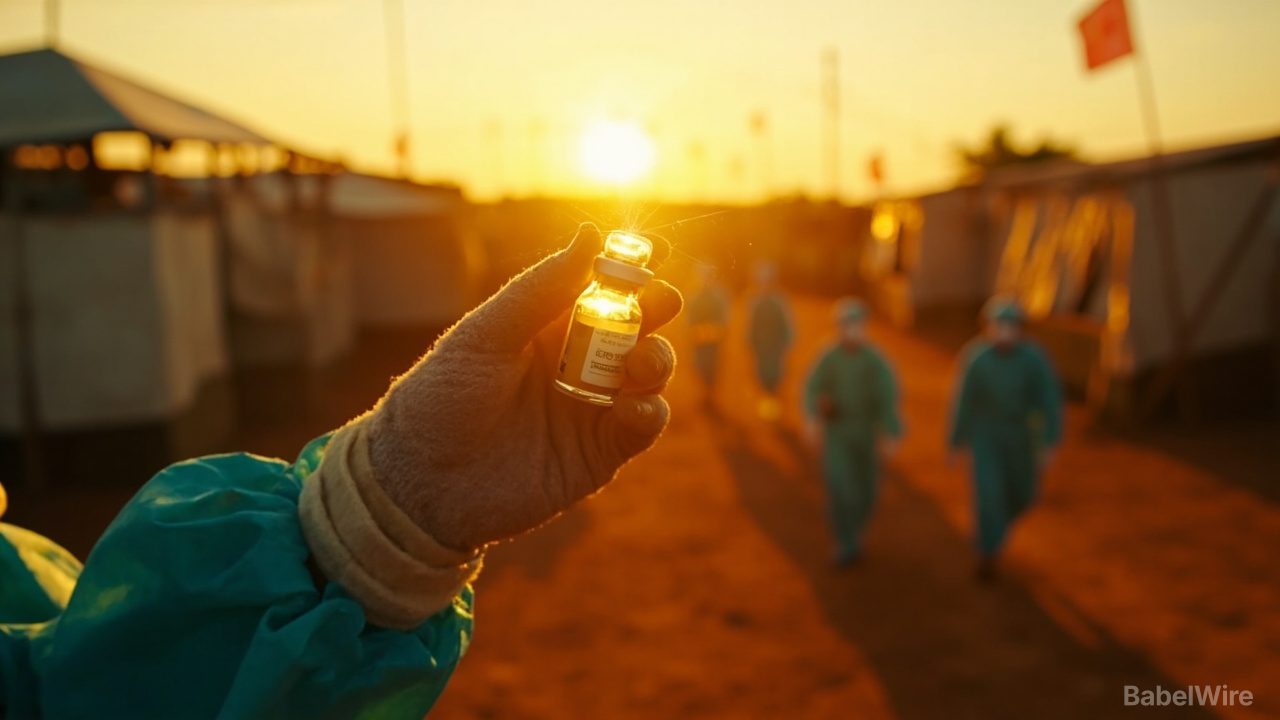
The Ebola outbreak in Central Africa has become the largest on record, with confirmed cases passing 4,000 and deaths exceeding 2,000. According to the European Centre for Disease Prevention and Control, 4,381 confirmed cases, including 2,011 deaths, had been reported as of August 10 since the epidemic emerged in mid-May in the Democratic Republic of the Congo and spread to Uganda.
The crisis is driven by the Bundibugyo species of Ebola virus, for which there is no licensed vaccine or specific treatment — unlike the better-known Zaire strain. The World Health Organization declared the outbreak a Public Health Emergency of International Concern on May 16. It is concentrated in Ituri province, where nearly one million people have been displaced by conflict and women and children make up around 80 percent of the displaced.
Children are bearing a disproportionate share of the toll. More than 300 children have died, and although children account for nearly a quarter of confirmed cases, they make up almost a third of deaths, UNICEF said. Maternal deaths in Ituri have nearly doubled since the outbreak began, with roughly six women dying each week from childbirth-related complications. Ebola infection during pregnancy is associated with almost universal fetal loss.
Fear is compounding the health crisis. In the hardest-hit areas, use of health services has dropped by more than 40 percent in recent months as people avoid clinics, the UN reported. Some 13,000 community workers have been deployed by the Congolese health ministry and partners, reaching more than 2.4 million people with prevention information and carrying out over 500,000 household visits to counter misinformation.
On the medical front, there is new momentum. A WHO advisory group has recommended that Ervebo — the only licensed Ebola vaccine, developed against the Zaire strain — be evaluated in a randomized clinical trial for Bundibugyo virus disease, after preliminary animal studies suggested it offers cross-protection, particularly against death. Its effectiveness against Bundibugyo still needs to be proven, and a vaccine developed specifically for this strain remains the preferred option.
Separately, Health Canada has authorized Moderna to begin a Phase I clinical trial of an mRNA vaccine candidate for Ebola disease caused by the Bundibugyo virus. Researchers say first-in-human studies with clinical-grade material could begin by the end of 2026. Until then, the response depends on surveillance, contact tracing, safe burials and community trust — the same tools that have contained past outbreaks.
Sources
- ecdc.europa.euEbola disease outbreak in the Democratic Republic of the Congo and Uganda — ECDC
- news.un.orgEbola in DR Congo: Childhood deaths rise; hopes raised over new vaccine — UN News
- who.intEbola disease caused by Bundibugyo virus — WHO Disease Outbreak News
- canada.caHealth Canada authorizes vaccine clinical trial for Ebola disease caused by the Bundibugyo virus
- bmj.comEbola: how soon could a Bundibugyo vaccine be ready? — BMJ