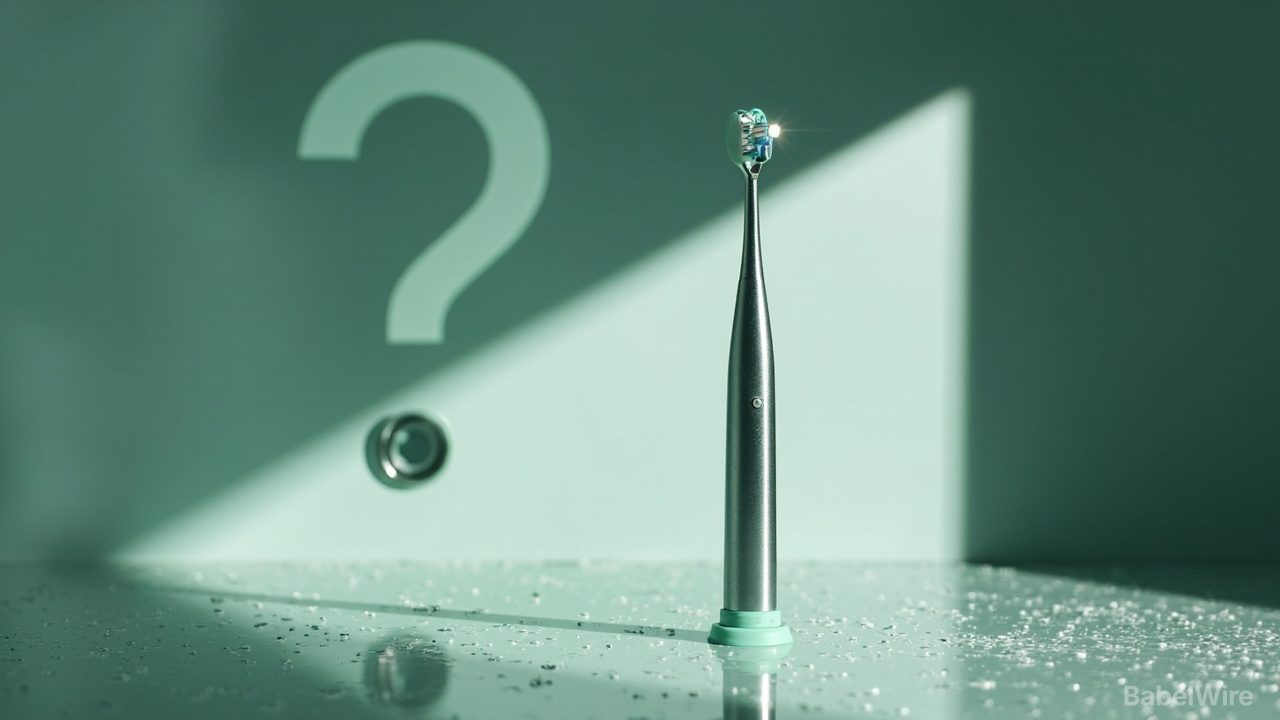
On 1 September Dyson launched the CameraJet, a $499 toothbrush with a camera and on-device intelligence that watches your brushing in real time. Three weeks later, Wired reports a follow-up that is less about brushing than about answers: Dyson will not say what is wrong with the toothbrush.
That is the substance of the story, and it deserves a pause. A device that photographs the inside of your mouth, interprets what it sees and reports the result to an app is not a toothbrush with a gimmick; it is a small medical-adjacent instrument sitting in a bathroom, on a wet counter, in a private routine. Its failure modes are not visible to the person holding it. When a plain toothbrush breaks, 'it stopped working' is a warranty conversation. When a camera, a light source and a model that grades your teeth break, 'something is wrong' is also a question about data handling, measurement accuracy and whether the health signal you have been trusting was ever sound.
The company's position, per Wired, is silence — no technical explanation of the defect, no clarity on how many units are affected, no public statement of what owners should do. That leaves buyers in an uncomfortable place. They cannot tell whether the fault is cosmetic, a software bug, or something that corrupts the measurements the product exists to produce. They cannot tell whether their own device is in the affected group. Third-party developers building on the toothbrush cannot plan either. And the trust that any connected-health category depends on gets spent quietly, in exactly the period when a new product needs it most.
The pattern is familiar from a decade of smart hardware: a launch full of feature claims, followed by support issues the vendor treats as brand risk rather than public information. The regulatory wind has been blowing the other way. European rules now push connected products toward disclosed security-support windows and explicit update commitments, precisely because owners cannot audit firmware themselves. A camera plus a model plus an app is squarely inside that category.
What to watch: whether Dyson publishes a technical explanation or a firmware fix note; whether affected behaviour surfaces in the companion app's release notes; whether the reports remain anecdotal or become a pattern across a device family; and whether any consumer-protection authority in the launch markets asks the obvious question on behalf of buyers. Until one of those moves, the honest state of play is the one Wired reports — the device is on sale, something is wrong with it, and the maker is not saying what.