Tyrannosaurus rex and Apatosaurus capture the imagination with their enormous size, but a new study asks a stranger question: why did dinosaurs never become truly tiny?
Researchers from the American Museum of Natural History and Princeton University used mathematical models to examine how body size evolves among vertebrates. Their results, published in the journal Evolution, show that energy use and physiology can account for the range of sizes seen in mammals, birds and turtles. Those same factors, however, cannot explain why even the smallest non-avian dinosaurs remained relatively large.
The smallest known non-avian dinosaurs weighed close to one pound — roughly 450 grams, comparable to a large rabbit. That is more than 200 times heavier than the bee hummingbird (1.75 grams). By contrast, about 75 percent of living mammal species and 90 percent of living bird species are smaller than the smallest known non-avian dinosaurs.
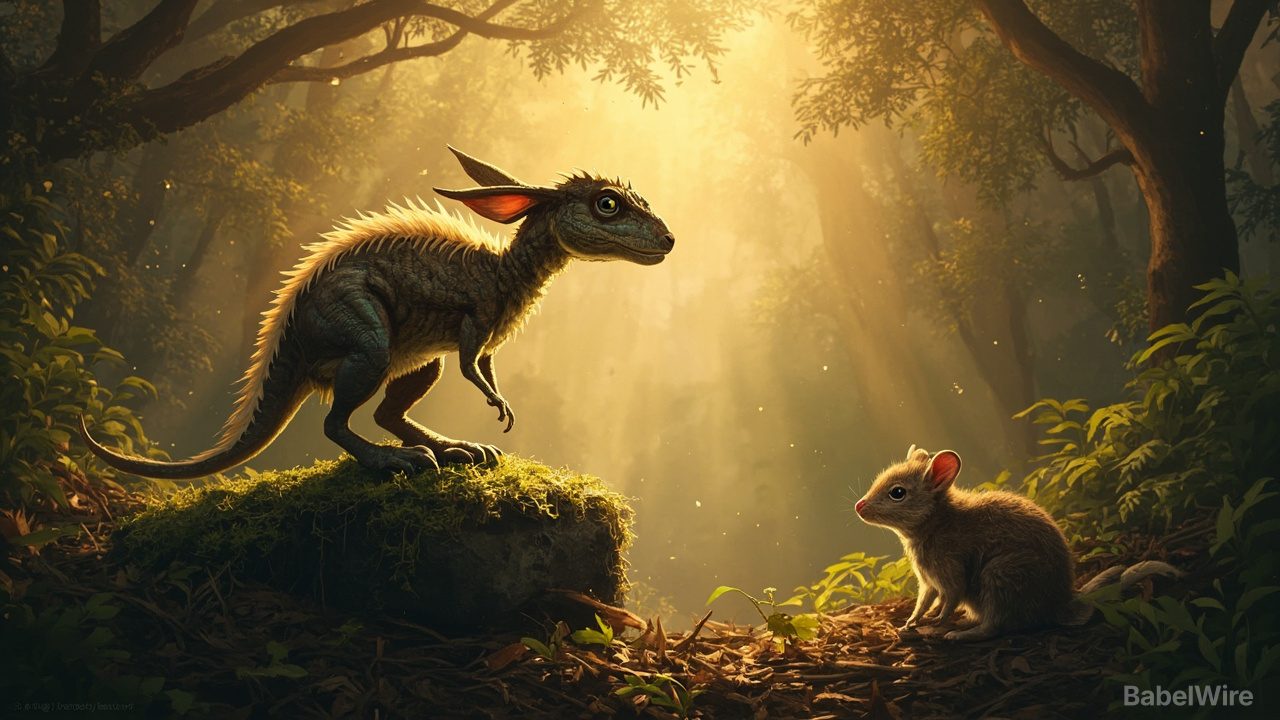
The researchers instead suggest ecology imposed a lower size limit on dinosaurs. In particular, competition with early small mammals could have prevented dinosaurs from moving into the mouse-sized and sparrow-sized niches filled by many vertebrates today.
"We already knew that dinosaurs prevented mammals from evolving to large sizes before the end-Cretaceous mass extinction. Here we suggest that mammals in turn prevented dinosaurs from evolving to small sizes," said co-author Roger Benson, Macaulay Curator of Dinosaur Paleobiology at the Museum.
The findings may also help explain the rise of birds. Soon after birds first appeared during the Early Cretaceous, they evolved body sizes far smaller than any other dinosaur group. Powered flight, the researchers argue, opened habitats and ways of life unavailable to terrestrial dinosaurs, freeing early birds from the ecological forces that kept other dinosaurs large.
"We have this unusual situation where the ancestors of dinosaurs could be tiny. The living descendants of dinosaurs — birds — they can be tiny. But dinosaurs themselves seemed to be forbidden from being tiny," Benson said.